ISLAND LIFE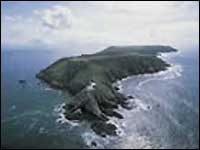 | | CASTAWAY | what is life really like for Lundy Islanders? |
At three miles long, half a mile wide and ten miles of the coast of Devon, Lundy is by no means a large island, but according to the EC - it may not be an island at all. Inside Out investigates what life is like on Lundy Island... sorry, on Lundy! Lundy means ‘puffin’ in Norse and although puffins on the island are in decline, Lundy’s wildlife still remains internationally important. Lundy Island is England’s only marine nature reserve and can boast the biggest seabird colony in the south of England. In fact on a visit to Lundy Island, you are more likely to be greeted by its wildlife than its locals - all 19 of them! And it is the number 19, that caused so much uproar in January 2003, when the press reported that Lundy may lose its Island status. Island status | | Lundy's wildlife is internationally important |
The European regional development fund conducted a study into island life, and in order to categorise, they came up with some interesting definitions of the term ‘island’. An island is no longer an island if: - it has a rigid link to the mainland
- if it contains a European Union capital
- if it has less that 50 permanent residents
Lundy is in good company then, as with the Channel Tunnel and London, it seems Great Britain is no island either! The loss of island status however, was only necessary for this particular study and Lundy Islanders can rest assure that at present, the island is still eligible for Objective Two funding (special development funding) as part of Devon. CastawaysThe island’s funding may be safe for now, but it has sounded a wake up call for Paul Roberts, the General Manager of Lundy. It has caused both Paul and the islanders to consider the expense of keeping the island open to visitors, particularly when the island is struggling to break even. | Lundy Island | The island is a granite rock about 400 feet high, three miles long and half a mile wide "Lundy" is actually Norse for "puffin island" Lundy is England’s only marine nature reserve and the biggest seabird colony in Southern England The island was used as rabbit warren at one point There are 19 residents here (25 in summer), and they all work for Lundy There is a shop, a tavern, a working farm and 23 properties that are let out. There are 150 wild sheep, 50 deer, 20 ponies, and an unknown number of goats |
Any attempt to take away Lundy’s island status however, could jeopardise any future European funding. Thanks to a campaign in the 1960s by three Devon MPs, the Island was no longer privately owned. Instead, Lundy is owned by the National Trust and administered by the Landmark Trust. All the residents on the island work for the Landmark Trust and for their efforts, receive free accommodation and a salary. "We are pretty self-sufficient here," says Paul. "We generate our own electricity, we treat our own water, we dispose of our own waste. But every item that we sell in the shop is shipped over from the mainland." In summer months, the Lundy Company’s ship is responsible for bringing supplies, but in the winter, islanders have to rely on the helicopter, which at £850 each trip, doesn’t come cheap! TourismPaul estimates that whatever you buy on the mainland it is 50% more expensive on the island. Lundy did receive Objective Two funding a few years ago to build a jetty for new boats to moor but apart from that they have had to rely on charitable donations. 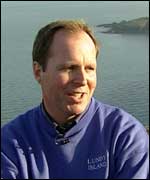 | | Paul Roberts would like to see the island made accessible to everyone |
As the saying goes, all publicity is good publicity and Paul hopes that recent press interest will encourage people to visit, as tourism is their lifeline. Paul insists that if the Landmark Trust wanted to make a profit they could just shut the island down, but he would hate to stop people visiting. At £25 for a daytrip to Lundy, Paul would like to see a subsidy introduced, making the island accessible to everyone. "I believe that the British have an affinity with small islands, and once you have been here, you are guaranteed to be smitten by the Lundy bug," insists Paul. "Pressures seem to disappear as soon as you set foot on the island. It is a total escape from the modern world." | 



 Inside Out - West: Monday 3rd March, 2003