COASTAL PATH EROSION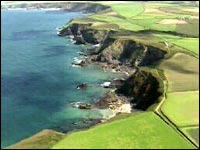 | | The path traverses a stunning coastline |
The SW Coast Path celebrates its Jubilee this year, but this popular beauty spot is under threat from natural erosion and the trampling of boots. So what can be done to halts its decay? 2003 is the silver jubilee of the completion of the South West Coast Path.
With its unique history and beauty, the path attracts millions of local, national and international walkers to the South West region every year.
But erosion is spoiling the party. Some parts of the path have been moved, but it is not always possible to move the route 15/30 metres inland. 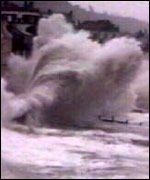 | | Wave power erodes the coastline |
Natural erosion is not the only issue which is creating problems for the future of the Coast Path. Sue Rodway Dyer from Exeter University is just completing research on the effect of human erosion on the path. The wonderful coast line has been shaping itself for thousands of years and erosion is the paradox of the path as it can both create and destroy the incredible landscape. The path was finally completed in 1978 when the Somerset and North Devon section was opened. The longest walkIt is Britain's longest National trail running from Minehead in Somerset to South Haven Point near Poole, Dorset.
With it's 302 bridges, the path is 630 miles long.
 | | West Coast Path is based on a working footpath |
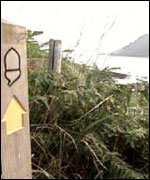
If you were to walk 10 miles a day it would take you over 2 months to walk the path. The South West Coast Path is unique because it is based on a working footpath which was in use until comparatively modern times. Coastguards used to patrol the whole coast of the South West Peninsula on foot, every day, in the course of their duties in pursuit of Revenue protection against smuggling.
This lasted until 1856 and the Admiralty carried on the work until 1913. Path divertedThe authorities are trying to divert the path or amend it but it's not always possible to find an alternative on the coast.
 | | Coast Path closed due to erosion |
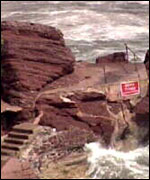
There is also a financial constraint as with an annual budget of £600,000 projects have to be prioritised. So natural erosion is one of the main problem with diverting the path. One place where the path has been diverted is in Torbay. The cliffs are in great danger of falling down and it is to protect the public that the path has been pushed inland.
Natural erosion is a problem but it is not the only erosion that can be a problem for the South West Coast path.
| COAST PATH FACTS |  The path is 630 miles (1014km) long, 17 miles longer than the previous best estimate The path is 630 miles (1014km) long, 17 miles longer than the previous best estimate
There are 2,473 signs and waymark posts walking the complete path requires encountering 921 stiles and 26,719 steps there are 302 bridges, the longest of which is at Thurlestone in South Devon and is 80 yards (73m) long a total of 19 miles (30km) of coast is at risk to regular coastal slippage. |
It is great that the path attracts hundreds of thousands of walkers every year, but this could also lead to its destruction. Extensive use of the path can start human erosion.
An unpublished study describes the effect of human use of the path. Sue Rodway-Dyer is completing a study of paths in the South West for her PhD at Exeter University. She explains that people not following the path create human erosion.
The lost vegetation on the side of the path will accelerate erosion as there is nothing 'keeping it' together.
Which is why it is important to keep to the path. | 


