DECOY Q-BOATS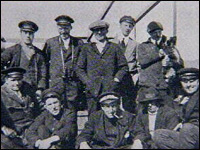 | | Q SHIPS| Men risked their lives on the mystery Q ships |
During the First World War Britain had a secret weapon - the decoy 'Q' boats. Inside Out investigates the ships and the brave seamen who sailed in them. Britain's secret weapon during the First World War was built in the dockyards of Devonport and other South West ports. The Q-ships were Britain's amazing answer to the German's potent new weapon - the submarine or U-boat. These fighting vessels were a great trick of disguise and cunning - they were actually ordinary ships built as decoys. Battle linesDuring World War One Germany's fearsome new weapon was the submarine. The German strategy was to starve Britain to defeat by sinking every ship it could. 880,000 tons of shipping went to the bottom of the seas in one month alone. This was a fight to the death and the biggest casualty was the traditional rules of war which sank without trace There was only one solution - to outwit the Germans with a clever plan - the Q-ships. More than 200 boats were disguised and sent into action against the U-boat menace. Secret men of war 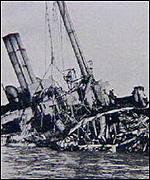 | | Many Q ships were sunk without trace |
In the ports of the South West, ships of every shape and size were transformed - trawlers, steamers, schooners and cargo ships were all transformed secretly into men of war. The ships were nicknamed Q-ships after the original 'Q' numbers given to the some of these special service decoy vessels. The ships had guns under dummy lifeboats or hidden under fake funnels and awnings. Some of the ships used paint to hide their cache of weaponry. The idea was to lure the U-boat into attacking these decoy ships which would unleash their hidden weaponry. The men on these mystery ships showed courage beyond the call of duty. Until now their story is little known for theirs was a secret mission. Courage under fire| The Q- Ships | 1914 - 3 ships entered service 1915 - 29 ships entered service.
9 Q-ships lost. 2 U-boats destroyed by the South West boat Baralong 1916 - 41 ships entered service.
11 Q-ships lost 1917 - 95 ships entered service.
23 Q-ships lost. 6 U-boats destroyed. South West boat Penshurst sunk two U-boats 1918 - 25 ships entered service.
1 Q-ship lost Total - 193 Q-ships in service.
44 Q-ships lost. 15 U-boats destroyed |
Forty four of the Q-ships were destroyed by the U-boats, some were sunk without trace. However the Q-boats were able to destroy fifteen enemy boats, with many other submarines limping back to port for repairs. But the Q-ships sustained their own losses as illustrated in the table below: During the First World War there were 70 duels between Q-ships and U-boats. One of the fiercest fought involved a battle off the Devon coast involving the HMS Stock Force in 1918. The boat was fatally hit and sunk in Bigbury Bay by a U-boat after luring the German vessel to the surface.
This ship was a small converted collier captained by Harold Auten who was awarded the VC for his courageous actions. Remnants of warIn this famous mismatch of strength, the Q-boats were David compared with the Goliath-like power of the U-boats. But the battling spirit of the men who fought in the Q-boats lives on. These decoy ships played a valuable part in the Allies anti-U-boat campaign.
Today only one of the boats survives - the HMS President moored on the Thames.
It remains a testament to the unsung heroes who risked their lives under a veil of secrecy. | 



