EXETER THEATRE FIRE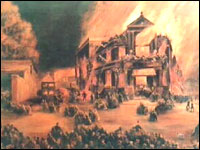 | | The Theatre Royal in Exeter is destroyed by fire. |
150 years ago saw one of Britain's worst theatre disasters. Even though the jury reported a verdict of accidental death, was the architect to blame? On the evening of the September 5 1887, an audience of more than 800 was present for the opening night of 'Romany Rye at the Theatre Royal in Exeter. But during the fourth Act a fire started on stage. Smoke and darkness quickly filled the theatre and it developed into one of the worst fire disasters of 19th century Britain. Up in the flys, the area above the stage where sets are rigged and operated, naked gas jets used to illuminate the stage, set drapes alight. Fire established quickly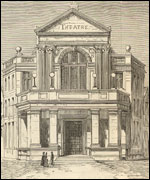 | | The Theatre Royal opened less than a year before the disastrous fire |
The theatre was on fire very quickly. The death toll was said to be around 150, mainly from the upper gallery from where there was only one exit, with a ticket office blocking the route halfway down. It was a dreadful night, despite the many desperately heroic acts of bravery. The Theatre Royal of Exeter had opened less that a year before the disaster. It was designed by one of the most respected theatre architect of the time, Charles John Phipps The theatre was destroyed, but since that date, stringent safety regulations have been in force in British theatres.
The Home Office in the introduction to its "Manual of Safety Requirements in Theatres and Other Places of Public Entertainment" (1934) explained that its recommendations were based on experience of disasters at home and abroad. Nine fires were highlighted including the 1887 fire at the Theatre Royal, Exeter. Parliamentary Inquiry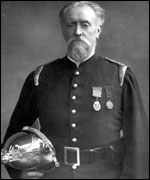 | | An Inquiry headed by Captain Eyre Shaw was launched |
An inquiry headed by Captain Eyre Shaw was launched. At the end of the inquiry, the unusual large jury of 21, returned an unanimous verdict of accidental death. Captain Shaw handed his report to the House of Parliament on the 29 September 1887. It is reported that Charles Phipps statement during the inquiry was vigorous and bold. He was sarcastic, particularly to those who did not appear to understand the subject as well as himself. Could he be responsible for the death of 150 people? During the Inquest it emerged that when Charles Phipps designed the theatre he agreed to comply to the latest safety regulations even though they were not mandatory at the time. Experts investigatedThe evidence was shown to a fire safety expert. Expert opinion says that looking at the evidence, the design was probably to blame. Charles Phipps, the architect, deceived his client and there is evidence of considerable changes in the plans during the theatres construction. Charles Phipps is still recognised as a great architect, a Victorian theatre specialist, an authority in his field. He was involved in the construction or alteration of over 20 theatres including the Theatre Royal on Londons Haymarket The positive side of this tragedy was that fire regulations became stricter after the event and safety devices such as the fire curtain were introduced in all British theatres. | 



