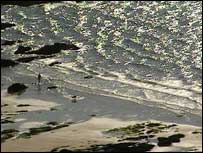
IS DUMPING DESTROYING OUR BEAUTIFUL COASTLINE?Millions of tonnes of waste has been dumped close to Whitsand Bay, one of the finest beaches in the South West. Environmentalists are concerned that it could result in an environmental disaster, and campaigners are lobbying to stop further dumping. The problem is compounded by the fact that nobody kept a record of what was being dumped before 1990. So how bad is the problem? And what can be done to preserve the beauty of our coastal areas for future generations? An environmental disaster?Expert divers at Whitsand Bay believe that the state of the sea bed has seriously deteriorated in recent years. | "It was like the sea had leprosy" | | Pete Mitchell, Police diver |
Diver Dave Peake claims that the situation worsened dramatically after the Navy started dumping as part of a controversial project called RAFT (Remote Ammunition Facility Tamar). Hundreds of thousands of tonnes of silt, shale and mud were dredged from the River Tamar and dumped at the licensed site. But the multi-million pound scheme was shelved earlier this year. Under pressure from environmentalists, the Government has now agreed to review the dump site and test the spoil. DumpingEnvironmentalists claim that the dumping is damaging the stunning coastal waters around Whitsand Bay. The material is spreading across a wide area from the tip site, even threatening an internationally important conservation area in nearby Plymouth Sound. Amongst those who claim to be worst affected by the dumping are local fishermen. 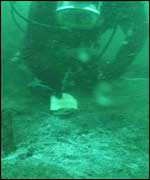 | | A diver assesses the impact of the dumping |
They claim that it has had a detrimental impact on their fishing grounds. Others are concerned about the effect on marine life. Some marine experts claim that rare corals could be under threat. Marine dumping can destroy or degrade important habitats for aquatic species, and cause coastal erosion and salutation, which affect the health and productivity of the marine environment. Hope for the futureThe coastal waters around the UK are of great importance because they carry a disproportionately large amount of marine life because of their relative shallowness. Managing the quality of the marine environment is therefore of fundamental importance. There are many potential sources of marine pollution including sewer discharges and overflows, approved dumping, illegal dumping by ships, and litter blown from beaches Over 80 per cent of all marine pollution is caused by human activities such industrial development, inadequately treated discharges of sewage and industrial wastes, dumping, and tourism. So what can be done? Testing and monitoring of the spoil and pollution levels is of great importance. Beachwatch also recommends the effective development and assessment of comprehensive waste management plans. Let's hope that a thorough review of the situation will help to maintain the vibrancy of aquatic life below our south western waters. | 



 Inside Out - South West: Monday 7th October, 2002