Wild wild country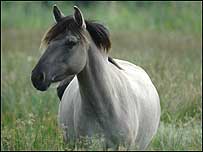 | | Wild horses are helping to restore habitats |
The South East is charging ahead into the 21st Century as fast as anywhere.
But there is one part of the South East which is going backwards in time - by about 7,000 years. Inside Out investigates how two areas of wilderness are being restored to their original state thanks to the reintroduction of wild animals.
Stodmarsh near Canterbury is an extraordinary part of Kent. It's a National Nature Reserve, as is Ham Fen near Sandwich. Both these places are owned and run on our behalf by English Nature.
English Nature wants to restore them to their original state - to how they were about 7,000 years ago.
Back in time
Taking these places back to that moment in time involves horses. Coincidentally, Stodmarsh was originally called Stud Marsh.
But these are not just any old horses. These are wild horses, specially imported by English Nature, the Kent Wildlife Trust and Wildwood Wildlife Park. They do the job of restoring habitats simply by eating the grass and reeds to stop the woody scrub building up. 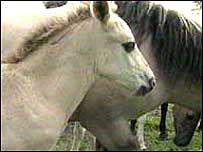 | | Wild horses are the new conservationists |
Without them the wetland would dry up and become woodland.
Normally the conservation organisations would use heavy machinery to keep down the vegetation. But now the horses do it for them the natural way.
These horses come from Holland, and they are genetically the closest thing to wild horses that roamed across England 7,000 years ago. The Dutch have been breeding them for the same purpose in their nature reserves. Three and a half years ago Inside Out travelled with the horses as they made their journey from the continent over to Kent.
Today, the horses are flourishing. Nine were originally introduced to Stodmarsh and seven have been born here. Natural conservation The transformation of this bit of countryside in Kent is going as planned. 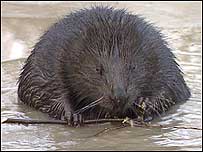 | | Eager Beaver - helping habitats in the fen lands |
The wild horses have eaten their way through the reed beds leaving behind a flooded field - a brand new habitat for wildlife, all thanks to the animals' voracious appetite.
But wild horses aren't the only animals involved in this project.
Conservationists have also been to Norway to catch Beaver and bring them back to Kent. And over the last four years the Beavers have left their mark in Ham Fen.
They have created channels which help wildlife. Beaver also help to hydrate the land, allowing other animals to flourish.
Wild Boar and Water Voles As well as the horses, another animal needed to take the woodland back to its original state is the Wild Boar. Boar were hunted to extinction in England about 300 years ago, but they arrived back comparatively recently.
The Boars return the woodland to its natural state in several ways. They destroy non-native trees by rubbing against them for years on end. 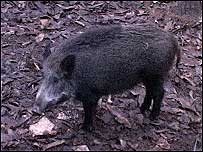 | | Wild Boar - back to help with conservation |
They also eat acorns and other seeds which are then spread around the wood when they pop out of the pigs' other end. They also help the seeds to germinate by rooting in the undergrowth and loosening up the earth, and they root out and destroy non natural plants like rhododendron. Another creature which is helping the land to go back in time is the Water Vole - Britain's most endangered mammal. As a result of these animals, there are a couple of bits of Kent left that remain natural havens - Stodmarsh and Ham Fen. And if these two places end up just how they were 7,000 years ago, we can thank the Wild Boar, the Water Voles, the Beavers, and one group of very special wild horses. Links relating to this story:The BBC is not responsible for the content of external websites | 



 Inside Out - South East: Monday January 9, 2006