QUEX HOUSE | | RUMBLE IN THE JUNGLE | Quex House brings a little bit of Africa to Kent |
Elephants, giraffes, monkeys, anteaters, gorillas and zebras; it may sound like a description of the African plains, but in fact these exotic creatures are currently residing in Kent. Quex House near Margate is home to more than 500 stuffed African animals preserved for posterity and lovingly displayed in reconstructions of their homeland. The founder of this collection was Major Percy Horace Gordon Powell-Cotton, who explored Africa and Asia between 1887 and 1939. Load you rifle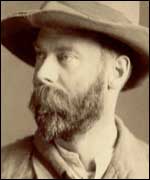 | | Major Powell-Cotton was the epitome of a Victorian explorer |
The epitome of a Victorian explorer, Major Powell-Cotton would don his pith helmet, load his rifle and set off into the jungle to bag himself a tiger or a rhino. His successful hunts would hang as trophies in the billiard room. Once the collection became too vast for the house, the Major built a gallery. The Powell-Cotton Museum was founded in 1895. There are five galleries displaying animal collections from his expeditions to remote corners of Africa and Asia. Huge collectionThe Major’s travels through Africa unearthed a wealth of artefacts, including thousands of photographs dating back to the early 1880s and home movie footage from as early as 1927.  | | Paul cunningly camouflages himself to avoid detection by the angry looking rhino |
There may only be 500 animals on display, but behind the scenes lies an even bigger collection of animal samples. Four and a half thousand skeletal specimens and six thousand skins are stored at Quex House. As the collection expanded, The Major began to catalogue his specimens. Each animal was measured, labelled and even the lines of latitude and longitude where the animal was found, were recorded. It became less or a sport and more of a science. In the 21st Century, the Major’s activities may be deemed far from tasteful or politically correct. The Major however, unknowingly left behind a legacy that at the expense of the animals of yesteryear, is a vital conservation tool for today’s endangered species. DNAContained in the specimens of Quex House is a vast genetic record, DNA. In 1997 the museum put this genetic information to use. Using Giant Sable Skulls and hides, collected in Angola in 1921, the team were able to take samples of DNA.  | | Wildlife of yesteryear are helping their ancestors by providing DNA |
The samples proved that South African researchers had found a number of pure Giant Sables. The DNA was the proof the team needed to begin a breeding program designed to save these creatures from extinction. "You are able to get a genetic blue print of the Giant Sable. It’s a remarkable depository of DNA in that it allows taxonomists to study animal information over time."
John Frederick Walker - US journalist and author of "A Certain Curve of Horn". DNA from Quex House was to prove vital once again, when the museum got involved in the Quagga project, five years ago. ConservationThe Quagga is an extinct form of Zebra. The Cape Mountain Zebra was a close sister Quagga and through the DNA samples from Quex House, scientists are now able to breed Cape Mountain Zebra that are similar to Quagga in all aspects except their DNA. At first glance, The Major’s collection of stuffed creatures may appear distasteful and would certainly be frowned upon were he still hunting today. The legacy he left however, has provided a key role in conservation work today. So the creatures residing in Quex House can rest assured that their untimely death at the hand of the Major is now helping to save future generations from extinction. | 



 Inside Out - South East: 27th January, 2003