LOCATION, LOCATION, LOCATION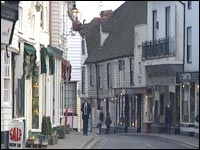 | | BEST AND WORST | Where do you buy a house in the South East |
At a time when house prices in the South East region have risen by almost 30% in one year, careful consideration must be given as to where to buy a property. Many questions must be answered if the buyer is to beat the market. The most important of these is location, followed by location and then again, location. Best and worst locations
Throughout the South East there are best and worst locations in which to invest in property. Over the past 50 years those whose homes enjoy the best locations have seen property values escalate by ten fold. Those living in the worst locations have seen only small gains in property value. Additionally during this period thousands of homeowners have faced the problem of negative equity. In 2003 the Halifax Bank warns of a cooling housing market, particularly in the South East, which may see many with homes worth less than the value of their loans. Locations focussed on in the South EastHouse price boom and bustA house price boom may make homeowners feel wealthy. But the wealth means little unless people start to take equity out of their property by increasing their mortgage. Releasing cash tied up in the home means people can buy cars, go on expensive holidays and generally enjoy living a little with few worries about paying back the debt, particularly when interest rates are low. All this consumer spending can run out of control and while it's tolerable in a low interest rate environment, it can cause problems if interest rates rise. Negative equityIn the late 1980s, many people over extended themselves in a desperate bid to get into the housing market. When interest rates rose in the late 1980s and early 1990s, many of them found they couldn't afford the repayments on their mortgages and their homes were eventually repossessed. This was a double disaster, because the numbers of repossessed properties coming onto the market helped to dampen prices and soon many people found that they had negative equity. In other words, they owed more on their mortgage than their property was worth. By 2002 many mortgage lenders decided that there was a strong risk of this happening again and so started to impose restrictions on who they lent money to and in what areas. Lending restrictionsThere is nothing particularly new about this. In an uncertain housing market, banks and mortgage lenders often limit the amount of money buyers can borrow. The restrictions are intended to protect buyers and the lending companies themselves from negative equity. 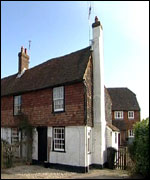 | | The charming village of Wadhurst is a much sought after location. |
If a bank introduces restrictions, buyers can only borrow a specified percentage of the property price, so if the value drops they won't slip into negative equity and risk losing their home. In January 2002, Alliance & Leicester and NatWest both introduced limits (of 90% and 95%) on mortgages in certain areas of London where they felt the housing market was becoming overheated. The house price boom in the South East area is another reminder that there is not enough property to go around. As demand outstrips supply, prices will go up and up. This means that public sector workers, such as nurses, police officers and firefighters, are priced out of the area and have to commute long distances to get to work in the region. Planning permissionsThere are few solutions besides building more property but planning restrictions limit where these can be put up. In the meantime, the only real restriction on house prices will be affordability as first time buyers are priced out, the market will rely on big City bonuses at the top end of the market to keep fuelling prices onwards and upwards. A City recession will bring an end to this and only then will house prices return to some sort of normality. Property prices in selected South East locations | Location | Detached | Semi detached | Terraced | All | Kent | Cranbrook | 302,929 | 169,551 | 144,341 | 230,797 | Sevenoaks | 471,796 | 217,171 | 168,752 | 325,176 | East Sussex | Newhaven | 187,871 | 124,084 | 115,651 | 93,590 | Wadhurst | 525,153 | 182,352 | 128,992 | 303,208 | | | | | | National | 220,616 | 127,009 | 108,681 | 144,173 | Source: TSI Consulting Ltd |
Factors contributing to a best investment locationInside Out asked a panel of property experts where, in their opinion, are the 'best' and 'worst' places to buy in the South East. This is the result of their deliberations. Rural
Places like Cranbrook and Wadhurst offer peace, quiet, safety and a settlement of like minded souls. Village amenities; shops, post office and primary schools with small classes and excellent records of pupil achievement. Close to secondary schools with excellent records of pupil achievement. Jobs
They are also close to centres of high reward employment and have the main road and motorway or rail connections necessary to get to those jobs. Undervalued
They are up and coming areas not yet fully valued. Factors contributing to the worst investment location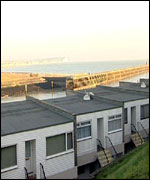 | | Newhaven has the benefit of a coastal location but is far from London |
Urban and distant from London
As an example, Newhaven is distant from London and has an industrial image. The town is best known for the ferry to Dieppe which has been operating since the 1830's. The country's first purpose built marina was constructed in the 1960's. It has berths for 300 boats, but has not yet seemed to benefit from the yachting fraternity. Poor transport
There are poor transport links to high value jobs and there is a lack of high paid local Jobs. Prices too high
Take the case of Sevenoaks in Kent. Many employed in the City of London finance industry would have had advanced warning of the slow down in paper investment and would have been loathe to invest their bonuses in stocks and shares. One alternative would be to buy a better house with their annual bonus. This drives the top of the market steeply upward. Sellers of top of the market houses, might release some of the equity possibly to help in retirement and buy houses further down the value chain in the same area. This has the effect of driving up all house prices in a locality. Eventually such areas mature and a reduction in property value is the most likely change. | 



 Inside Out - South East: Monday 2nd March, 2003