FROM TRAGEDY COMES HOPE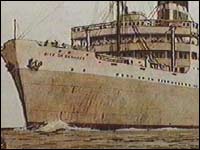 | | The ship was torpedoed in 1940 |
Turn the clock back 64 years and imagine yourself in the middle of the North Atlantic. Now imagine you are a passenger on a ship that has been hit by a torpedo and is sinking, fast. This was reality for Beth Williams, who is about to meet the man who tried to kill her. Two people inextricably linked by a tragedy are about to meet, a lifetime after the event that would change their lives forever. Inside Out North West are bringing together Rolf Hilse, 83, who as a young man was the dangerous enemy, and Beth Williams, 78, who became a survivor. Wartime realityLiverpool in 1940 was a dangerous place. In the height of World War II, during the German bombing campaign, whole areas of the city were flattened, homes were destroyed and thousands were killed. 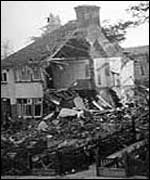 | | Many Liverpool homes were destroyed during World War II |
The Liverpool docks were an integral part of the Allied war effort.
This caused Liverpool to become the most heavily attacked English city outside of London. Families were desperate, trying to protect their loved ones any way they could. Thousands of children were sent on ships to the safe shores of Canada; Beth Williams was one of those children. "I felt as if I wasn't really leaving. I thought I was on my way and would be coming back," she remembers. City of Benares sets sailOn Friday September 13, 1940 a passenger ship called City of Benares began its 2,500 mile crossing of the North Atlantic. On board were around 400 people, 100 of which were children. 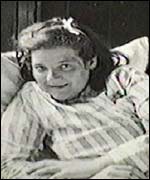 | | Beth Williams was 14 years old when she boarded the ship |
Designed for the tropical trip to Bombay, City of Benares, accompanied by a navel destroyer, entered the rough seas patrolled by German U-boats "We'd hardly found our cabins when the alarm bells went. That was our first lifeboat drill," remembers Beth. As the morning of the fourth day at sea dawned, the passengers awoke to find their escort had left them - apparently now safe to continue the journey alone. "We were told we were out of the war zone
so we were all feeling a bit happier." An enemy lurkingU-48 was the most successful German submarine of World War II, claiming thousands of tonnes of allied shipping. Nineteen-year-old radio operator Rolf Hilse remembered, "We sunk approximately 55 to 60 ships in the first two years of the war." 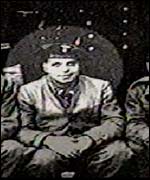 | | Rolf Hilse was a radio operator on U-48 |
Nine days before Beth left Liverpool, U-48 was sent out to patrol the Atlantic. By September 17, 1940 it was 600 miles from the west coast of Ireland - lying beneath City Of Benares. With no escort vessel Rolf said they didn't know it was a passenger ship. "The Captain said 'we start in the middle as this is the biggest ship'. "That was the City of Benares," said Rolf. Lethal attackAs U-48 launched its attack on the Allied fleet, Rolf manned the radio. "I listened to our torpedo, so when I heard a bang I said 'It's a hit'," he explained | "It was a horrible feeling. I couldn't see anything." | | Beth Williams |
Onboard Beth found herself amidst a panic. "It was the explosion that woke us up," she said. "It almost threw us out of our beds." As water engulfed the ship, Beth and her newly found friends were thrown out into the freezing ocean. Survival instinctSurvival instincts kicked in and Beth grabbed onto a rope and crawled up out of the water onto the side of a lifeboat. Of all the friends she had made on the journey only one remained. There was no sign of the other children. Beth and her friend Bess held on to that rope and lifeboat for 19 hours. "We knew we were alone but that made us feel it was up to us to survive," Beth said. "We needed each other and we wanted to survive for our parents' sake." Beth and Bess were eventually rescued by a warship but many others weren't so lucky. The torpedo attack left 175 adults dead and of the 100 children on board only 13 survived. Life goes onBeth was reunited with her parents and was treated in hospital for exposure after her rescue. 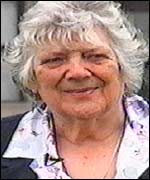 | | Beth Williams says she will never forget that day |
Physically she recovered well from the event but lives with the constant memory. "Wind, rain, hailstones - they all remind me of that day. It never leaves you," she comments. Rolf surrendered in 1945 just off the US coast and was held as a prisoner of war. He ended up at a POW camp in Cumbria and settled in Windermere as a builder on his release. It wasn't until Beth wrote a foreword in a book about the sinking that the two would become reunited. A local paper reviewed the book which Rolf read and followed up. Former "enemies" come face to faceInside Out followed Beth and Rolf as they met at the Liverpool docks where City of Benares set sail. The pair exchanged pleasantries, somehow made easier by their awful link. 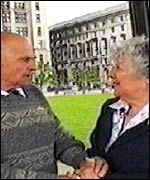 | | Rolf and Beth are reunited 64 years after the tragic event |
As with any tragic event Beth still wants to know "why?" Rolf tried to explain how it all happened. "There was no escort there. The Captain gave it plenty of time to go and the Benares was the biggest. "Why choose the smallest ship when there is a bigger fish behind it?" he said. "You wouldn't have known, and he wouldn't have known, there were children on board?" Beth asked. "No. No idea at all," replied Rolf. Questions answered"I was in two minds, wondering it she would accept me, knowing that I was the enemy who tried to kill her, but Beth made it quite easy for me," said Rolf after their meeting. "There's no point in holding a grudge. He's a charming gentleman - of course I forgive him," commented Beth. There will never really be a satisfactory answer to how the event could have happened, yet at least two people with a tragic link have found some peace. | 



