OBSESSIVE COMPULSIVE DISORDERMany people have obsessions - football, cleaning, checking that they’ve locked the door. But Inside Out meets three people who have Obsessive Compulsive Disorder (OCD) and it’s dramatically affecting their lives. Fahara who lives in Manchester, Steve from Blackpool and Alison who lives in Chorley agreed to talk to Inside Out in the hope of helping others recognise and obtain help with their problem. They are part of an estimated 2-3% of the general population who are affected by OCD. The often bizarre behaviours exhibited by sufferers can be distressing, time consuming and can have a devastating impact on their life. Common compulsions include repeated hand washing, putting household items such as books or CDs into order and repeating words silently. Rare form| OCD EXPLAINED | To describe OCD it is useful to look at the obsessions and compulsions separately: Obsessions are recurrent and persistent thoughts, impulses or images that cause anxiety or distress. Compulsions are repetitive behaviours or mental acts a sufferer feels driven to perform in response to an obsession in order to reduce distress or prevent a dreaded event or sitation. Treatments usually consists of therapy and/or medication. |
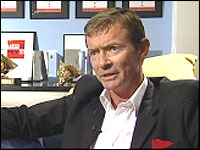
Fahara bears witness to OCD’s detrimental effects. She has a form OCD called Trichotillomania - she pulls her hair out. Farhana can spend up to three hours a day doing it, she says, "I can’t help myself." "I’m doing it myself when I am half asleep. My hands climb to my head and my hands will be working by myself all night." When asked about the physical pain her Trichotillomania causes Farhana says, "It’s funny it doesn’t. It’s soothing, it’s nice." Friends and familyOCD can also be devastating for the friends and family of sufferers too, according to Nicky Lidbetter from the National Phobic Society (NPS). She says, "Often it’s family and friends who contact us and they can’t take any more of living with the sufferer." To provide support for families and sufferers alike, NPS are launching a campaign this week to raise awareness of OCDs. CausesSteve from Blackpool (pictured above) is the founder of a multi-million pound advertising agency in London. He also has an OCD. 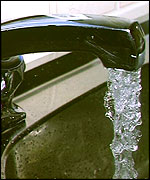 | | Some sufferers wash their so much they are cracked and sore |
Steve spends a good proportion of his day washing his hands - particularly when he is feeling anxious. He also finds it difficult to touch door handles, banisters and flush toilets. Steve says, "I’ve tried to trace it back to some traumatic psychological moment in my life." "It was when I came back from watching Preston play Burnley and I suppose there’s very few more traumatic moments then watching Preston play Burnley, especially in the 1970s." "I came back one night at about 11 o’clock, I was about 14, and decided I’d have a bath. I started to change my whole cycle of behaviour after that." Extreme| TO MAXIMISE CHANCES OF RECOVERY | Join a self-help group. Educate yourself and your family about OCD. Take medication as prescribed. Eat a well-balanced diet. Sleep adequately. Exercise regularly. |
Alison who lives in Chorley was possibly the most extreme sufferer who Inside Out observed. Alison spends a large amount of time each day checking that things are turned off, locked or in the right order. Alison says, "It’s an anxiety that builds.. it reaches a peak and at that peak I check to make sure [that the door is locked]!" Help and adviceThe National Phobic Society is largest anxiety disorders association of its type in the UK. To find out more about the support and service they offer, they can also be contacted at: National Phobics Society
Zion Community Resource Centre
339 Stretford Road
Hulme
Manchester
M15 4Z Helpline: 0870 7700456 This page only contains basic information. If you are concerned about your health you should consult a doctor. | 



 REALPLAYER REQUIRED