AIR TRAFFIC CONTROL 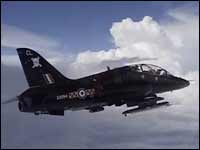 | | Air traffic control guide planes safely to land | | MAIN STORY |
They are the navigators of the sky, the pilot's eyes and ears on the ground, but how does the air traffic control work? Inside Out takes a closer look. Air traffic controllers use radar screen which displays all the aircraft in their sector, although they may not be in radio contact with all the planes that are visible. Whilst a controller's screen is two-dimensional they have to think in three dimensions. Two blips on the screen may look like they're on a collision course, but in fact one aircraft may be several thousand feet beneath the other. There's only a risk if they are at the same height when they cross paths. "Squawk"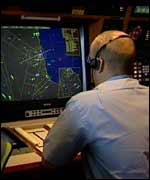 | | In controlled air space, pilots must obey air traffic control |
Aircraft "squawk" is a four digit identity code which appears on the radar screen, often with height information. The "squawk" information tells the air traffic controller what sort of flight it is - military or civilian - and usually which controller he is talking to. Air traffic controllers have different levels of control depending on the class of airspace.
Controlled Airspace - Immediate area around main airports
- Above 24,500 feet (upper airspace)
- In air corridors connecting airports to the upper airspace
- Pilots must obey the instructions of air traffic controllers who will set a course and height for each aircraft in order to keep them apart.
Uncontrolled Airspace Pilots do not have to contact anyone, but they can ask air traffic control to give them a "Radar Advisory Service". The service keeps them informed about other aircraft in the vicinity and gives a course or height to keep them five miles apart horizontally or 3,000 feet vertically. 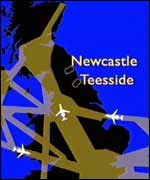 | | Air corridors provide extra safety for planes |
Airlines will usually insist their pilots ask for a Radar Advisory Service as part of their safety policy, but of course other aircraft might be flying in the same area with no radio contact.
An air traffic controller can be left having to anticipate this unknown aircraft's movements. The basic principle in uncontrolled airspace is "See and Avoid" other aircraft. Free as a birdThe freedom of movement within uncontrolled airspace is essential to the military who need to be able to manoeuvre at will during exercises. Civilian pilots learning to fly also need to be able to train without restrictions. But planes aren't the only ones vying for space - there are gliders and hot-air balloonists to consider too. Here on the ground the sky above may appear vast, empty and a paradigm of freedom - get above the clouds and you'll discover it's more like rush-hour on a Friday! | 



