SWIMMING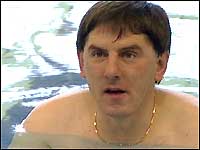 | | Time to take lessons - it could save your life |
Thousands of the North's youngsters leave primary school not being able to swim. Former footballer Peter Beardsley was one of them. So what can be done to make non swimmers take the plunge? Peter Beardsley was fearless on the football pitch, but when it comes to swimming, he's terrified. The former England and Newcastle United footballer should have learned to swim at school but he didn't. Now he's facing his biggest challenge of his life - learning to swim. Inside Out gets him to take the plunge, and looks at why so many children in the North leave school unable to swim. Swimming at schoolWe all know that being able to swim could save our lives, but school children are increasingly leaving school without the most basic swimming skills. 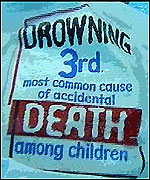 | | Drowning could be averted if more children learned to swim |
A recent survey by the Times Educational Supplement found that one in five primary children leaves school without learning to swim. And it's even worse in Sunderland where the figure is nearly two in every five pupils. One in 13 schools don't offer swimming at all, and the situation is even worse in inner city areas. The survey also found that one in nine schools rely on parents to help teach their pupils to swim. So what can be done to tackle the problem, and how can children be encouraged to get interested in swimming? Sink or swim?| DROWNING FACTS | * The majority of UK drownings (41%) occur in rivers and streams.
* Coastal waters account for 18% of UK drownings. * Other locations where children may be at risk include canals, docks and harbours, lakes, reservoirs and garden ponds.
* Drownings in UK swimming pools accounted for only 2% of drownings in 2001. * More than 100,000 children leave school each year without mastering basic swimming skills.
* Only 5% of schools provide opportunities for swimming outside the curriculum. |
The importance of being able to swim is demonstrated by a few stark facts. Drowning is the third most common cause of accidental death among young people under the age of 16. It claims about 50 lives of children under 16 every year. So why are so many children falling through the net? Poor facilities, lack of funds and pressure on curriculum time leave many schools struggling to teach pupils the most basic water safety skills. The average school faces a round trip of half an hour to reach a pool. By the time the pupils get to the pool, there's hardly any time to get into the water. Some schools also see subjects like maths as their main priority, with swimming being seen as a luxury. Dangerous watersThe dangers of not being able to swim are obvious in the North East and Cumbria where coastlines and lakes provide potentially lethal places for children.  | | Kelly Ashley lost her son in a tragic drowning accident on this beach |
In a recent case, Lewis Ashley, aged five, tragically drowned near his home at Newbiggin in July 2003. He couldn't swim. His mother Kelly explains how it happened, "One boy pushed him. It was just an accident... "Maybe if he'd started swimming lessons and I'd took him, it could've made a difference. "The majority of people that I know in Newbiggin don't swim anyway." But swimming lessons can be expensive especially for families who don't live near a pool.
Swimming lessonsSo what about swimming at school? The National Curriculum requires that all children should be taught to swim, and schools have a responsibility to ensure that children can reach specific targets. But a recent report from the Central Council of Physical Recreation found that a third of pupils in deprived inner city areas failed to meet these standards.
The cost of hiring pool facilities and transporting pupils to off-site facilities has led to some schools opting out of providing swimming lessons. The situation is especially bad in some areas of the North with many localities failing to meet the targets. Deep water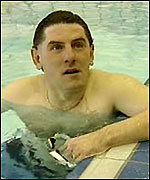 | | Peter Beardsley was fearless on the pitch but will he be as courageous in the pool? |
Another problem for children who don't learn to swim is that they can develop a fear of water and a swimming phobia later in life. Former footballer Peter Beardsley has never been able to swim, and he's been terrified of water for years. He recalls how he once got out of his depth when he was messing around in a pool with his team mates during his playing days. "I was edging towards the deep end, suddenly there was a drop in the pool, and I got into trouble", he says. Fortunately his wife Sandra was on hand to dive in and rescue him. Taking the plungeInside Out set him Peter Beardsley a challenge - to overcome his lack of swimming skills and take the plunge. His target was taking three lessons, his goal was to get his 25 metre swimming certificate. A qualified instructor put Peter through his paces, starting in the shallow end with basic floating exercises and breathing control exercises. This was designed to boost his confidence and make him feel comfortable in the water. Peter describes the experience as "more nerve-wracking" than running out for a crunch football match. But he's delighted with his progress. "I'd recommend it to anyone," he says. Back in the swimSo what's needed if we're to get children back in the swim following Peter Beardsley's example? 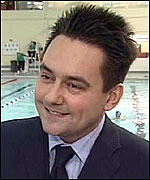 | | Twigg - hoping to get more youngsters to take the plunge |
Some sports organisations argue that more investment in community swimming facilities is needed. The Government has also responded to the issue, and recently launched a Charter to help all children learn to swim safely. The Charter gives practical advice to schools and local authorities on planning and organising swimming lessons, with guidance on encouraging more children to take part. School Sports Minister Stephen Twigg says, "I think we are progressing in the right direction, but I don't think it's acceptable for one in five 11 year olds not to be able to swim 25 metres. "I want that statistic to come down," he says. If it works, hopefully more children will learn to swim early, and not leave it as late as Peter Beardsley. | 



