LINCOLNSHIRE PEACE COMMUNITY 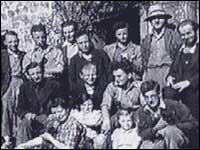 | | Conscientious objectors of the peace community |
What links the lead singer of Blur, an Oscar winning actor and a man who led 10,000 resistance fighters in the World War II? Inside Out pays a visit to the village of Holton to find out. During World War II RAF Wickenby in Lincoln was a hub of military activity from where hundreds of bombing mission were launched. One thousand and eighty of the young men involved in those missions were killed. Just a few miles away however, the neighbouring village of Holton cum Beckering, became a hotbed for the Peace Movement. A group of like minded people gathered together in this farming community, united in one belief - they were not going to fight World War II. 'Conchie'Pacifism was a popular cause for those familiar with the horrors of World War I. 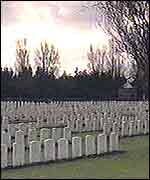 | | The personal tragedies and loss of WWI made pacifism a popular cause |
"The whole story of World War I was so overwhelming that I think many of us said we must never be part of this again," explains conscientious objector Francis Cammaerts. The Peace Pledge Union was started by priest Dick Sheppard, who'd been a chaplain to troops in the trenches. Young men were asked to sign a pledge to renounce war and become conscientious objector, or "conchies" as they were known. Although farming duties were largely taken over by land girls, replacing the farmers sent away to war, it was also something a conscientious objector could do. Many knew nothing about it but sympathetic landowners helped to set up the Lincolnshire Farm Training scheme and the community began. Mucking inTeachers, tailors, accountants, journalists, and artists all came to live and work together. They lived in basic surroundings and the work was hard. "On the whole, they were people like me who hadn't been brought up on a farm and had learnt - very painfully in my case - that seven stone weaklings had a long way to go," says Noel Makin. 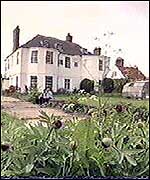 | | Holton Hall was home to conscientious objectors from a variety of professions |
Francis Cammaerts met his wife while working as a shepherd on the farm. She was the sister of Roy Broadbent one of the farm's founders. Francis admits that farming was difficult to begin with but their skills improved and they won the respect of the local community. "I found that the agricultural community in Lincolnshire were very helpful and very supportive," explains Francis. The birth of Francis' first child and the loss of his brother in the RAF made him decide there was something to fight for and he spent the rest of the war in Southern France where he became a British agent, organising 10,000 resistance fighters. Dramatic flairBack in Lincolnshire pacifist farming continued and to while away the long evenings there was drama. 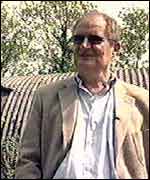 | | Jim Broadbent made his acting debut in the Holton Players dramatic society |
Known as the Holton Players, the Broadbent family were leading lights. With expansion, the group moved from Holton Hall to an old Prisioner-of-War hut, where Oscar winner Jim Broadbent first trod the boards. "There was an awful lot of opposition to what they did," says Jim. "There's a certain strength to take the line that they took." But it was not just the dramatic arts in which the community excelled. Another born in the community was John Makin who grew up in Holton Hall. He's now writing a history of the pacifist farming groups. Artistic inheritanceIt seems that flair in the arts was passed down through the generations. Edmund Albarn, grandfather of Blur's Damon Albarn was a conscientious objector living in the Holton community. 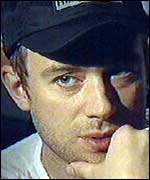 | | Damon Albarn spent childhood days visiting his grandfather at Holton Hall |
"I don't think anyone of this generation, in this country, can appreciate what a big thing it was saying you were not going to join the war effort," says Damon. The consequences of their decision were far reaching, with many pacifists attracting scorn. As an architect, Edmund Albarn was stripped of his professional qualification because of his views. Damon, a campaigner for peace himself, is full of admiration for his grandfather's resolution. "It took an enormous amount of courage," says Damon. "You were basically opting out of society and had no guarantee you were ever going to be allowed back in." The legacyThere are still conscientious objectors throughout the world where military service is compulsory. Each year they are remembered at a service in London. A memorial acknowledges their courage at taking the stance against fighting. Now 88 years old, Francis Cammaerts, a leader of the French Resistance, still remains a conscientious objector, steadfast in his belief in the futility of war. "I never stopped being a conscientious objector," insists Francis. "I know of no war which resulted in what the victors wanted to achieve." | 



