WHAT LIES BENEATH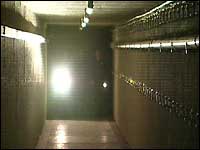 | | DEEPER UNDERGROUND | discover the wonders hidden below the surface |
Grab your hard hat and journey deep underground. Inside Out delves into the world of underground man-made structures to find out what really lies beneath your feet. Abandoned tin mines, disused nuclear bunkers and antiquated ice houses; for the Subterranea Britannica group, this is their idea of heaven. For Inside Out’s Neena Nerkar it’s an excuse to don a hard hat and get her hands dirty as she goes deeper underground. In the East Midlands, there are more caves, caverns and tunnels than anywhere else in the country, making it an ideal destination for enthusiasts Jason Blackiston and Nick Catford. They are members of Subterranea Britannica, an organisation who unearth man-made subterranean structures. Drift mines to dungeons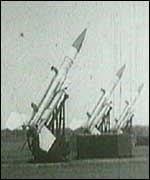 | | Nuclear attacks were a very real threat during the Cold War |
"It’s mans’ need to explore areas of the unknown. And certainly the subterranean world is very much an unknown." Jason Blackiston The organisation was formed in 1974 to bring together people with an interest in all types of underground space. From bunkers and burial chambers to drift mines and dungeons, there are at least 70 categories of underground spaces to explore. Inside Out pays a visit to just one. There are so many different types of underground spaces that most members of Subterranea Britannica specialise in just a few. A leading figure in the underworld, Jason Blackiston’s true passion is relics of the cold war period. Underground bunkers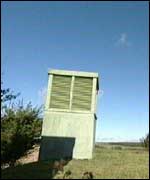 | | This ventilation shaft is the only thing to suggest a bunker lurks beneath |
During the five decades which the cold war spanned, nuclear strikes were a very real threat to the UK and her allies. In preparation for the worst, huge underground bunkers were built all over the country. One such bunker is located at Skendleby in Lincolnshire. This underground labyrinth which spans three floors and over 100 rooms would have been used by regional government if a nuclear attack demolished Whitehall in London. With the help of Subterranea Britannica, Inside Out has gained special access into this long redundant bunker. RAF Skendleby first became operational in the early 1940s and remained in use for two years as a radar station. In the 50s, the site was developed as a Ground Controlled Intercept station. It was completely modernised in the 80s to include an extra floor. The bunker is cunningly disguised from aerial view by a three bedroom bungalow which was built above. Bunker for sale| Bunker Heaven | For those of you with a passion to live deep underground and with pockets that go even deeper, here’s some suggestions as to what you could turn your decommissioned bunker into. Take a leaf out of the house music group K-Klass and turn your bunker into a recording studio - no chance of anyone stealing your songs through those concrete walls! Turn your bunker into an e-commerce server like one bunker in Sandwich Open an underground club, literally underground like one nightclub in Kirknewtown near Edinburgh |
As well as sleeping berths for 130 people, the bunker boasts decontamination showers, a radioactive filtration system, a generator that could power a small village and even a fully equipped BBC studio, ready to broadcast to other survivors. The Ministry of Defence sold ten bunker complexes in the 90s. The Skendleby bunker was bought by a Lincolnshire storage company for the sum of £150,000. But before you hammer that ‘for sale’ sign into your front garden and dash out to your nearest bunker estate agent, consider for a moment your yearly bills. Dr James Fox of the Bunker Protection Trust, warns that costs to run the bunker could exceed £60,000 a year, with £7,000 of that on electricity alone! Maybe life above ground isn’t so bad after all, although members of Subterranea Britannica may beg to differ. | 



 Inside Out - East Midlands: Monday 13th January, 2003