FILM COLLECTION’S NEW HOME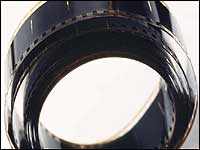 | | Flammable films are being transferred to new stock |
Inside Out has gained access to one of the country’s most important film archives. The priceless footage it contains is so flammable, that it could literally burst into flames at any time. The Imperial War Museum nitrate film store at Duxford holds footage dating back more than 100 years. Rare sepia images of the First World War, shot by the Germans, are some of its most valuable treasures. | Watch some of the footage | Holiday in Kashmir
Home movie footage shot in 1945 by Lady Eleanor Smith.. Paramount newsreel
Shot in the 1940s, troops are seen showing pictures of movie stars in their helmets. Maiden flight
Royal Air Corporation footage showing the launch of an early aeroplane. Troops in Africa
King African Rifles making their way through the scrub to the front. Building tests
The proposed design of the new nitrate film store is tested. REALPLAYER REQUIRED Footage © Imperial War Museum |
David Walsh, Head of Preservation at the archive says, "The film archive is extremely important. It has a huge range of films. "It's a great social record of life and times during the war... It's an enormously useful resource for the nation." FlammableMost of the early footage was shot on 35mm film containing nitrate, which is highly flammable. This old stock can literally burst into flames at any time. Once alight, the film will even burn under water, making it almost impossible to extinguish. Considering its fragile yet potentially hazardous composition, safely storing the archive is a huge challenge. New homeUntil recently, most of the collection’s film was stored in London. It has now moved to a new, purpose-built facility in Duxford, Cambridgeshire. 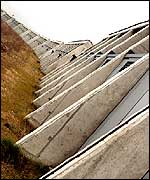 | | The separate blocks of the film archive |
The Nitrate film store is probably the most advanced in the world. It is a building comprising eleven separate blocks and experiments have confirmed that a fire in one block could be contained, and it would not spread to the rest. This ensures that if one of the rolls were to ignite, the whole collection would not be destroyed. PreservationPreserving the footage is also a constant battle. A team at the Imperial War Museum are transferring the old film onto new stock. Original equipment dating back to the 1930s is being used for this process. Currently the archive has over a 100,000 rolls of old film. Just to transfer them onto new film will take at least 20 years. | 



