Camels could be source of deadly virus
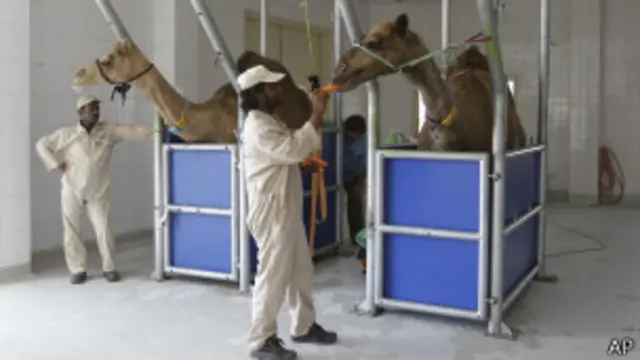
Scientists studying a deadly virus say they are closer to finding its source.
Research suggests that camels could be responsible for passing Middle East Respiratory Syndrome - or MERS - to humans. The study is published in the Lancet Infectious Diseases.
Reporter
Rebecca Morelle
Report
<link type="page"><caption> Listen to the report</caption><url href="http://http-ws.bbc.co.uk.edgesuite.net/mp3/learningenglish/2013/08/130809_witn_virus_report_130809_witn_virus_report_au_bb.mp3" platform="highweb"/></link>
This deadly virus first emerged in the Middle East last year. So far, it's infected nearly 100 people, killing about half of them - and scientists have been striving to understand how it spreads.
Now tests have revealed that dromedary camels in Oman and the Canary Islands have signs of the virus in their blood. Scientists have found antibodies that show that the animals were once infected with the Mers virus, or one that's very similar.
This, though, doesn't offer definitive proof that camels are reservoirs for the disease. For that, scientists need to look at animals from the country where the virus is most prevalent - Saudi Arabia - to see if they carry the infection. Researchers say confirming the source of the virus is a priority and will be crucial for halting its spread.




Vocabulary
<link type="page"><caption> Listen to the words</caption><url href="http://http-ws.bbc.co.uk.edgesuite.net/mp3/learningenglish/2013/08/130809_witn_virus_words_130809_witn_virus_virus_words_au_bb.mp3" platform="highweb"/></link>
striving: berusaha, berjuang
spreads: menyebar
antibodies: antibodi, zat dalam darah yang membantu melindungi dari penyakit
reservoirs: sumber
prevalent: umum
priority: prioritas
crucial: sangat penting
halting: menghentikan