Depicting Jesus
Dramatising the life of Jesus was a first for television drama, but BBC producers had to tread carefully around some sensitive and difficult concerns.
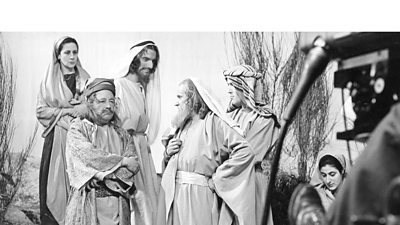

The BBC’s relationship with religion has often been a delicate one, and perhaps never more so than when, 70 years ago, they undertook a project the like of which had never been seen before. For the first time, the life of Jesus was to be dramatised for television – and not in a prime evening drama or a religious slot, but in the Sunday children’s hour…
Long preparation
Unsurprisingly for such a prestige production with so much attention focused on it, Jesus of Nazareth is very well-represented in terms of surviving paperwork stored in the BBC Written Archives.
This was an era when the pre-production for most dramas, particularly children’s ones, could usually be measured in months, and sometimes just weeks. But Jesus of Nazareth was different. “The preparation of a series of this importance should not be undertaken in less than one year,” Head of Children’s Programmes Freda Lingstrom wrote to Director of Television George Barnes in December 1954.
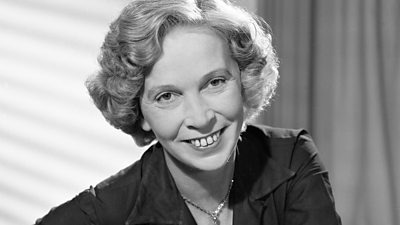
The woman assigned to undertake this task was Joy Harington, who both wrote and produced Jesus of Nazareth. One of the original seven producers recruited when the television Children’s Department had been set up in 1950, Harington had come to specialise in drama. She was assisted from a theological perspective by Robert Walton, the religious adviser to schools broadcasting, but he was far from the only figure consulted on such matters. In July 1955 a conference was held at the BBC’s Lime Grove Studios where Lingstrom, Harington, Walton and others met with experts from various educational and Christian backgrounds.
Scripts and filming
One issue of debate was how Jesus should speak. “If the less important people in the story are given vivid personalities by added dialogue the same thing will happen to the character of Jesus,” Harington wrote after that meeting, on the subject of whether words not included in Biblical texts could be put into Jesus’s mouth.
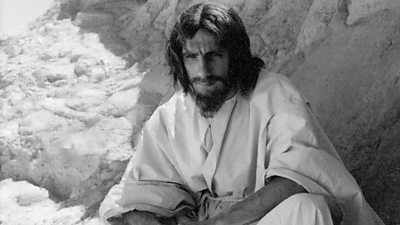
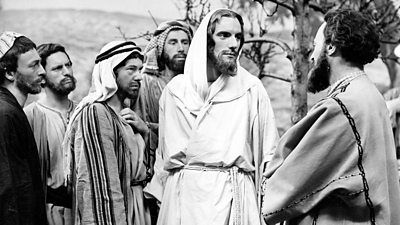
Cast as Jesus was Scottish theatre actor Tom Fleming. He had appeared in some television dramas, but appears to have been at least partly chosen as much for his religious background as for his acting ability. The son of a Baptist minister, he had also appeared on television discussing his Christian faith in the end-of-day Epilogue.
Fleming was cast early, because some of the actual production on the serial was also carried out unusually early. In the summer of 1955, Harington and a small film unit spent several weeks in Palestine shooting certain scenes on location - before even the full scripts for the serial were finished. “There, many of the scenes from the Gospel stories were re-enacted in the very places where they happened two thousand years ago,” a BBC press release in early 1956 explained.
In the studio
Jesus of Nazareth also had some filming done back home in the UK, taking advantage of what was then a new facility for the BBC – their own set of film studios. In 1955 they had taken over Ealing Studios in West London, which would be the base of their filming operations for the next forty years. At this point they would not make entire drama series on film, for a variety of reasons - chiefly budgetary. But as with Jesus of Nazareth, drama producers could sometimes afford to have certain sections shot on film. Usually, these were scenes which might be too complicated or expansive to achieve in a television studio.
As with most dramas, though, these pre-filmed sections shot on location and at Ealing made up only a certain amount of each episode. The rest would be broadcast in the same way as almost all television programmes at the time - live. For Jesus of Nazareth, this was from Studio E at Lime Grove, which was then the BBC’s main television production base, also in West London.
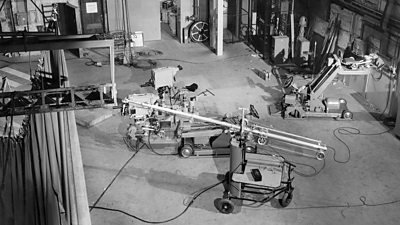
Studio E was the regular venue for children’s programmes at this point, but Jesus of Nazareth was allowed an advantage most other children’s dramas didn’t have. In common with other programmes, the cast would rehearse each episode through the week, like actors rehearsing for a stage play. Usually, such rehearsals might be in a church hall or youth club or other kind of space-for-hire. Then, cast and crew would spend the day of transmission doing ‘camera rehearsals’ on the sets in the studio, with at least one full run-through ahead of the live broadcast - which, in Jesus of Nazareth’s case, was at around 17.20 each Sunday.
But Jesus of Nazareth was allowed two full days of camera rehearsals in Studio E, on the Saturday as well as the Sunday, meaning the regular Saturday children’s programmes from Studio E, such as Whirligig, were moved to Fridays. For the eight weeks of Jesus of Nazareth’s run, up to Easter 1956, the children’s Saturday slot was therefore filled with repeats of imported Westerns on film, so that Studio E was free for the rehearsals.
This may seem like a mere behind-the-scenes technicality, but it was clearly regarded as such an unusual occurrence that it was even reported in the Children’s Newspaper. Their TV and radio correspondent, former BBC television press officer Ernest Thomson, wrote how “The normal Whirligig studio is now in use on Saturdays for the elaborate rehearsals of the plays about Jesus of Nazareth, which are broadcast on Sundays.” Another sign of the significance attached to the production from various quarters; both in the fact that it was done, and that Thomson considered it worth reporting on.
Live jeopardy
All of this careful planning and preparation, however, didn’t spare the series from some of the pitfalls of live transmission. “It was VERY unfortunate that the central character, Jesus, had to take a prompt,” Controller of Programmes Cecil McGivern wrote to Freda Lingstrom the day after the fourth episode. “It was momentary but obvious but the loud prompt made it more obvious.”
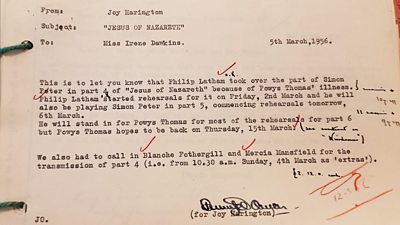
This was not the worst problem producer Joy Harington had been faced with regarding that episode, however. Also the day after it was shown, she wrote to Irene Dawkins of the artist bookings department to let her know that “Philip Latham took over the part of Simon Peter,” due to Powys Thomas being unwell. “Latham started rehearsals for it on Friday,” Harington explained - so just two days before the broadcast.
Despite these and other issues, there is no doubt that Jesus of Nazareth was widely regarded as a great success. A BBC audience research report on the opening episode noted how its ‘reaction index’ score, showing how much those responding had enjoyed the programme, was 82 – “considerably above the average (68) for the last twenty Children’s Television broadcasts.” Praise for the episode was summarised as it being “vivid and authentic” and “a valuable broadcast.”
Commenting on the same episode, the BBC’s Religious Broadcasting Officer for Scotland, Robert Falconer, wrote that he had watched it in a packed viewing room at the Edinburgh studios. “One rather hardboiled studio manager said ‘but it was done so reverently!?’ as if something else was expected!!”
Rare survivor
Harington wrote a tie-in book published in the autumn, and there was quickly demand for the series itself to be repeated. This was possible as recordings had been made of all the live transmissions; in this era before videotape was in widespread use at the BBC, though, these were film recordings, made by pointing a film camera at a monitor.
Cecil McGivern did however have some reservations about the series, and had been unhappy that some of the episodes had run much longer than the usual children’s drama standard of half an hour. Indeed, he suggested that for another run at Easter 1957 the entire series might be re-made in full, as “we ourselves would have wished to improve the script and production for next year.” McGivern even wrote that “we might have the series completely on film,” for a remake - an extraordinary suggestion when at this point the BBC had never yet made an all-film drama series. In the event, however, no remake was produced - filmed or otherwise.
Joy Harington had feared that it might not be possible to repeat the original series at all, with one memo from January 1957 noting how she “thinks some of the telerecordings will not be in a good enough condition to show them again – a small piece was cut out of No. 4 and has not been put back.” Presumably, it had been clipped out to be put on an insert reel for that section to be shown in another programme.
This was unlikely to have been a major issue, though, as the BBC held the original film recording negatives and so could have had another print of that episode struck. But it does give some sense of how fragile television history was at this point; the survival of Jesus of Nazareth to this day, and indeed the fact it was recorded in the first place, is extraordinarily rare for a BBC children’s drama of this era.
A worthwhile endeavour
But survive it did, and for a time it became an Easter tradition. It was shown again at Easter 1957 and 1958 - in seven parts rather than eight, dropping the original opening episode which had depicted Jesus as a boy. In 1960 Harington wrote and produced a sequel, Paul of Tarsus, picking up the story a few weeks after Jesus’s crucifixion and telling the story of St Paul.
Despite its acclaim and survival, the 1956 BBC Jesus of Nazareth is now comparatively obscure; eclipsed twenty years later by ITV’s all-star epic of the same title. But in terms of both its content and its production, there is no doubt that Joy Harington’s version remains a significant landmark in the history of both children’s television and religious broadcasting in Britain.
Harington summed up her own feelings on the project in a reply she wrote to a letter of congratulation - complete with bonus cheque - she had received from Cecil McGivern shortly after its conclusion.
“For myself I am deeply grateful for having been entrusted with the work which has made all the years of sometimes tedious and trivial ‘jobs’ worthwhile.”
Paul Hayes is a writer and radio producer
Links
- BBC HistoryOver 100 years of programmes celebrating unique perspectives on some of life’s big questions
- BBC iPlayerFaith and Hope
- BBC OneSongs of Praise
- BBC Radio 4Sunday
- BBC Radio 4The Daily Service
- BBC World ServiceHeart and Soul
- BBC Local RadioKeeping Faith
