

- Contributed by
- Paul O'Donovan
- People in story:
- Jerome James O'Donovan (narrator), Jim McSorley, Gnr. S. Denton, Jim Stanley, Rogers and Co and Clutterbuck, Jim Stoddart, Maj.Ruffer, Clive Singer, Lts. Crabbe and Hooton, Lt.Brenwald, Danny O’Leary, Don Porter, Don Goodenough, Col. Hunt, Frank Cheeseman, Admiral Sir Bert Ramsey, a young British soldier
- Location of story:
- Dunkirk
- Background to story:
- Army
- Article ID:
- A3510956
- Contributed on:
- 12 January 2005
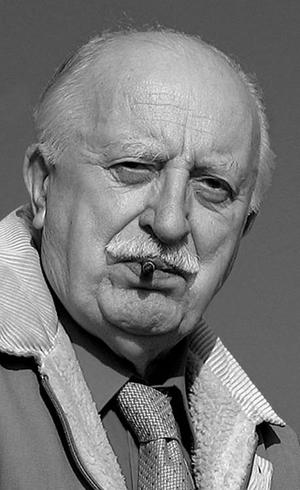
The 'Guv'nor' today at age 87
Gunner O’Donovan,J.J. 881669 169/60th Regt. H.A.A R.A T.A
10th May 1940
Tap tap on the door, and there is Mother with a cup of tea saying, “Get up, this is your last cup of tea for the next six months!” This was at 07:50....in rushes Dad, “ The Germans have broken through the Low Countries, it’s on the News!”
He was spluttering away, when I said, “ Just in time and I have to report back to Thieulloy l’Abbaye later today.”
Ma looked tearful and young Pat was morose. I packed up my kit determined to get away quickly before anybody had pronounced me as good as dead! Sandwiches, drink plus this and that, an oil lamp to read by (what a hope!). Masking our sadness, we made our farewells and Dad drove me to Ashford Station. There, I was glad to dismiss him promising to stay alive and off he went. The railway was buzzing and as the train puffed along through the white chalk tunnels, I thought of those who had gone before in the Great War.
After a rest in Folkestone, we marched down the same old Road of Remembrance. What I remember about the ship was, that Jim McSorley was attending a Lewis gun on the deck. We had been Boy Scouts together at St.Mary Moorfields.
Landed at Calais...no transport! I caught a train to Amiens to see the RTO. It was late in the evening and there was a strange feeling of agitation and excitement as the hissing trains lumbered in and out of the station. I slept at the waiting room. The RTO was overcome with all these troop movements and could give me no help at all, so I opened Mum’s sandwiches and had a feast. I went off to a Café for a drink and then went to find what had happened to my comrades. Some report said they had gone to Rotterdam but that did not seem true. (May 14th, Rotterdam was smashed by bombers, 814 killed).
I had to scrounge lifts from cars and lorries and then I saw Gnr. S. Denton who was driving a 30cwt. truck. Along with some other lost souls, he was trying to find HQ. While driving across some railway lines, the van stalled. At that very moment and to our horror, a great Nord steam train came upon us. “Get going Stan”, we all shouted and somehow his foot came to life and we rattled over the tracks, while this great train thundered by! Cooo!
When we arrived at the next village, I got off because I had caught sight of an old friend, Jim Stanley from RHQ. He was able to direct me to the gunsite at Merville Airfield, a Hurricane drome near Estaires.
I was just getting the hang of the place, (now the 18th May), when to my amazement, I spotted a hostile aircraft, a Dornier 215 approaching. This was the first time that we had actually seen the enemy, so even though I had identified the machine and alerted the guns, the GP Officer hesitated to order to fire. I shouted, “Can’t you see the black crosses?” We fired. A strange whining whistle ending with a loud explosion and a bomb had smashed a hole in front of the Command Post. We fired again and again but the Do 215 gently floated on to attack the airfield damaging a large Ensign civvy aircraft. This machine was taking on RAF personnel, and in spite of the damage, made off to the west. Not long after another plane appeared, a Henschel 126, a German reconnaisance plane which could hover quite successfully in the sky. The pilot must have noted our position and retired out of range of the guns.
Just as we were beginning to get over the excitement, there was a terrifying roar when from out of the sun three Me109s attacked us from lowdown with blasts of cannonfire. The sandbags saved us (and the prayers) but we still had two shocks in one day. For us the war had really begun. I took out my pipe, filled it with Gold Block, lit it and sat back. Did these pilots really mean to kill us? This is serious. However, we suffered no casualities. Twenty-three rounds of 3” were fired and Danny Jons reported one round of .303. The Lewis gun had quite a few stoppages and this was one.
The road that ran beside the airfield was crowded refugees, men, women and children all trying to move north to escape the enemy from the South. Struggling along this way, confused and afraid, they were still the targets for the Luftwaffe fighter pilots who mercilessly gunned them down. Dead and wounded lay in the ditches and we were helpless to defend them. Our own guns would have inflicted more suffering on them.
A party of us crossed into this road to the drome in order to help, but there was little we could do. We ranged over the airfield. There were three Hurricanes which seemed only superficially damaged by small arms fire. We looked for some food for the refugees and the little we found was handed out. We returned to our gun position and as the Merville shop is now shut we are defending...nothing! Some distance away at a little village called La Gorgue the Stukas were beginning a terror bombing while to the south could be heard the sound of artillery fire at Bethune. During the next day, it seemed to be creeping towards us, so what next?
We had received no orders, so we sat still and waited while “ nearer, clearer and more deadlier than before...” At dusk, orders camee to move north from Estaires to Armentieres and Ypres. Before leaving, I called in at a Café where the tearful proprietress gave me a memento of a corkscrew!
We were very, very slow moving as our original transport was lost to the enemy and we had collected one RAF radio van (Guy Motors and a credit to the Co), one Bren gun carrier found along the way, one three tonner and a French farm tractor. We were fortunate to have in our Battery, a number of LPTB TA gunners, expert drivers and mechanics, Rogers and Co and Clutterbuck.
We all served two 3” 1918 AA guns, not too reliable and very noisy. When we reached Armentieres, Jim Stoddart, our driver was overcome with exhaustion and as he was driving in-and-out of the streets trees, I took over the wheel! Up in the sky, hovering like a bird of prey, was a plane I recognised, a Henschel 126 waiting to guide in the next flight of bombers. Ever so slowly we pushed through the town and on to the road towards Ypres.
A strange incident occurred as we sought some rest in the Forest of Nieppe. Some fellows and I went into the forest where we found a barn and a lay down to catch up with some blissful sleep. Next day I awoke to find my comrades gone and in their place a crowd of Morrocan soldiers with their horses...and here is one standing over my inert body! These boys have lances, swords and muskets with bamboo-shaped muzzles. I scrambled from under the horse’s belly and made my way to the road where my pals were laughingly awaiting me.
Another night, another stop and we found ourselves between a Franco-German artillery duel, shots flying over our heads from both sides. While half asleep in the back of the three-tonner, our driver, a one-eyed Paddy, came off the road and tipped us on our heads...a good thing we were wearing our tin hats (weight 2 ½ pounds). Some of us were trapped by the cargo of instruments some of which were very heavy. Dazed by the crash, I managed to pull out a couple of my friends to safety where we were ordered to catch up with the convoy. Pushing our way through refugees and the French Cavalry, we hiked lifts on slowly passing vehicles. What a night! When we caught up with our CO Maj.Ruffer and reported our loss, he lost his rag and ordered us to return for the truck. We did return but found nothing. Where was it? Were we on the wrong road? Maybe, but with the enemy shelling five miles south, we gave up the search and retired. Maj.Ruffer was disgusted! Not only he, but we were too, because our small kit was lost...razors etc.. not forgetting my oil lamp for silent reading, ha ha.
Our transport was now, one Guy RAF radio van, one Bren gun carrier and this old French farmer’s tractor to carry us and these two guns. What a mess!
So, we rolled into Ypres and here we noticed that old signposts still remained from the Great War i.e Shrapnel Corner, Knightsbridge and Piccadilly.
As we pushed through this ancient city, we hoped that during this conflict no harm would come to it. We were directed along the road to La Panne, a resort for artists and during the Great War the HQ of King Albert of the Belgians. I cannot recall our vehicles ever being refuelled, but they surely were by our drivers and mechanics. They did us proud...and now we had reached the sea.
Clive Singer said he thought we would embark for Bordeaux and reenter mid France, but when we saw the sea , the smoke and the fire and heard the racket, we knew we were here to stay or.... We had now realised that the German Army had us encircled and we had no idea how to deal with the situation. However, up comes Major Ruffer with Lts. Crabbe and Hooton and briskly announces “All right, it’s Dunkirk. Turn left, go along the coast into the town”. So along we went to Dunkirk and what a mess! Bricks, glass, dead horses, burnt shops and houses. Buildings were blackened and destroyed. This was a great shock. We returned to take up a position to the East of the town and there set up the guns, a bit short on ammo, and then we waited.
The Stukas did not keep us waiting long as they had a half-hour schedule and were very punctual. By now bombing raids made on the docks had set the oil tanks ablaze and the dense smoke blew lazily along the front screening the Stuka attacks until the last moment of their fiendish, screeching dive.They were not singles but came in twenties and forties and it was noisy..and dangerous! About half a mile away were six 75mm French AA guns firing away into the air. We sooned joined in.
We carried on in this style for three days and were going down on ammo when some of our lads were detailed to go into the flaming port and unload an ammunition ship. This was dangerous work and hard, but these heroes were able to deliver the shells. What we were doing was putting up a barrage of fire which we hoped would either bring the bombers down or scare them from attacking the ships. AA gunnery is a deterrent and if you hit an aircraft it is a bonus(1940.
Up comes Maj. Ruffer breezing onto the gun park and shouts above the din “Let’s get a bit of the hot stuff, lads!” By which he meant we should take the guns down to the beach for a better engagement. We were Section Four and now we were joined by Section Three whom we had not seen for ages. (Sections One and Two had disappeared). Moving the guns down across the dunes and on to the beach was a Herculean task, but we did it. During a Stuka attack, the Command Post of Section Three was hit directly and the GPO Lt.Brenwald and his crew were killed. He was a very popular officer just recently commissioned. This was depressing news!
We were down now to twenty rounds a DAY (these old guns could fire at twelve rounds a MINUTE!), when along came the Demon King Ruffer to announce, “Up sticks and out!” Where this time?
“We’ve been ordered to engage enemy tanks out to the East.” He muttered some coordinates as we set about in a frenzy to remove the guns from the beach and to manhandle them along the eastern road. Started up, hooked up and travelling at a slow speed in the dark for about six miles, we were astonished to see a glimmer of light in a hedge. A dark figure emerged, raised his hand and said “Halt!”
In the faint light, this figure has a flash of red on his collar and hat. He approached our leading lorry and demands, “Where are you going?”. Maj. Ruffer replies, “It’s too dark to show you, but it’s at the end of the road!”
This General, for that is what he was, said, “I order you to turn round, destroy your guns and make your way back to the beach immediately”. The Major salutes and gives the order. To destroy them we should have to spike them, but we do not know how to do it and if we did there is no time. Both guns and any instruments are set about with picks and hammers but by removing the breeches they were rendered useless. Danny O’Leary, hero limber gunner of No. 2 gun, refused to jettison his breech into the nearest dyke but clutched it to his breast.
We all climbed aboard the 30cwt. van, standing room only, and waving farewell to our old weapons, set off for the beach. Now, the roads across the flat country are straight but with sharp bends and it was while our driver skidded around one of these, that Dan fell and the heavy steel breech cracked his ribs like firewood. What could we do? Well, one thing for sure and that was goodbye to the last of the gun...and into the next dyke it sank! Poor Dan was in agony and without medical care and had to wait till June for some relief!
In the early morning, we saw the extent of the Retreat. Fields upon fields were crowded with every variety of new equipment, some just arrived from the UK. Guns, lorries, loads of stores, all abandoned! It was a heartbreaking sight and the fact that we were coming back to the shore disarmed was disconcerting. We looked all around at all these men spread across the flat seashore and found it unbelievable that we should have come to such a pass. All this time our attention was taken up by the half-hourly Stuka visits with their high-pitched shrieking as they dived almost vertically on to the beaches. It was an unearthly racket and no miserable shell-hole used as a shelter could remove the feeling that this one [bomb] had my name on it!
Being short of food, Clive Singer, Don Porter, Don Goodenough and I walked back to the derelict transport lines where Clive soon found a rotor from one car to complete another, and we were away inland on a foraging expedition amongst the dumped vehicles, searching for food and fags [for our American friends, cigarettes!]. This was not without its danger, for, sweeping low along the straight road back came two Dornier 125s roaring over and ignoring us. What a relief!
We arrived back at the beach having secured enough food for our own company and indeed sufficient for our close neighbours in the dunes.
All this time our rescuers [the Royal Navy was standing off] were not left alone, two destroyers were sunk by torpedoes, a Red Cross (plainly marked and visible from the beach) steamer was set on fire and forced to retire, while a troopship hit a mine and sank with an unearthly groaning within three minutes. It would be wrong to overlook the valiant defence of the port, shipping and troops by the RAF. Operating at least sixty miles from their base, these brave fighters were engaging the enemy before he could drop his bombs, and so, were not often seen by the troops on the beach.
The houses behind us on what had been the Promenade were blazing fiercely as more shells and bombs fell upon us. Capt. T.. was sitting close to me when a sudden aerial attack almost caught us out. As I rolled away into a sand-hole, I saw him out of the corner of my eye twirled up in a cloud of sand revolving anti-clockwise to about ten feet before returning to land flat on his backside with a great thump! I am sure he did not know what had happened, for his first words were “Where’s my cap?”. It was found buried a couple of feet down. He was unhurt.
© Copyright of content contributed to this Archive rests with the author. Find out how you can use this.


 Recommended story
 Story with photo