Sea power and victory
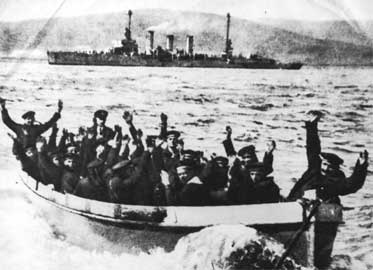
Sea power and victory On 21 November 1918, under the terms of the Armistice agreement, the most powerful units of the German High Sea Fleet surrendered to Admiral Beatty, off the Firth of Forth. This was the result of Allied victory on land, but that victory had only been possible because of Allied command of the sea. Only because of the ability to use the seas had the armies that were victorious in 1918 been supplied and maintained.
The various other land campaigns around the world also depended on the use of the sea. Sea power had maintained the Allied nations in food, fuel and raw materials. Conversely it had starved the Central Powers of all kinds of supplies, in a ruthless blockade that had contributed to their final collapse.
Germany could never have been defeated at sea as Britain could have been. Germany's army was the mainstay of her power, and the only way it could be defeated was by other armies, supported by sea power. In the words of an Admiralty paper, the Navy and the mercantile marine it supported in the years 1914-18 had been 'the spearshaft of which the Allied armies have been the point'.