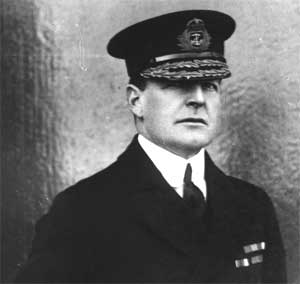
Inspired command
Contrasting leadership styles Admiral Sir John Jellicoe and Admiral Sir David Beatty were successive commanders of the British Grand Fleet. Beatty had commanded the autonomous Battle Cruiser Fleet until his elevation to full fleet command at the end of 1916, when Jellicoe was made First Sea Lord.
They were highly contrasting personalities. Jellicoe was a highly intelligent technocrat, able to calculate everything that might go wrong. This gave him a natural pessimism that prevented him taking the risks inherent in decisive action. He fully recognised the problems of commanding a huge fleet with inadequate communications, and responded with voluminous battle orders that stifled initiative. Jellicoe's natural kindness and thoughtfulness inspired loyalty, but he was not able to gain the confidence of Prime Minister Lloyd George, who sacked him at the end of 1917.
David Beatty was a very different character, flamboyant and self-confident. He shared Jellicoe's ability to inspire loyalty, and deliberately developed a charismatic image by wearing a non-regulation uniform, with his cap always at an angle. His leadership of the battle cruisers was marked by slipshod staff work, but this improved after he took over the Grand Fleet, in which he introduced more tactical flexibility.