


Only part of the story
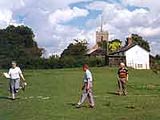
- Compiling Thriplow's story from established sources
- Getting intrigued by the local landscape
The sort of local history we had found out was very typical of what can usually be found in existing printed sources. Such information has been gathered from documents by antiquarians and scholars over the past 300 years and then published in books.
Information like this is very important but it only tells part of the story. What intrigued us was that during wet weather, hollows filled up with water, revealing straight edges and right-angles, showing that these ditches had been made by man.
'I started writing down the entries relating to Thriplow and found the reports of accidents, fires, crimes and coroner's reports ...'
Were these ditches surrounding the areas where houses had once stood? It was these 'humps and bumps' which led us on a trail of historical discovery and the formation of the Thriplow Landscape Group.
At first it was difficult to know where information about the village could be found. One of the early speakers to the Thriplow Society was Mike Petty of the Cambridgeshire Collection, part of the main library in Cambridge.
He had card-indexed all village references in the Cambridge Chronicle a newspaper that had started in 1770. So I started writing down the entries relating to Thriplow and found the reports of accidents, fires, crimes and coroner's reports fascinating.
I went into Cambridge every week and the past seen through these newspaper reports became more real than reality! I joined a class run by Cambridge University's Board of Continuing Education on Local History so that I could find out more about this fascinating subject.
Published: 2005-03-03

