Scots Mercenaries
Mercenaries were another Scots export to the Low Countries. After the Reformation Scots fought across Europe mainly on the Protestant side, most famously of all for the King of Sweden, Gustavus Adolphus, but also extensively for the Dutch United Provinces in Germany. The Dutch Brigade alone employed 1,500 Scots from 1572-1782 and some 25,000 Scots served with the Scandinavian powers in the Thirty Years War against the Holy Roman Emperor. However, mercenaries didn’t just flow in one direction. With the outbreak of the Wars of the Covenant in Scotland in 1638, ports like Veere in Holland sent many experienced Scots troops back home to fight. For a few, with luck, the life of the mercenary brought fame and fortune in the service of the great kings of Europe, but for most the prospects were bleak. Even if they survived the brutality of battle, capture often meant death, as only officers were ransomed.
The Dutch Exiles Revolution
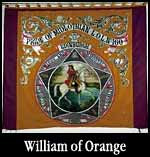 It was from Holland that an invasion of Britain was launched that allowed the Scottish exiles to return home. Late in 1688 the Dutch William of Orange invaded England with 15000 troops to drive King James II from the throne in London. James, fearing for his life, fled into exile in France.
In the wake of William’s coup a host of Scottish exiles returned to reshape Scotland by applying the new ideas they had encountered in Holland. Among them were men like Andrew Fletcher of Saltoun, defender of Scotland’s parliamentary liberties; the Earl of Argyll, involved in massive financial speculation; and William Carstares, who transformed Edinburgh University along similar lines to Leiden’s and persuaded William of Orange to agree to a Presbyterian Kirk in Scotland. Most importantly of all, these men brought new economic ideas gleaned from the Dutch money markets (the most advanced in Europe) to transform the Scots economy.
In 1695 the Scottish Parliament created two new financial enterprises both based on Dutch models: The Bank of Scotland (based on the Bank of Amsterdam) and the Company of Scotland (set up to trade in Africa and the East Indies and based on the Dutch East India Company). They were designed to increase Scottish access to credit and trade; both were founded by men with strong Dutch connections. John Holland founded the Bank of Scotland - an Englishman with extensive connections to Scottish merchants in London and Holland as well as to the East India Company; and William Paterson founded The Company of Scotland - the Scot who founded the 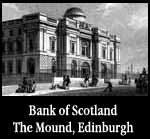 Bank of England and was highly trained in Dutch commerce.
Scotland’s horizons were expanding. The New World across the Atlantic was becoming economically successful and this altered Scotland’s relations with Europe. The European lifeline had sustained and enriched Scotland for centuries, but now the economic map was shifting. Scotland moved from the fringe of Europe into the centre of a transatlantic trading system. Trade now operated on a global scale and Scots set off around the world in pursuit of its opportunities. In the process many Scots became citizens of the world, leaving their names in the unlikeliest of places.










