Houses and palaces
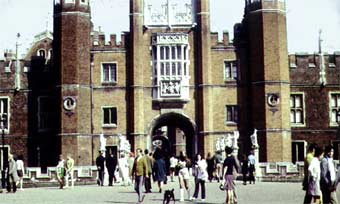
Britain has a rich heritage of great houses and palaces. Hampton Court Palace (pictured) is Britain's largest Tudor Palace but few traces remain of its origins as a manor house. The transformation began with Cardinal Wolsey who turned it into a bishop's palace after he acquired it in 1514. It later became a Royal Palace when it was taken over by Henry VIII in 1528.
If Hampton Court Palace is one of the most impressive royal palaces, Cragside House in Northumberland is a triumph of 19th century innovation and engineering. It was the home of the first Lord Armstrong who played a major role in the industrialisation of Tyneside. It had hot and running water, a hydraulic lift and electric lighting which was powered by a hydroelectric power station. In it's day, it was called a palace of the modern magician. In order to power the house, Armstrong created a series of lakes in the grounds to hold the water which was used to drive the machinery in the house.
Hampton Court and Cragside are houses of the wealthy but a lasting reminder of the development of houses for the working and middles classes can be seen in every city. Whole terraces re-erected at the Beamish Open Air Museum which offers a fascinating glimpse into life in the 19th century, where family life centred around the cast iron fireplaces. The bread was baked here, the clothes dried and the food cooked, an example of how life lived before the dawn of electricity and central heating.