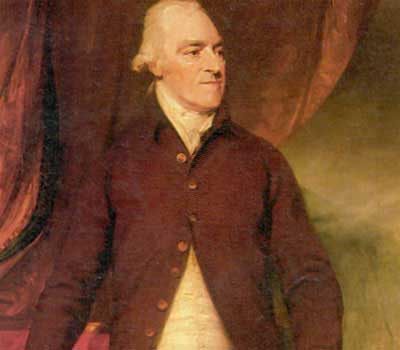
Richard Pennant, 1st Baron Penrhyn
Absentee plantation owner and politician
Richard Pennant's parents both inherited substantial plantations in Jamaica. Pennant himself was born either at sea on the way back to Britain, or in London. When he married Anne Warburton in 1765, he acquired the Penrhyn estate in Caernarvonshire. Using money generated by the sugar and rum from his family's Jamaican plantations, Pennant invested substantially in this estate, and developed a major slate industry. He built a network of roads and by 1790 had established a harbour at the mouth of the River Cegin called Port Penrhyn. From here slate was transported to London, Bristol, Liverpool and Ireland. The house on the estate was substantially remodelled.
In 1761, Pennant became MP for Petersfield. Six years later he became one of the two MPs for Liverpool, which was by this time the major slave trade port. Pennant was related through family or business connections to nearly every major absentee plantation owner in Britain, and was, therefore, part of a very powerful and influential pro-slavery network. He was chairman of the West India Committee, an organisation of merchants and plantation owners, and chair of its special sub-committee set up in 1788 to organise opposition to abolition. Its tactics included sponsoring petitions to parliament and producing pamphlets that supported the slave trade and explained its economic benefits.
In 1783 he was created Baron Penrhyn, but because this was an Irish peerage he was able to continue opposing the abolition of slavery in the House of Commons. In 1790, Pennant left the Commons and his successor as MP for Liverpool was Banastre Tarleton, who became a glamorous and high-profile campaigner against abolition.
Pennant had no children, so when he died his estates passed to his cousin's son. He and his descendants became one of the most powerful landowning families in north Wales.