Servants
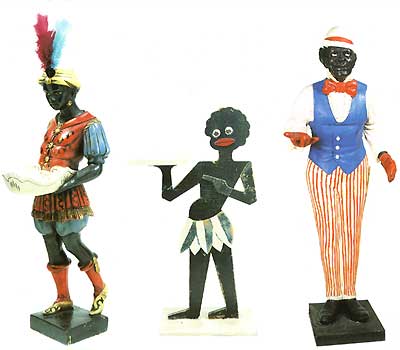
Enslaved black people worked as skilled craftsmen, carpenters, smiths and foremen. After emancipation, however, trade unions throughout the United States barred black people from skilled trades - the very trades they had performed during slavery. The few occupations open to black people were servant, entertainer or unskilled worker, resulting in common and enduring American images of black people as servants, porters, busboys, doormen, waiters or bartenders.
In the United States the status of black servants was part of what has been called 'hierarchical integration'. In his autobiography, the former slave Frederick Douglass described an episode when, as a free man accompanied by white ladies, he was attacked. He observed: 'While we are servants we are never offensive to the whites ... On the very day we were brutally assaulted in New York for riding down Broadway in company with ladies, we saw several white ladies riding with black servants.'
Hierarchical integration permits physical proximity as long as there is a clear relationship of social superiority and inferiority. In the mid-20th century, the servant status of African Americans was taken for granted.
Another major stereotype of this period showed black people as entertainers - singers, minstrels, musicians, tap dancers, and so forth. In the course of the 20th century a third category gradually opened to black people - sports.
For a long time these roles of servants, entertainers and sportspeople remained the only niche occupations open to black people and the only roles in which they were allowed to shine. Black people as figures of authority - managers, judges, scholars, generals and doctors - emerged only towards the end of the 20th century.