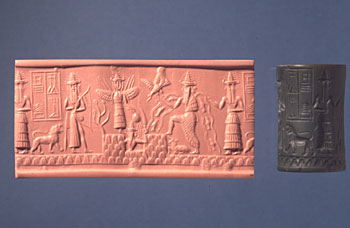
Seal of Adda
From about 5,000 BC, stamp seals, cut with simple designs, were used to mark ownership on clay sealings on storeroom doors. They were also found on the bags, baskets etc in which goods were traded up and down the Tigris and Euphrates. Around 3,500 BC, the cylinder seal was invented; it provided room for elaborately carved designs, and could be rolled over clay.
The Akkadian greenstone seal (height 3.9cm) shown here, dating to about 2,300 BC, is shown alongside its modern impression. Gods and goddesses are depicted, identified by their horned head-dresses and attributes as a hunting god, the goddess Ishtar, the sun god Shamash and the water god Enki followed by his vizier. 'Adda, scribe' is written in cuneiform above a lion, identifying the owner as a high official, who could also have sealed letters and administrative documents on clay.