The Royal Standard of Ur
In the 1920s Sir Leonard Woolley excavated at the site of Ur in southern Iraq and discovered a cemetery of unlooted graves from around 2,600 BC; this enigmatic object was found in one of them.
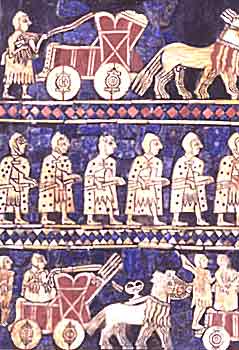
Its sides consist of two rectangular panels (height 20.3cm), decorated with scenes made from a mosaic of white shell, red limestone and blue lapis-lazuli (imported from Afghanistan) set in bitumen.
The 'War' side shows chariots charging over fallen enemies, spearmen in helmets and cloaks seizing prisoners, and prisoners escorted before the general. The chariots have solid wheels, and are drawn by donkeys whose reins go through nose-rings (spokes and bits were later inventions).
A banquet is celebrated on the 'Peace' side; a musician is shown playing the lyre, and attendants bring booty, donkeys, bulls, sheep, goats and fish.