King Pine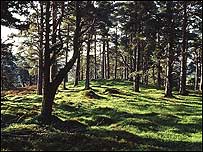 | Abernethy Forest in is one of the oldest woodlands in the Britain, renowned for its soaring Scots Pines, its stunning Ospreys, and its abundance of wildlife.
This is a great place for looking at trees and becoming a nature detective. | | Abernethy. Photo - RSPB. |
Located in the Eastern Highlands of Scotland, Abernethy is home to some amazing plants and animals and offers one of the country's unique wildlife experiences.  Pines and Martens Pines and Martens
The Abernethy Forest is one of the last remnants of the Caledonian pine forest which once covered the country. It is now the largest remaining stretch of native pinewood in Britain. The diversity of wildlife at Abernethy Forest is immense ranging from Red Squirrels feeding on the Scots Pines' cones, to birds like Grouse and Capercaillie. Also look out for Pine Martens chasing small birds through the wooded canopy. The woods support an array of specialist insects and plants. There are also 700 types of fungi, 300 species of moths, 280 types of fly, 128 varieties of spider and 900 different types of beetle. Beetles include the Timberman with its impressive, long antennae and camouflage colouring. King Pine The walk from the car park at Abernethy takes visitors through a rare Caledonian pine forest, where you can also see Red Squirrels, Grouse and Capercaillie. The walk from the car park at Abernethy takes visitors through a rare Caledonian pine forest, where you can also see Red Squirrels, Grouse and Capercaillie.
The Scots Pine is the largest and longest lived tree in the Caledonian pine forest, characterised by the distinctive pine cones at the end of their branches. The mature trees are easy to spot - they have a blue-green look to them, which distinguishes them from other conifers in the woods. When the Ice Age ended, these trees were amongst the first to re-colonise the landscape.  Birds, bugs and woods Birds, bugs and woods
Much later during industrial times the trees were used as timber for shipbuilding, and their resin was used to make glue and other products. Today they form the backbone of an eco-system on which many other plant and animal species depend. When walking through the woods, look closely and you may spot a Crested Tit looking for bugs that live on Scots Pines, or prising open its pine cones to get at the seeds inside. There's also a wealth of life on the forest floor from junipers through to blueberries (sometimes known as bilberries), which provide food for birds. Bird power Abernethy Forest is famous for its Ospreys which can be seen from the Osprey Centre in the season, with video pictures of the birds relayed back to the centre. Abernethy Forest is famous for its Ospreys which can be seen from the Osprey Centre in the season, with video pictures of the birds relayed back to the centre.
The forest is also a good place to find the Capercaillie, one of Britain's biggest birds, weighing in about the size of a turkey. Visitors can join a Caper Watch in one of the forest's hides to spot this elusive bird strutting its stuff during the breeding season. The Black Grouse is another forest resident, though smaller in size than the Capercaillie. Listen out for its distinctive bubbling noise. The best time to visit Abernethy is April to July to see birds, plants and insects. | 






