Wonderful wilderness 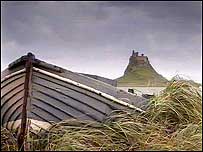 | Holy Island or Lindisfarne is a wilderness location - a place of mystery, escape and solitude - which boasts a diversity of wildlife habitats.
The island is a fantastic sanctuary for wildlife and a great place to watch birds and go rock pooling. | | Lindisfarne - diverse habitats |
Sitting on the top of the easterly section of the Whin Sill, this small island is separated from the mainland by a narrow causeway which is covered by water at high tide.
Golden beaches, blue seas and a vast array of wildlife are some of the highlights of a trip to this natural treasure trove. Rock pooling Holy Island boasts one of the most stunning beaches in Britain, and some of the best rock pools in the whole country. Holy Island boasts one of the most stunning beaches in Britain, and some of the best rock pools in the whole country.
Rock pools provide protection for marine creatures from the action of the waves and from drying out for a wide range of creatures. Rock poolers on Holy Island can expect to find crabs, sponges, anemones, starfish and pipe fish, if they know where to look and what to search out. Another good place to look for marine life is the 'strandline', where you may be lucky to make some unusual finds. But remember, you'll need to be prepared to get your hands dirty and start turning over the seaweed that gets washed up on the shore if you want to see marine life at its best. Look out for the shell cases of crabs, trapped in the seaweed, as well as creatures such as sea urchins.  Bird watching Bird watching
Holy Island has a rich diversity of marine and bird life, especially on its shorelines.
In winter about 50,000 birds visit the island and its mudflats, including Wigeons and Geese - making this a real treat for twitchers.
Bird watchers should also look out for Ringed Plovers, Redshanks, Turnstones and Oystercatchers. Roots of Christianity  Holy Island is important as one of the seats of early Christianity. Holy Island is important as one of the seats of early Christianity.
Lindisfarne Priory is the site of one of the most important early centres of Christianity in Anglo-Saxon England.
In the 7th Century, Aidan and his monks sought solace and retreat here, establishing their church and a monastery on the island in 635AD.
Another of Holy Island's most distinctive features is Lindisfarne Castle. Perched atop a rocky crag, the castle was originally a Tudor fort which was converted into a private house by Edwin Lutyens in 1903. | 






