
Features: Ten unusual and exotic vegetables to try growing and eating at home

10 unusual and exotic vegetables to try growing and eating at home
There's a quiet revolution going on in the veg patch. Carrots are making room for the return of long-forgotten delicacies such as skirret, strawberry spinach or scorzonera. Peruvian oca and yacon are the new spuds; and exotic gourds, tomatilloes and sweet potatoes are finding their way into our veg-growing repertoire too. They're also popping up in gardens all over this year's RHS Hampton Court Flower Show, and you too can be a vegetable fashionista: just follow our easy guide to growing ten of the trendiest veg around.
Amaranth
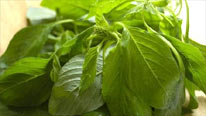
In Bangladesh amaranth is a staple crop in the vegetable garden. Known as 'dugi', several different kinds are grown and the young leaves picked and eaten like spinach: they taste similar, too. Look out for varieties adapted to our cooler conditions: 'Annapurna' makes a tall, elegant plant, or try the smaller but vividly-coloured 'Kerala Red'.
See it: at the Bangladeshi Allotment designed by Jeff Travers
Grow it: Chilly spells set amaranth seedlings back easily, so wait till May to sow seed. Choose a sunny, sheltered spot in the garden and dig in plenty of sand or grit on planting to give them the free-draining conditions they love. It may sulk when first planted out but be patient: when it gets going it will romp away. Pick young shoots frequently to keep plants productive.
Cook it: Amaranth is cooked just like spinach – it's perfect lightly steamed, sweated in butter or mixed into stir-fries. Or simply eat the youngest leaves raw in salads.
More from BBC Food: Amaranth recipes and information
Balsam pear
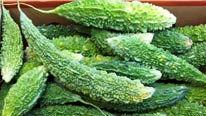
Also known as bitter gourd, balsam pear has been used in Asian cooking for years. It's a fascinating plant: like a fat, slightly pear-shaped cucumber but with deeply-cut leaves, yellow, courgette-like flowers are followed by small, warty green fruits. These mature to orangey-red and then split dramatically to reveal seeds covered in sweet red pulp.
See it: at Home Grown designed by Jon Wheatly and at Bangladeshi Allotment designed by Jeff Travers
Grow it: Balsam pears need the warmth of a greenhouse and plenty of support as they scramble around. Sow in May on a sunny windowsill and plant into good rich soil in the greenhouse borders. Pick the fruit while still green to eat the flesh, or wait until it ripens and splits for the sweet red pith: in south-east Asia this is eaten raw in salads.
Cook it: Reduce the bitterness of the green fruit by salting for 10 minutes before cooking, as for aubergines, then slice thinly and stir-fry with pork or cook in a curry with potatoes and plain yoghurt.
Chinese artichoke
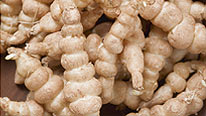
Like strings of pale, translucent beads, Chinese artichoke tubers are extraordinary vegetables to look at – so it's perhaps surprising that they're so easy to grow. Treat these clump-forming plants like Jerusalem artichokes, leaving them in the ground all winter and harvesting as needed, but watch out - they share Jerusalem artichokes' antisocial effect on your digestion!
See it: at Home Grown designed by Jon Wheatly
Grow it: Plant tubers outside in spring, about 10cm deep and 30cm apart, in good rich soil in a sunny spot. Water and feed regularly, and look out for insect damage – Chinese artichokes are prone to capsid bugs, aphids and other insects. It may help to grow them under fine mesh or fleece. The tubers form only after flowering: any you don't dig up will grow again next year.
Cook it: The knobbly tubers are a bit fiddly to clean, but you don't need to peel them: they'll lend their delicious nutty flavour to soups, stir-fries and vegetable stews.
Snake gourd
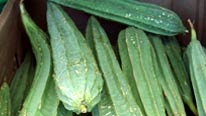
If you want to grow a real talking point, try these edible Asian gourds: with their long, twisting green fruits, you can see where they got their name. In Bangladesh these rampant vines clamber up trees: they're more restrained in a cooler UK climate, but can still put on a staggering amount of growth. The fruits taste like squash, and the shoots are delicious too – steam them like spinach or use them in stirfries.
See it: at The Girlguiding UK Centenary Garden designed by Philippa Pearson and at Home Grown designed by John Wheatly
Grow it: Sow in pots in May and plant outside in rich soil from mid-June in a sunny, sheltered spot. Provide plenty of support – in Bangladesh they're grown over large horizontal racks, raised above the ground. Snake gourds also do well in polytunnels or greenhouses, though you may not have much room for anything else!
Cook it: Slice fruit in half and scoop out the seeds, then cut into chunks and cook with chillies and spices for a delicious curry. The shoots can also be steamed or used in stir-fries.
Strawberry spinach

This extraordinary plant, related to the common weed fat hen and brought to Britain by German monks in the 1600s, just can't decide whether it's a vegetable or a fruit. You pick the leaves just like spinach, yet later in the season it starts producing spectacular sweet red fruits like wild strawberries at each leaf joint. The best thing is not to question it too much: just enjoy.
See it: at The Shakespearean Allotments designed by Barry Locke and at The Girlguiding UK Centenary Garden designed by Philippa Pearson.
Grow it: Sow strawberry spinach in modules from early spring, or direct from March onwards. Pick young leaves regularly for salads, but later in the year allow the plants to flower and fruit. If you leave a few fruits on the plants, they'll self-seed around: just pull out any you don't want next year.
Cook it: Toss young leaves and fruit in vinaigrette dressing mixed with half a teaspoon of wholegrain mustard for a colourful and tangy salad, or steam like spinach: the fruit is eaten raw or cooked into pies.
Tomatilloes
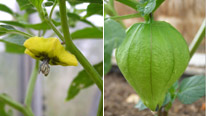
The must-have ingredient if you enjoy Mexican cooking, as tomatilloes are to salsa what potatoes are to chips. Related to cape gooseberries, the green or purple tomato-like fruit is encased in a pretty papery casing: pick and use just like a firm, tangy tomato raw in salads or chopped with coriander, lime and chilli for a truly authentic salsa.
See it: at Home Grown designed by Jon Wheatly and at The Girlguiding UK Centenary Garden designed by Philippa Pearson.
Grow it: If you can grow tomatoes, you'll find tomatilloes straightforward. They need the same conditions: a warm sunny spot in your greenhouse and plenty of water, with a liquid tomato feed every week as soon as plants begin flowering. Unlike tomatoes, they don't need support, and grow into a large bushy plant about 1m tall and wide.
Cook it: Remove the papery casing, chop finely and mix with a generous handful of chopped coriander, two cloves of minced garlic, and as much chopped chilli as you dare for a classic salsa verde.
Recipe idea from BBC Food: Chermoula-baked sea bass with quinoa, tomatillo and preserved lemon salad, spiced toasted seeds and tahini cream
Yard long beans
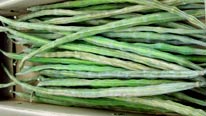
In this country a yard might be a bit optimistic for these heat-loving beans: perhaps it's better to use one of their many other names, such as asparagus bean, snake bean, or Chinese long bean. Whatever you call them, you'll need to be up for a challenge as they can be a bit tricky: but if you pull it off, you'll be rewarded with the most amazing beans you've ever grown.
See it: at Bangladeshi Allotment designed by Jeff Travers and at The Girlguiding UK Centenary Garden designed by Philippa Pearson.
Grow it: Warmth is the key. Yard-long beans require a greenhouse or polytunnel and you'll also need to be lucky with the weather. Plant in late spring into good rich soil and use tepid water to avoid shocking the plants. Once they get going they're enthusiastic climbers, so provide plenty of support.
Cook it: Pick the beans when they're still young and tender for the best flavour – they taste just like French beans and can be used as a substitute in recipes, steamed as a side dish or as an unusual ingredient in salads.
Recipe idea from BBC Food: Salad of two beans, walnuts, radicchio and croutons with beef fillet
Oca

Oca tubers are as easy to grow as spuds, and in their native Andes the translucent, pinkish-red tubers are used in just the same way, tasting like potatoes but with a pleasant lemony tang. What's more, with its clover-like leaves and buttery orange flowers, this lovely plant is attractive enough to use in your flower borders.
See it: at Home Grown designed by Jon Wheatly
Grow it: Start tubers three to a generous pot of multi-purpose compost in spring. They start slowly, so be patient and keep them in the warmth of a greenhouse until they're growing well, planting out only after all risk of frost has passed. Tubers don't form until the days get shorter in late autumn, so wait as long as you dare before digging them up.
Cook it: Give the tubers a good scrub but don't bother peeling them: just cook them like potatoes, boiling for 15-20 minutes or roasting drizzled with olive oil.
Sweet potatoes
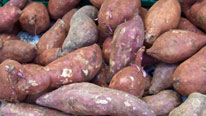
For veg with such a taste of the tropical, sweet potatoes are becoming surprisingly easy to grow here. Choose a variety that's adapted to cooler climates such as 'Beauregard' and give them plenty of room: they grow like crazy once they get going, though you'll need to keep them warm and protected from slugs.
See it: at Home Grown designed by Jon Wheatly
Grow it: Start from cuttings, or slips, three to a generous container in spring. Sweet potatoes are very cold-sensitive, so if you grow them outside plant through black polythene to keep roots warm. They also grow well in large tubs in the greenhouse: keep well-watered and you can expect plenty of big knobbly tubers in late autumn, just before the first frosts.
Cook it: Just like ordinary potatoes, either in a sweet mash (mix half-and-half with spuds if it's too sweet for you) or brushed with olive oil and baked in a medium-hot oven. Delicious.
More from BBC Food: Sweet potato recipes and information
Skirret
Skirret may have fallen out of fashion these days but in Elizabethan times it was a much-prized delicacy. You eat the finger-like roots, which look just like bunches of small parsnips: the flavour is so sweet you can eat them raw. It grows very tall, with pretty white flowers, and it's perennial: leave some roots in the ground and they'll re-grow into another plant next year.
See it: at The Shakespearean Allotments designed by Barry Locke
Grow it: If you can grow parsnips and carrots you won't have any trouble growing skirret, as they need just the same conditions. You do however need patience: it takes two years for plants to reach maturity and produce a crop. Sow from seed in March and thin to about 30cm apart.
Cook it: Eat the shoots in spring, cooking them just like bamboo shoots, or dig up the roots as needed from the second autumn onwards and steam them until tender, then serve with butter and a little salt.
Recipe idea from BBC Food: Bulgar wheat pancakes with duck and black pepper skirrets
Other takeaway ideas:
Take part

BBC iD
BBC iDBBC navigation
BBC links

BBC © 2014The BBC is not responsible for the content of external sites. Read more.
This page is best viewed in an up-to-date web browser with style sheets (CSS) enabled. While you will be able to view the content of this page in your current browser, you will not be able to get the full visual experience. Please consider upgrading your browser software or enabling style sheets (CSS) if you are able to do so.

