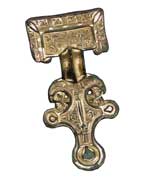
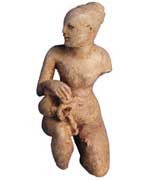
| The museum has been closed for two years to undergo a multi-million pound makeover which has effectively doubled its size and allowed many fascinating treasures to go on show for the first time. Visitors will be able to trace the story of the Cotswolds from Prehistory to the late 19th Century, with hands-on exhibits, interactive displays and a wealth of precious artefacts. There are animated and practical games, as well as audio-visual screens to bring the past to life for everyone from schoolchildren to grandparents. Roman heritage Special emphasis is placed on the town's Roman heritage, reflecting Cirencester's importance as the second biggest Roman town, Corinium, outside London. The Roman collection is now spread over two floors and includes mosaics, tombstones and sculpture as well as room and shop reconstruction's and objects from everyday Roman life. Anglo-Saxons A new Anglo-Saxon gallery has been created to house the finds - including rare gold pendants - from the cemetery uncovered at Butler's Field, Lechlade, in 1985. Here, visitors will come face to face with their ancestors in the shape of a forensically-reconstructed Anglo-Saxon man and child who were among the 219 bodies. The centrepiece of this new gallery is the reconstruction of the grave of 'Mrs Getty', the 6th Century Anglo-Saxon princess so nicknamed because of the 500 treasures buried with her. Facial anthropologist Dr Caroline Wilkinson, the expert behind BBC2's Meet The Ancestors, has painstakingly reconstructed Mrs Getty's head from clues yielded by her skull. Now, complete with body, clothes and hair, Mrs Getty appears laid out in her coffin with replicas of her 'grave goods'. The originals - around 1,500 years old - will be on display in a secure case nearby. Medieval The revamped medieval gallery focuses on the impact that the wool trade had on the town of Cirencester and its Abbey - the second largest Augustinian foundation in the country. Although almost completely destroyed during the dissolution of the monasteries, it has left a wealth of sculpture and architectural carvings. New look to the museum As well as new galleries and exhibits, the museum also has a redesigned entrance and reception area, a new, bigger shop and a fully-equipped Lifelong Learning Centre for school use, talks, seminars, lectures and community functions. Cotswold District Council's Head of Museum Services John Paddock said: "We are extremely proud of the new-look museum which has been two years and £5 million in the making. It's a unique attraction that we hope will be a source of enjoyment and inspiration for everyone who visits. We are very grateful to the Heritage Lottery Fund and all the private donors who helped the Council to make this happen." The Council's Portfolio holder for IT & Culture, Councillor John Burgess, said: "The expansion and refurbishment of the museum has been well worth the wait and tremendous effort. For the first time, it is accessible to everyone. I'm amazed by the change to the building and delighted that we have been able to treble the number of objects on show. The museum has always been the major tourist attraction in Cirencester with up to 60,000 visitors each year. I'm sure the transformation will help to make these figures even higher." Nerys Watts, South West Regional Manager for the Heritage Lottery Fund (HLF) added: "We are delighted to support this project because it has saved the fascinating Corinium Museum collections for future generations to enjoy. This important resource holds many keys to Cirencester's proud identity and will be made available for the widest possible audience to discover. The Museum is part of the Council's excellent provision for the preservation and celebration of Cirencester's heritage, which also includes the specially-built store at Northleach, where the reserve collections are cared for." | Corinium Museum, Cirencester | | Prices | Adults £3.50
Senior citizens and adult groups £2.50
Children (5 to 16) and students £2.00
Families (2 adults and 2 children) £8.00
Annual season ticket £7.50 | | Info | More info: Corinium Museum The BBC is not responsible for the content of external websites |
| 




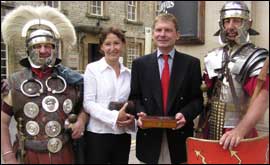
 The Corinium Museum reopened its doors on September 15 2004 after a £5m transformation which has made it one of the top visitor attractions of the Cotswolds...