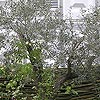
Attractive, slow-growing evergreen tree of Mediterranean origin. It forms an rounded head of small, silver-grey leaves and is tolerant of hot, dry conditions. The tiny creamy-white flowers, which are produced in summer are small and insignificant. These are followed by small, round green fruit that ripen to black. In the mediterranean they are cultivated widely for their fruits. In the Uk they are not fully hardy and require a warm, sheltered spot to thrive. Alternatively grow in a large pot and move into the shelter of a cool greenhouse over the winter months.
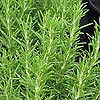
Rosmarinus officinalis Rosemary
Rosemary is one of the oldest Mediterranean aromatic shrubs in cultivation. It is still regarded as an essential culinary and medicinal herb, with an invigorating spicy flavour. As a specimen garden plant it is handsome and impressive at all times, especially when covered with its lovely flowers that attract bees and butterflies. Plant against a warm wall to help it to gain extra height, and preferably in a position where it is brushed in passing to release its lingering scent. To keep plants in shape, trim after flowering.
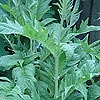
Cynara cardunculus Cardoon
An old Victorian favourite, once grown as a vegetable and blanched for use rather like celery, the cardoon is now valued for its striking silvery, thistle-like foliage which adds a theatrical touch to the border. In summer, tall flower stems are topped by fat thistle buds which resemble small globe artichokes - the plants are close cousins. The buds finally open into large purple thistles which attract lots of bees; the dead flower-heads can be left on the plants and will provide an attractive feature over the winter months. The Royal Horticultural Society have given it the Award of Garden Merit (AGM).
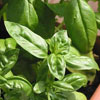
Ocimum basilicum Basil
Basil is an essential Mediterranean annual with a uniquely warm flavour that complements tomato dishes. This is the basic kind, easily raised from seed and kept productive by frequently pinching out of shoot tips for use in the kitchen. There are many other kinds of basil, often with subtly different and compulsive aromas, and all make fine pot plants for a warm sheltered spot. Outdoors they need protection from wind and frost. Always water with care, ideally before midday, and try to avoid splashing the leaves to keep them in good condition.
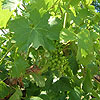
Vitis vinifera Grape vine
This grape vine is a vigorous, high-powered tendril climber, which can easily cover a house wall if left unchecked, covering it in large, lobed, bright green summer leaves up to 15cm long. The tiny green summer flowers are followed by late summer bunches of small grapes. For a Vitis with strong autumn leaf colour, go for the deep, dark purple 'Purpurea', and for tasty edible grapes grown against a sheltered, sunny garden wall, try the likes of 'Brandt' and 'Gloire de Boskoop'. Vitis can easily be cut back the moment it gets close to the guttering, ideally when dormant.
To view the panoramic image, click on the garden with your mouse and drag it around the picture. To find out about the planting hotspots in the garden, click on the leaf icon above. To start and stop the audio commentary click on the speaker icon.
If you're having problems viewing the panoramic images read our help page. Alternatively, take a look at our still photography of all of the show gardens.
"My garden celebrates the gastronomy of Catalonia with an authentic reconstruction of a vineyard and a 'tapas' vegetable patch to add an interesting twist.
"Four 300-year-old 'working' olive trees have been brought over from Torres' vineyards in the land of wine and olives. They have been cropped for fruiting and each marks a corner of the garden adding height and shade. Underneath around 100 'Garnacha' grape vines at hip height give the impression of a hanging 'hedge'.
"Roses in the colours of white, rosé pink and deep red wine fill a central raised bed. This follows on from an ancient tradition which Torres still practise today, planting a rose at the end of a row of vines. Roses, being the more vulnerable plant, succumb to disease and act as an early warning sign for grape vines."







 "My garden celebrates the gastronomy of Catalonia with an authentic reconstruction of a vineyard and a 'tapas' vegetable patch to add an interesting twist.


