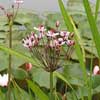
This handsome marginal plant from Asia is a splendid sight at the water's edge when grown in groups of 6-10 plants. It is sometimes known as the water gladiolus because of the attractive bi-coloured flowers, 2.5cm (1in) across and gathered in a distinctive umbel at the top of stems which are taller than the long, narrow leaves. It is happiest right at the edge of the pond where it can dip its toes in shallow water. The rhizomes, used in its native region for making flour, spread vigorously and plants should be divided regularly or flowering may decline. The Royal Horticultural Society has given it its prestigious Award of Garden Merit (AGM).
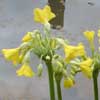
Primula florindae Giant cowslip
The largest and most impressive species cowslip. It has leaves up to 45cm long and clusters of up to 80, nodding, pale yellow flowers from July to August. Vigorous and long-lived, it thrives in moist soil which doesn't dry out, with bog gardens and stream-sides ideal. To avoid a build-up of large colonies, deadhead the plants before they get a chance to self-seed. To raise a few new plants, collect seed - which remains viable for several years - and sow when ripe or in late winter.
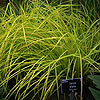
Carex elata 'Aurea' Bowles' golden sedge
A delightful dwarf sedge forming compact tufts of arching, dark green leaves, each edged with white, which give the plants a considerable sparkle. Plants look good grown towards the front of a moist border or among other plants, especially compact perennials and grasses, since they tolerate light shade. However they also look good grown at the edge of a pond, and are a useful solution to the problem of what to plant as a marginal that looks authentic but will grow in normal border soil instead of needing wet bog garden conditions. The Royal Horticultural Society has given it its prestigious Award of Garden Merit (AGM).
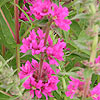
Lythrum salicaria Purple loosestrife
Purple loosestrife makes a tall wildflower that grows naturally on banks of streams and around ponds. It has strong, upright stems, topped in summer with long, poker-like heads of bright purple-red flowers. Plants look tidier if dead heads are removed occasionally. They do not need staking but, because plants can be rather vigorous, they need dividing every few years to keep within bounds. Team with other moisture-loving plants such as inula in a damp border or pondside.
Gunnera manicata Gunnera
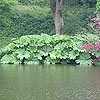
Gunnera is one of the biggest and most spectacular, architectural, herbaceous plants, commonly thought of as 'giant rhubarb'. The plants need a lot of space because it is difficult to restrict their size. They look best as specimen plants in a damp bog garden, or beside a large pond where the reflections reveal the prickly undersides of the leaves. The fat growth buds clustered in the crown are prone to frost damage, so pile the dead leaves and stems into a mound over the plants in autumn for winter protection - they make quite a feature of their own. The Royal Horticultural Society has given it its prestigious Award of Garden Merit.
To view the panoramic image, click on the garden with your mouse and drag it around the picture. To find out about the planting hotspots in the garden, click on the leaf icon above. To start and stop the audio commentary click on the speaker icon.
If you're having problems viewing the panoramic images read our help page. Alternatively, take a look at our still photography of all of the show gardens.
Vote now for your favourite garden in the BBC RHS People's Award.
"I was inspired by my many trips to the beautiful Dorset coastline, in particular The Purbecks, and the traditional use of Purbeck stone in buildings. My aim is to show the versatility of the Purbeck stone in a more natural form. I have used it to form a retaining bank, a stream/waterfall and as stepping stones as a precarious option to access the small island.
"The backdrop planting is mainly native plants, that merge seamlessly together. Flowers and foliage add hot spots and highlights the main focal points within the garden. The marginal planting and bog areas completes the overall naturalistic feel. I have incorporated the stream to add movement and sound while the timber building provides shelter with the benefit of a panoramic view. I hope the garden entices visitors and envelops them within its calm atmosphere."







 "I was inspired by my many trips to the beautiful Dorset coastline, in particular The Purbecks, and the traditional use of Purbeck stone in buildings. My aim is to show the versatility of the Purbeck stone in a more natural form. I have used it to form a retaining bank, a stream/waterfall and as stepping stones as a precarious option to access the small island.


