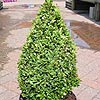
Common box is a vigorous, evergreen, bushy, upright shrub or small tree. It has small, rounded to oblong, glossy dark green leaves. Its dense habit makes it ideal for hedging or screening and it can be closely clipped into different shapes. An excellent plant to make into topiary, as you can leave a smart finish after trimming. It's best to choose the dwarf form of this shrub for low hedging to create a knot or parterre.
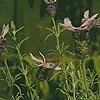
Lavandula stoechas French lavender
An attractive and unusual lavender from hot, dry Mediterranean regions, and best grown in a warm position, sheltered from cold winds and frost. It is not fully hardy, but survives well in a sunny corner or against a warm wall, and makes an excellent container plant that can be brought under cover in winter. It is an old variety, cultivated for more than 400 years, and a favourite both for its intense fragrance and also the short dense flower spikes topped with a flourish of conspicuous rich violet bracts, rather like a set of extravagant ears. The Royal Horticultural Society has given it its prestigious Award of Garden Merit (AGM).
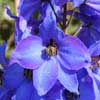
Delphinium Elatum group 'Finsteraarhorn' Delphinium
Blue is one of the rarest colours in nature, so this new, gentian-blue plant makes an attractive and unusual addition to the garden. Due to its height and delicate, elegant stems it does benefit from being staked and supported while growing. It is unfortunately rather attractive to slugs too, so young plants should be protected to ensure that they reach flowering height. Plant in well-drained, rich soil that has been enriched with organic matter and water well during flowering. The plant will flower in June or July and, if deadheaded promptly, can re-flower again in the early autumn.
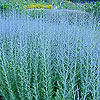
Perovskia 'Blue Spire' Perovskia
Sometimes called Russian sage, this sub-shrub produces soft grey-green foliage on white stems. The flowers resemble spikes of blue lavender. This variety has larger flower-heads and is an impressive plant, even in winter when bold groups of the white stems make an attractive feature. The deeply cut foliage smells strongly of sage when bruised. The Royal Horticultural Society has given it the Award of Garden Merit (AGM).
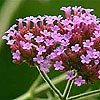
Verbena bonariensis Verbena
Tall, narrow, sparsely-leafed stems bear flattened heads of bright lavender-purple flowers that provide useful height in a herbaceous border. This is a short-lived perennial, and because it is borderline hardy, plants may be damaged by winter frosts. This may be avoided by leaving the dead stalks until spring, when new growth is evident, before cutting them back. A protective mulch should be added around them in the autumn with leaf mould or compost. They do, however, self-seed liberally and resulting seedlings are stronger and more drought-tolerant than those that are transplanted. This is a superb butterfly plant, rivalling even buddleja. The Royal Horticultural Society have given it the Award of Garden Merit.
To view the panoramic image, click on the garden with your mouse and drag it around the picture. To find out about the planting hotspots in the garden, click on the leaf icon above. To start and stop the audio commentary click on the speaker icon.
If you're having problems viewing the panoramic images read our help page. Alternatively, take a look at our still photography of all of the show gardens.
"Our inspiration stems from the verse in Shakespeare's A Midsummer Night's Dream; 'I know a bank where the wild thyme grows'. The bank quoted is built up at the back of the garden, a woodland area underplanted with wildflowers. The temple in the centre is where Titania sleeps and is filled with Iceberg white roses with musk roses climbing up the columns.
"The garden is theatrical and slightly eccentric but essentially we believe everyone can take home a little bit of it, the soft, white and blue perennial planting or the topiary box hedging.
"This is our fifteenth year at Hampton Court and it's our big advert for the year so we have to come up with something new each time. We love doing it - it's a drug, it's a passion."







 "Our inspiration stems from the verse in Shakespeare's A Midsummer Night's Dream; 'I know a bank where the wild thyme grows'. The bank quoted is built up at the back of the garden, a woodland area underplanted with wildflowers. The temple in the centre is where Titania sleeps and is filled with Iceberg white roses with musk roses climbing up the columns.


