This Portugese/Spanish lavender has long purple bracts like rabbit's 'ears' on tall stems in June and July, held well clear of the short, grey-green aromatic foliage. It needs a hot, dry, sheltered position to thrive, with excellent drainage, and withstands drought well. If you can't provide these conditions, grow in a large container and stand under cover in winter. Give a light trim after flowering, but don't cut it hard back. It is still sometimes sold as L. stoechas 'Papillon', and has been awarded the RHS Award of Garden Merit.
Echinacea purpurea Coneflower
Strong daisy shapes and large flowers, up to 15cm (6in) across, are features of this North American prairie plant which flowers from mid summer to early autumn. The flowers last well and attract bees and other insects, as well as being suitable for cutting. Echinacea is a popular component of the current trend for planting perennails in drifts, along with rudbeckias, achilleas and grasses. Seeds may be saved for sowing in spring.
Foeniculum vulgare 'Purpureum' Bronze fennel
The bronze or purple form of garden fennel (not to be confused with sweet or Florence fennel, an annual vegetable grown for its swollen bulbs) is a handsome and popular perennial, often planted on its own for impact or combined with bergamot in flower borders. With plenty of humus and water in dry weather, plants develop into magnificent clumps of airy feather foliage, crowned in late summer with large heads of tiny flowers. The seeds are as useful herbally as the leaves, and may be left to ripen as a crop.
Achillea 'Terracotta' Yarrow
Achilleas are traditional border flowers valued for their feathery foliage and striking flat, circular heads of flowers throughout the main summer season. They team well with other perennial flowers and are a vital ingredient of a traditional herbaceous border they are also at home in island beds, cottage gardens and other perennial planting schemes. The variety 'Terracotta' has beautiful blooms which open orange fading to yellow with age.
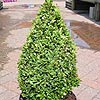
Buxus sempervirens Common box
Common box is a vigorous, evergreen, bushy, upright shrub or small tree. It has small, rounded to oblong, glossy dark green leaves. Its dense habit makes it ideal for hedging or screening and it can be closely clipped into different shapes. An excellent plant to make into topiary, as you can leave a smart finish after trimming. It's best to choose the dwarf form of this shrub for low hedging to create a knot or parterre.
To view the panoramic image, click on the garden with your mouse and drag it around the picture. To find out about the planting hotspots in the garden, click on the leaf icon above. To start and stop the audio commentary click on the speaker icon.
If you're having problems viewing the panoramic images read our help page. Alternatively, take a look at our still photography of all of the show gardens.
"The garden is designed around my thoughts of the importance of celebrating life. It is based around strong feminine lines, and is planted entirely with edible plants, but arranged for their decorative appeal, following from the French tradition, especially at Villandry. I have taken English influences from the formal parterres of the 17th century, but used medicinal plants to mark the boundaries, and feminine curves to break their harsh formality. It's the allotment I never had time to make for myself.
"I have strived throughout to keep to an impossibly low budget, growing the vast majority of the plants myself from seed, and using recycled materials as much as is possible, both to show the importance in this disposable world of reusing whenever possible, but also to inspire people to trust their imagination above their wallets."







 "The garden is designed around my thoughts of the importance of celebrating life. It is based around strong feminine lines, and is planted entirely with edible plants, but arranged for their decorative appeal, following from the French tradition, especially at Villandry. I have taken English influences from the formal parterres of the 17th century, but used medicinal plants to mark the boundaries, and feminine curves to break their harsh formality. It's the allotment I never had time to make for myself.


