Even if you don't normally like dahlias, you're sure to be swayed by the rich purple flowers tipped with white of 'Edinburgh'. It looks fabulous in late summer border and in cut-flower displays. Lift the tubers after the first frosts and bring indoors to overwinter in a frost-free place.
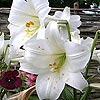
Lilium longiflorum Easter lily
Originating in Taiwan, this is a gorgeous lily. In mid-summer, it has handsome, shiny, deep green leaves and up to six, glorious, strongly and deliciously perfumed, trumpet-shaped flowers. The flowers are pure white and up to 18cm (7in) long. It's a florist's favourite and is easily and quickly raised from seed. It enjoys well-drained soil with plenty of compost added. It is also ideal in patio pots. Plant the bulbs during autumn, at two to three times their depth.
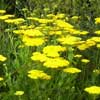
Achillea filipendulina 'Gold Plate' Yarrow
Achilleas are traditional border flowers valued for their feathery foliage and striking flat, circular heads of flowers throughout the main summer season. They team well with other perennial flowers and are a vital ingredient of a traditional herbaceous border. They are also at home in island beds, cottage gardens and other perennial planting schemes. The cultivar 'Gold Plate' has mid-green to grey-green leaves with bright golden yellow flower-heads that are 15cm (6in) across.
Dahlia 'Arabian Night' Dahlia
'Arabian Night' is a beautiful dahlia with large, fully-double flowerheads of dark burgundy-red, from June until the first frosts. It needs full sun in a sheltered site. Feed and deadhead regularly to prolong flowering. Lift the tubers after the first frost and overwinter indoors in a frost-free place. Susceptible to earwigs, aphids and slug damage, so appropriate controls should be used to help prevent these problems.
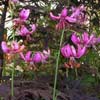
Lilium martagon Common turkscap lily
This European lily is a native of woodlands and deciduous forests, and also grows well in taller grass. As a result, it is a wonderful variety for naturalising near shrubs and trees, or in a wildflower garden where it can be planted in groups that are then left undisturbed. The bulbs are very shallow and are best kept away from cultivated borders where they may be damaged. The strange opulent colouring of the pendent flowers endears them even to gardeners who do not like the strong scent, and when planted in groups they can make a bold statement.
To view the panoramic image, click on the garden with your mouse and drag it around the picture. To find out about the planting hotspots in the garden, click on the leaf icon above. To start and stop the audio commentary click on the speaker icon.
If you're having problems viewing the panoramic images read our help page. Alternatively, take a look at our still photography of all of the show gardens.
"We are trying to represent the 1950's style of gardening, recreating a small family-owned market garden. In the last two to three years we've noticed a resurgence in the popularity of older garden plants, particularly dahlias. People are looking back and remembering what grandad grew; that they were wonderful plants. The breakthrough has been taking these plants and using them differently, to suit modern gardening. Dahlias are being grown for their dark foliage, in new planting combinations or as feature plants.
"This is what we've sought to do in this garden - put together these plants in old and new ways. We've created an allotment with a cut flower area, growing plants as they used to, in rows for cutting. Contrasting with this in the family market garden is our 'wow' border filled with a riot of colour."
Michael Mann, Operations Director, Winchester Growers, working with designers, Audrey Daw, Mary Payne and Jon Wheatley