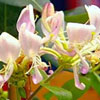
A vigorous honeysuckle with large cartwheel-shaped flower-heads made up of rings of curved, almost tubular shaped individual flowers, which open white, but often red-flushed, for most of the summer. The plants are vigorous twiners that climb rapidly up trellis or over arches, where they associate well with climbing roses or other varieties of honeysuckle. They are also superb trained up into trees or covering old tree stumps. Plant so the roots are in shade but the stems and flowers can grow out into sun.
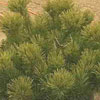
Pinus mugo subsp mugo Swiss mountain pine
The Swiss mountain pine is a spreading cone-shaped conifer, with long mid-green needles that cover its branches. As the tree grows lower branches need to be removed to reveal the trunk. Very hardy and ideal for cold areas or an exposed garden. Although it is ultimately a large tree, it?s quite slow growing and will tolerate pruning to prevent it from getting too large. Mature plants produce attractive brown cones.
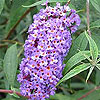
Buddleja davidii Butterfly bush
Buddleja davidii is a fast-growing and undemanding shrub from China. It is ideal for a wide range of positions in the garden, providing they are sunny and the soil is well-drained. The long, heavy flowering heads transform the bush and make a stunning display for four to six weeks, attracting clouds of butterflies. Prune hard in spring to keep plants within bounds. To propagate, take hardwood cuttings in winter.
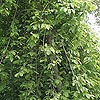
Carpinus betulus 'Pendula' Weeping hornbeam
'Pendula' isn't as small as many believe, and it quickly becomes a decent-sized tree which is invaluable at casting summer shade. The second big attraction is the way the leaves flare yellow and then orange before they fall in the autumn. If you have room for two hornbeams, 'Fastigiata' makes a fine contrast with its shape like a gigantic aerial egg, with a thick middle tapering up to point. They grow on any soil, but best of all on heavy clay.
Chamaerops humilis Dwarf Fan Palm
This is the only palm native to Europe which gives an exotic focal point in any garden with its evergreen fan-shaped leaves. It is naturally slow growing and rarely exceeds head height. Given a warm, sheltered position it's safe to plant outside, but in colder areas it's best grown in a large tub and brought indoors during the winter. The Royal Horticultural Society has given it its prestigious Award of Garden Merit.
To view the panoramic image, click on the garden with your mouse and drag it around the picture. To find out about the planting hotspots in the garden, click on the leaf icon above. To start and stop the audio commentary click on the speaker icon.
If you're having problems viewing the panoramic images read our help page. Alternatively, take a look at our still photography of all of the show gardens.
"This is a welcoming, accessible garden that offers an interactive experience. There is something for everyone, a great social space to enjoy. Innovative garden art, design, construction and planting provide opportunities for stimulation, contemplation, relaxation and play!
"The discerning gardener should also recognise that this garden is environmentally sound. The suppliers have good social policies. The materials are all from sustainable or recycled sources. The planting has an ambitious range using British and temperate varieties that will do well in our drier, milder climate and promote wildlife!"








 "This is a welcoming, accessible garden that offers an interactive experience. There is something for everyone, a great social space to enjoy. Innovative garden art, design, construction and planting provide opportunities for stimulation, contemplation, relaxation and play!


