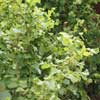
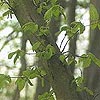
Often grown as a large, multi-stemmed shrub rather than a tree, the common hazel has large, rounded, leathery leaves. It makes a good addition to informal shrub plantings, where is forms a useful backdrop to more showy species. Plants bear attractive, long catkins in spring which are followed in autumn by edible nuts. It responds well to coppicing and the resulting straight stems can be woven into screens and rustic plant supports. It dislikes shallow soil which quickly dries out in summer.
Acer campestre Field maple
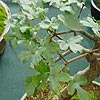
A small, native british tree which can grow in full sun or partial shade so its often found at the edge of woodland and in hedgerows. It rarely grows more than 15m tall and prefers moist, fertile soil. Young leaves are reddish-purple, turning dark green when mature, with clusters of yellow-green flowers in spring. Its winged seeds are similar to most sycamores.
Ligustrum japonicum Japanese privet
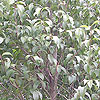
A good choice for a smart evergreen shrub flowering in late summer. It has a good, thick covering of shiny, dark green leaves all year, it makes a very effective background for the white flowers which are followed by shiny black fruit. Use in hedges or to break up a long border, giving climbers something to sprint over. Give a late winter trim for shape; if clipping hedges in late summer you'll lose the flowers.
Crataegus monogyna Hawthorn
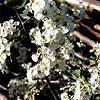
The thorny stems of hawthorn make it an ideal boundary hedge that will help keep unwelcome visitors out of the garden. This deciduous tree produces fragrant white flowers in late spring, followed by glossy dark red fruit. Trained as a hedge it will reach between 1.5 and 3m (5-10ft) in height. If grown as a formal hedge, it will need to be pruned twice a year, in summer and autumn. Grown as an informal hedge, the only pruning needed is the removal of the most vigorous shoots in winter.
Carpinus betulus Hornbeam
Similar in appearance to beech, hornbeam makes a superb specimen tree or hedging plant. Grown as a tree, it has a pyramidal shape that later becomes more rounded. As a formal hedge it requires clipping once a year in mid- to late summer to keep it looking tidy. Although it is deciduous, it retains its coppery dead leaves throughout the winter so it remains an effective screen. Green catkins appear in spring and winged nuts develop in autumn.
To view the panoramic image, click on the garden with your mouse and drag it around the picture. To find out about the planting hotspots in the garden, click on the leaf icon above. To start and stop the audio commentary click on the speaker icon.
If you're having problems viewing the panoramic images read our help page. Alternatively, take a look at our still photography of all of the show gardens.
The picture of 1950's village life in the Kent-themed Darling Buds of May pavilion is completed with an immaculate cricket pitch. Inspired by the world of the Larkin family created in the books of H E Bates the garden is set in the idyllic Kent landscape; a relaxed garden for remembering rural life fifty years ago.