Celebrating careful cultivationNew varities are unveiled in the floral abundance of the Great Pavilion. | 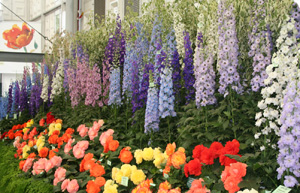 |
Plant lifeThe plant displays in the Great Pavilion have been at the heart of the RHS Chelsea Flower Show since it began, and remain the most popular part of the show. Your senses are bombarded from the moment you get inside; from the scent of thousands of flowers, to the overwhelming number of colours, shapes and textures. This is truly a plantsman’s paradise. Just as for the show gardens, this extraordinary display is the result of years of painstaking work, and never more so than when a nursery launches a new plant at Chelsea. The word "new" isn’t quite accurate - these previously unseen varieties have been around for at least eight years, hidden behind closed doors. Richard Cayeux has been known to spend 30 years perfecting an iris, and this year his 'Noctambule' came closest to the iris breeder’s holy grail - a black-and-white flower. "You have to cross-pollinate them, wait for the seedling to come up, see what colour it comes out, and then if it’s not right you have to do it again," says Anne Williams, of Cayeux Irises. About ten in every 6,000 new seedlings are marketable. Cayeux is already developing a child of 'Noctambule' which has even darker petals.  Another unmissable stand, Avon Bulbs, pulls off the impossible every year by persuading daffodils, usually well over by the end of April, to flower in late May. This year, hot weather has played havoc, but even so, they haven’t given up. "We’ve got one pot of daffodils on there," says nursery owner Chris Ireland-Jones. "Daffodils are probably the most difficult things to do in their own pots, because the foliage starts to look very manky by the time they flower if they’ve been held in cold store for a long time." It's been easier to bring forward later-flowering plants, he says, but the lilies have defeated even Avon: the entire stock aborted their flowers because it was too hot. Once they're at the show, plants must be kept in top condition every day for a week to maintain the display. The stalls don’t have extra storage space, so nurseries can’t do what many show gardens do and substitute fresher plants during the week. The only alternative is to make sure the flowers will last. "All we do is make sure they’re in very good condition before they come," says Ted Dicker, of Kelways Nurseries, whose tree paeonies - well-known for flowering spectacularly but briefly - are dropping petals, but still looking lovely. "Otherwise we don’t touch them apart from maybe a bit of deadheading." One of the lesser-known functions of the Great Pavilion is as an unrivalled source of expertise. Nurserymen spend most of their days giving advice to visitors. "It's education at the end of the day," says Rob Hardy, of Hardy's Cottage Garden Plants. "I think there are so many different varieties of plants on the market today that people get a little bit confused." Extraordinary beauty, unrivalled variety, and unrestricted access to deep horticultural knowledge: what gardener could ask for more.

| 







