Life on MarsWe talk to Best in Show winner Sarah Eberle about her garden 600 days with Bradstone. | 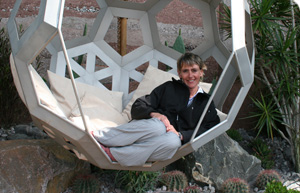 |
Life on MarsDesigner Sarah Eberle has been miles away just lately. Several hundred million kilometres away, to be exact, deep in outer space. The surface of Mars doesn’t usually inspire garden designers to create an award-winning garden - but then Sarah Eberle is no ordinary designer. 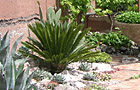 "I’ve been fascinated with space ever since I was a child,” she says. “It’s a project I’ve been working on for more than eight years now - I’ve always dreamed of getting this garden here." The garden has a small encyclopaedia of research behind it, not only into the conditions on Mars but also into how 600 days living on another planet would affect an astronaut psychologically. Sarah drew advice from the European Space Agency and the British Science Museum. "Everything on the garden is within the realms of current scientific possibility," says Sarah. Astronauts chill out in the pit-like Nap Station, and steaming pools in the garden - created using vaporisers - replicate water melting deep within the permafrost on Mars and seeping up to the surface, to be used by astronauts living there. The striking red rammed-earth walls and rusty iron metal sculpture are uncompromising enough. But it’s the planting that really sets it apart - a sparse, unforgiving mix of cactuses, aloes, agaves and cycads at one end, and exotic edibles like chillies, myrtle and figs at the other. The effect is strange, other-worldly, and utterly different. "The basic, core material is arid, because water needs to be conserved,” says Sarah, who is better known for her work with soft English wildflowers. "And the astronauts would be on a very dry, concentrated diet, so we’ve got luxury things like chillies, and things like strawberries and oranges, which are really feel-good, comfort food." Calendulas, there for their medicinal properties, are the only bright splash of colour in the garden. Sarah says the lack of colour variety was a concern at first. "If you want someone to feel comfortable, cactuses aren’t really the things to do it with," she says. "But I’m really pleased with how it’s worked, with the balance of it. Instead of just putting the same old stuff in, I‘ve had to think, how do I actually use these things." Sarah says her experience of this very different design style won’t change her usual way of working in the long term. But when such a radically different garden wins at Chelsea, it may well change the way we think about gardens for some time to come.

| 







