Bye for nowpublished at 21:20
See you same time next week!
Episode 3 is out 8pm next Wednesday the 20th of Jan.
And we'll be here with extras and to answer your questions.
Goodnight!
Episode 2 examines whether alcohol can be good for our health and if it's really possible to cure a peanut allergy
We'll be answering your questions, so send them to us using the hashtag #TrustMeImADoctor
See you same time next week!
Episode 3 is out 8pm next Wednesday the 20th of Jan.
And we'll be here with extras and to answer your questions.
Goodnight!
We did cover this subject once already, you can read it here on the website.
Allow X content?
This article contains content provided by X. We ask for your permission before anything is loaded, as they may be using cookies and other technologies. You may want to read X’s cookie policy, external and privacy policy, external before accepting. To view this content choose ‘accept and continue’.
One study in 2010 tested 86 species of plant for their effectiveness in absorbing formaldehyde, and found 9 to be excellent absorbers:
Other studies have looked at a wider range of chemicals, and house plant species which have excellent all-round absorbing ability seem to be:
You can read our full article about this here on the website.
Allow X content?
This article contains content provided by X. We ask for your permission before anything is loaded, as they may be using cookies and other technologies. You may want to read X’s cookie policy, external and privacy policy, external before accepting. To view this content choose ‘accept and continue’.
Allow X content?
This article contains content provided by X. We ask for your permission before anything is loaded, as they may be using cookies and other technologies. You may want to read X’s cookie policy, external and privacy policy, external before accepting. To view this content choose ‘accept and continue’.
We got everyone to fill out a food diary. Actually still analysing, but we don't believe there was a significant difference in calorie intake.
Allow X content?
This article contains content provided by X. We ask for your permission before anything is loaded, as they may be using cookies and other technologies. You may want to read X’s cookie policy, external and privacy policy, external before accepting. To view this content choose ‘accept and continue’.
(but only for this month)
Michael Mosley is doing 'dry January' in his attempt to find out the truth about alcohol.
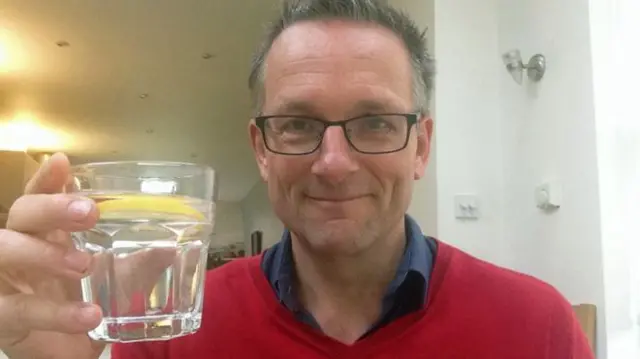
Are you sure that's not a gin & tonic?
So if you've got any questions about tonight's episode - or the rest of the series, then now is the time to ask!
We'll be here for another 20 mins doing our best to catch them all from Twitter. Just use #trustmeimadoctor
Take the test online!
Here's an iWonder guide where you can see how best to change your meals to suit your current daytime pattern.

But it's worth it!
Wow - amazing results! Everyone was surprised it 'worked' so well!
Here's those graphs again - good reductions in blood sugar, cholesterol and body fat! And a link to the stats for geeks.
Do you think you're going to give it a go? Tweet us at #trustmeimadoctor

The group that restricted their mealtimes (red) showed a significantly healthier change in blood sugar and cholesterol levels between the start and end of the experiment. They also lost body fat.
Michael tries it out
Michael writes about what happened when he altered not what he ate, but when he ate.
 Image source, iStock
I know what I'm having for dinner then...
Yep, so, microwaving is not a bad way to cook but steaming vegetables usually comes out as the best way to retain nutrients.
You can find the academic studies on our accompanying article.

Straight from your mobile phone

You can download the free Change4Life Drinks Tracker from the NHS website, external.
or are you getting the pints in tonight?
 Image source, Thinkstock
Strict new guidelines on drinking alcohol were announced by the Department of Health last week. So, what's new? Just how bad is alcohol for you and can it ever be good for you? asks this Newsbeat article.
We think it's important too.
Allow X content?
This article contains content provided by X. We ask for your permission before anything is loaded, as they may be using cookies and other technologies. You may want to read X’s cookie policy, external and privacy policy, external before accepting. To view this content choose ‘accept and continue’.
Allow X content?
This article contains content provided by X. We ask for your permission before anything is loaded, as they may be using cookies and other technologies. You may want to read X’s cookie policy, external and privacy policy, external before accepting. To view this content choose ‘accept and continue’.
You can also watch that interview again below and here on our website. Michael's been interviewing world experts on a whole range of topics over the different series, so if you want to hear the arguments for and against, say, taking statins, HRT, daily aspirin, or cutting down on salt, as well as expert advice on avoiding dementia, cancer or heart disease then do go to our page here full of them.
Prof Tim Stockwell tells Michael Mosley about the risks to health of drinking alcohol.
Really?
If you want to hear more about the evidence for alcohol having some health benefits, then you can watch that film again, or find links to the academic studies mentioned, on our website.
Dr Alexander Jones tells Michael Mosley about the potential benefits of alcohol.
There's similar treatment for bee & wasp sting allergy too.
Allow X content?
This article contains content provided by X. We ask for your permission before anything is loaded, as they may be using cookies and other technologies. You may want to read X’s cookie policy, external and privacy policy, external before accepting. To view this content choose ‘accept and continue’.
Allow X content?
This article contains content provided by X. We ask for your permission before anything is loaded, as they may be using cookies and other technologies. You may want to read X’s cookie policy, external and privacy policy, external before accepting. To view this content choose ‘accept and continue’.
You can save someone’s life if you know what to do
Here're those key 'red flags' to look out for:
Problems with Airway, Breathing and Circulation, especially alongside tell-tale rashes or skin changes.
If you see these, particularly after someone has been in contact with fish, shellfish, nuts, medicines that they haven't taken before, or if they've been stung by an insect, then check to see whether they, or anyone else have an adrenaline injection device on them.
Never be afraid to use an adrenaline device - they are simple and have full instructions on them.
If you can't get hold of one, then lie the patient down, raise their legs, and keep them calm.
If they lose consciousness, put them in the recovery position.
And always call 999, because many people will have their symptoms return.
You never know when you might be in a position to save someone's life just because you've heard this advice.
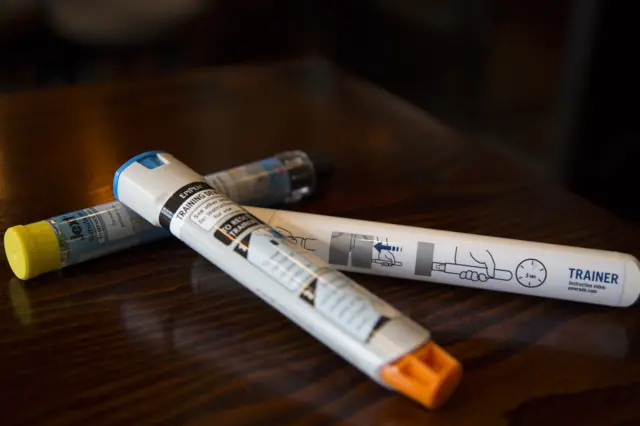
Adrenaline devices
All on the website! With stats...
Allow X content?
This article contains content provided by X. We ask for your permission before anything is loaded, as they may be using cookies and other technologies. You may want to read X’s cookie policy, external and privacy policy, external before accepting. To view this content choose ‘accept and continue’.
