See you later in the year!published at 22:20
Goodnight and goodbye - for now.
Thanks for joining us!
We're on iPlayer if you want to catch up with recent episodes.
All our topics are also easily browsable and explorable on our website.
The doctors reveal the secrets of how we can stick to those resolutions we made at New Year
Dr Chris van Tulleken reveals some unusual ways to get a better night's sleep
Michael Mosley uncovers the secret of staying motivated
Dr Saleyha Ahsan tests some revolutionary new science that could help us all easily lose weight and be healthier
Surgeon Gabriel Weston experiments with a herbal supplement said to help us drink less alcohol
Goodnight and goodbye - for now.
Thanks for joining us!
We're on iPlayer if you want to catch up with recent episodes.
All our topics are also easily browsable and explorable on our website.
Allow X content?
This article contains content provided by X. We ask for your permission before anything is loaded, as they may be using cookies and other technologies. You may want to read X’s cookie policy, external and privacy policy, external before accepting. To view this content choose ‘accept and continue’.
We know that diet changes the biome easily and quickly - but of course the key is knowing what you want to change it to and how! The Israeli team think that avoiding foods that currently give you 'sugar spikes' can change it in a beneficial way - but you'd need to be profiled by them to find out what those foods are. At the moment that's not easily possible, unless you live in Israel and are ready to sign up for their research. They are hoping to make it widely available, though (and not for profit, I believe)
Allow X content?
This article contains content provided by X. We ask for your permission before anything is loaded, as they may be using cookies and other technologies. You may want to read X’s cookie policy, external and privacy policy, external before accepting. To view this content choose ‘accept and continue’.
At the moment, the Israeli team are only recruiting people within Israel. There are places you can have your gut microbes tested, but you wouldn't get the same interpretation as you'd get from their project. Have a look at our website for more details.
Allow X content?
This article contains content provided by X. We ask for your permission before anything is loaded, as they may be using cookies and other technologies. You may want to read X’s cookie policy, external and privacy policy, external before accepting. To view this content choose ‘accept and continue’.
Yes - there are genetic collagen mutations that can affect ligaments, and probably others that I don't know about!
We do really appreciate your tweets!
Allow X content?
This article contains content provided by X. We ask for your permission before anything is loaded, as they may be using cookies and other technologies. You may want to read X’s cookie policy, external and privacy policy, external before accepting. To view this content choose ‘accept and continue’.
Allow X content?
This article contains content provided by X. We ask for your permission before anything is loaded, as they may be using cookies and other technologies. You may want to read X’s cookie policy, external and privacy policy, external before accepting. To view this content choose ‘accept and continue’.
We're still around for a bit
If you've got any questions about tonight's episode - or the rest of the series, then now is the time to ask! We'll be here for another 20 mins doing our best to catch them all from Twitter. Just use #trustmeimadoctor , external
What’s the easy way to get healthier?

Promo for What’s the easy way to get healthier? iWonder guide.
This iWonder guide reveals some easy tips on how to fit exercise and healthy eating into a busy day.
Social pressure motivates us
The evidence around doing things socially rather than on your own is mounting. In our own experiment the co-operators improved by 16% and the competitors by 30%, but that masked a lot of variation in individuals and over the weeks.
Research in the US by Dr Damon Centola is beginning to reveal that a combination of co-operation and competition might be the secret to the best results.
You can sign up online to join in with programmes such as the Workplace Challenge that harness these psychological findings to help you get more active.
There are links to the research and the Workplace Challenge on our website.
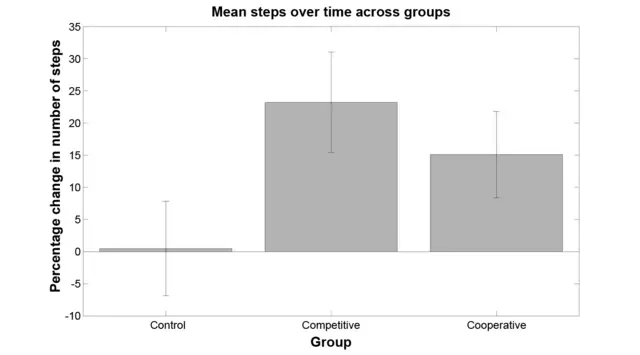
After four weeks the activity levels for our control group had only improved by 3%, suggesting that information alone is not enough to change behaviour. In contrast, our cooperators improved by 16% and our competitors by 30%, but these average improvements concealed a lot of variation within both groups.
Should it be used for back pain?
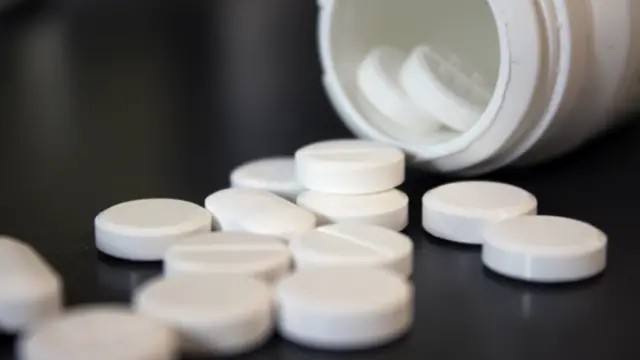
Paracetamol is thought to be useful for headaches, toothache, and reducing fever – and its action can be enhanced by taking it with caffeine. Read more on our web page.
We have previously reported on the potential for long-term, high-level use of paracetamol, so if you have chronic back pain, then you may wish to talk to your doctor about alternatives.
Weighing yourself that is!

We were pretty taken aback by the difference that putting your scales on a solid surface versus the carpet actually made. Online there are more claims that scales on a carpet over-estimate weight, whilst our consistently under-estimated, by about 10kg! It seems that that's because the little rubber sensors in the feet sink into the carpet to such an extent that the carpet ends up supporting the plastic frame of the scales we were using - hence taking some of the pressure off the sensors. You can watch the film again below and on our website.
Dr Saleyha Ahsan reveals the secrets of how to weigh yourself accurately.
Or should we all be doing the 4-5 hours of cycling a weekend plus a couple of sessions during the week that Prof Lucia recommends? Watch his interview again below and also on our website.
Michael Mosley hears Prof Alejandro Lucia on how much exercise gives us the most benefit.
So, can over-doing it damage your heart? Here's that interview with Prof Sharma again...
Michael Mosley hears Prof Sanjay Sharma's views on how much exercise is too much.
An inactive lifestyle can lead to many health problems like diabetes, osteoporosis, stroke and heart disease.
But beyond that exercise may even help keep us younger and more alert.
It is even an antidepressant.
Exercise also reduces the risk of some cancers.
For more about how British running is booming and whether there is such a thing as doing too much exercise, check out this Newsbeat article.
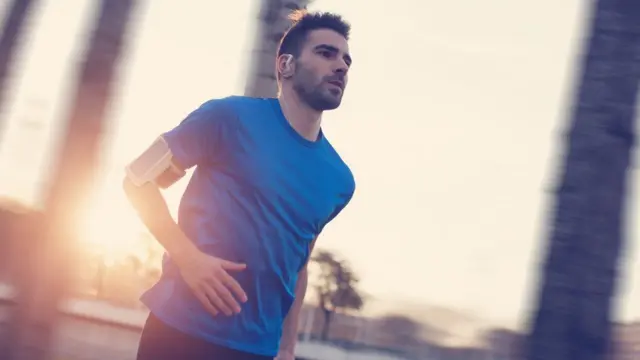 Image source, Thinkstock
Everyone's at it! Even politicians
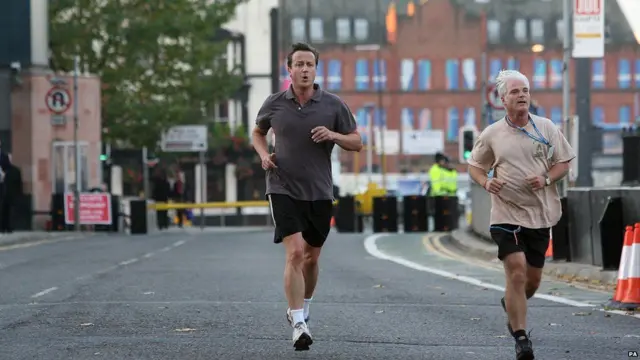 Image source, PA
Even David Cameron goes jogging - he was photographed in 2009 with MP Desmond Swayne in Manchester
A record total of 247,069 people entered the ballot for the 2016 London Marathon in April.
Last year the oldest runner was 90 (!) and this year even astronaut Tim Peake will be running the London marathon from the International Space Station.
We sure love marathons in the UK. (Although, ahem, we are the second slowest nation in Europe just ahead of Greece).
Are marathons a health boon or can they be dangerous?
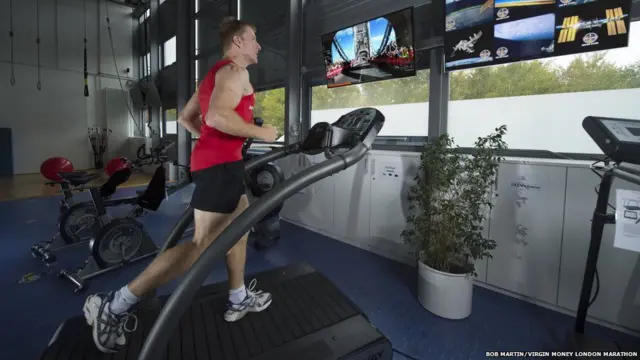 Image source, Bob Martin / Virgin Money London Marathon
Tim Peake will be running the London marathon on the International Space Station. (he'll need to wear a special harness to avoid floating away from the treadmill)
 Image source, Skeeze/Pizabay
Running outdoors uses more energy than running on a treadmill because of wind resistance: so on a treadmill you need to set it to a 1% gradient to compensate.
When running outdoors people tend to run faster than those on a treadmill without realising it. That's probably because on a treadmill your eyes aren't getting the cue from the moving scenery so you find it difficult to judge speed.
On a treadmill, although there are fewer hazards to cause injury, and the belt is shock-absorbing, because every step is exactly the same, people are more prone to overuse injuries.
So again, use varied inclines and speeds if you're running indoors. Outdoors, the varied terrain helps strengthen ligaments and improve your balance.
Outdoors runners get the added benefits of lowered blood pressure, better mental health and - during the summer - the UV light in sunshine triggers vitamin D production.
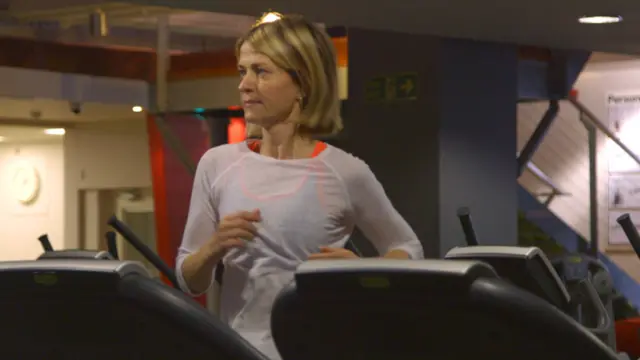
For every mile you run your feet will hit the ground about 1,000 times. Repeating the same movement puts you at greater risk of joint or ligament damage. So if you use a treadmill it's a good idea to mix it up a bit by varying the speed and the incline.
As for Michael, as he explains in this BBC Magazine article, outdoor running has clear advantages: It's far more varied and he can take his dog out with him.
A study found that in general people who exercise outdoors claimed to enjoy it more, find it more satisfying and say they are more likely to do it again...whether they actually do remains to be seen!
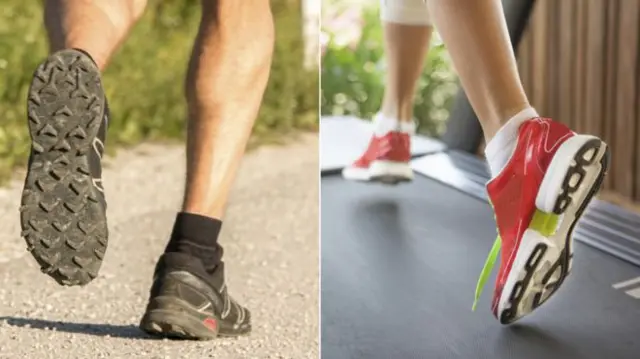 Image source, iStock
Have we been dieting all wrong?
The research in Israel is pretty revolutionary.
Here's two more clips in which Dr Eran Elinav and Prof Eran Segal talk more about their work and its implications, and there are more details on our website too.
Dr Saleyha Ahsan talks to Dr Eran Elinav about how your gut bacteria govern your health - and how you can change them for the better.
Dr Saleyha Ahsan talks to Prof Eran Segal about how more fat in your diet could be healthier - and other surprising revelations from the huge new study in Israel
Why do people put on differing amounts of weight?
Read more about Saleyha's experience in Israel - and why she can now eat ice-cream guilt free ! - in her BBC Magazine article.
 Image source, SilviaEmilie/Pixabay
Diet food?
Timely reminders and prompts at the point of decision can really help us to remember our priorities and shop more healthily. For more on the results of our experiment on food shopping see this article on our web page.

laziness!
Here are those key findings from Dr Brian Wansink at Cornell University again: