Summary

  • Each week on The Fix we try to solve an intractable social problem through innovative policy design

  • We gathered 12 of the country's brightest young minds from a range of disciplines to try and get people to drink less

  • Thank you for sending in all your suggestions on how to drink less via Facebook and Twitter @BBCRadio4 #BBCTheFix

  • Tune in to Radio 4 from 8pm to listen to the pitches and find out what the winning solution is

  1. And that's a wrap!published at 18:03 BST 6 September 2017

    Thank you for joining us for today's live blog and for all your thoughts and comments.

    The teams are now preparing and perfecting their pitches before the judges arrive.
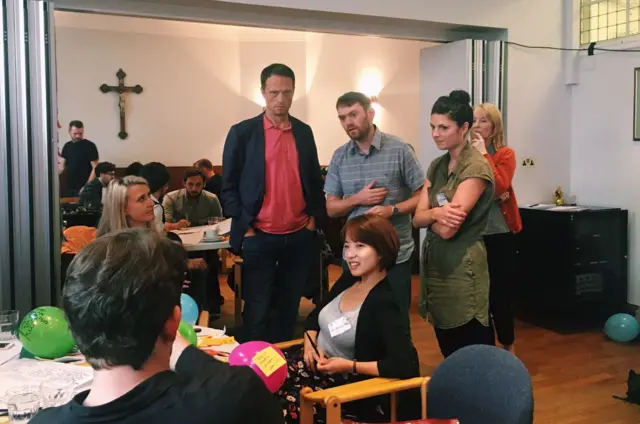
    People talking in a room

    A few listeners are thinking along the same lines as our teams, but we can't tell you which ones just yet...

    This X post cannot be displayed in your browser. Please enable Javascript or try a different browser.View original content on X
    The BBC is not responsible for the content of external sites.
    Skip X post

    Allow X content?

    This article contains content provided by X. We ask for your permission before anything is loaded, as they may be using cookies and other technologies. You may want to read X’s cookie policy, external and privacy policy, external before accepting. To view this content choose ‘accept and continue’.

    The BBC is not responsible for the content of external sites.
    End of X post
    Facebook

    You can hear exactly what they came up with, what the judges think and the victorious pitch on The Fix tonight at 8pm on BBC Radio 4.
  2. Final steer as the teams finesse their pitchespublished at 17:44 BST 6 September 2017

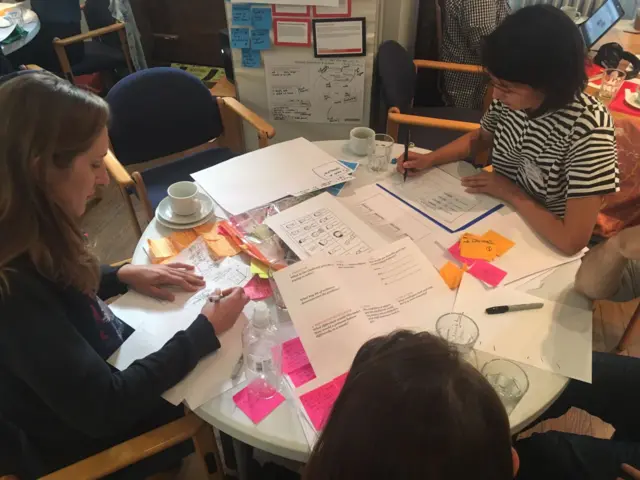
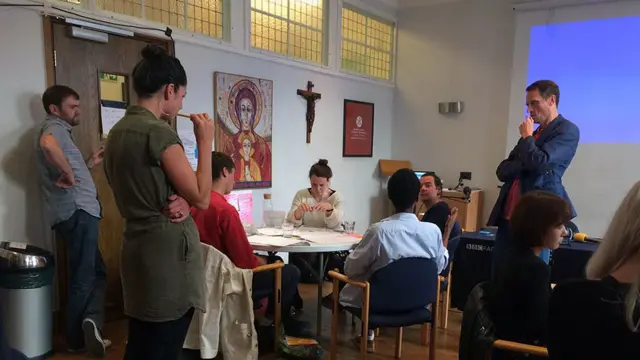
    Each team has to pitch their idea in under 90 seconds later tonight live on Radio 4 and Matthew is giving each team some feedback.

    Producer Wesley Stephenson, Cat Drew and Matthew Taylor listen to Table Two's pitch
    Image caption,

    Producer Wesley Stephenson, Cat Drew and Matthew Taylor listen to Table Two's pitch

  3. We are live on PM!published at 17:30 BST 6 September 2017

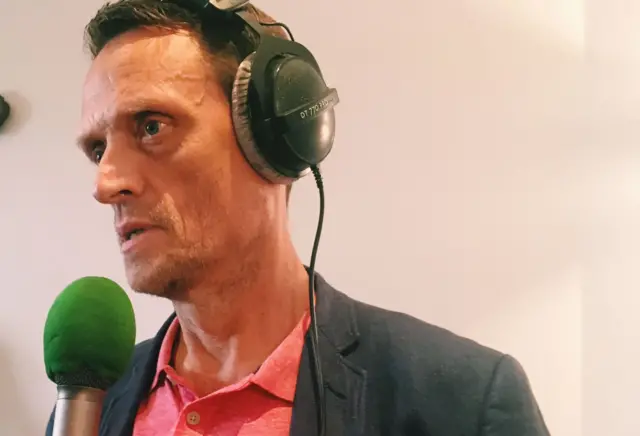
    Matthew Taylor is currently talking to Radio 4's PM about tonight's edition of The Fix where you can hear all the ideas that the teams have devised to reduce alcohol consumption.

    Listen to PM here

    Matthew Taylor talking into a microphone
    Image caption,

    Matthew Taylor talking to PM

  4. Alcohol: Britain's Most Harmful Drugpublished at 17:28 BST 6 September 2017

    Problems with alcohol touch people from every strata in society. This hard-hitting BBC Three documentary follows the stories of different people whose lives are intertwined with drinking.

    Garry's future depends on kicking his alcohol addiction, 25 year-old Nathaniel delivers alcohol after hours to some of London’s richest residents, while many young, drunk revellers are comforted by older people like 71 year old Katie.

  5. Poorest at greater risk from heavy drinkingpublished at 17:19 BST 6 September 2017

    According to a University of Glasgow study, the poorest in society are more likely to suffer the health repercussions of excessive drinking.

    The researchers found that heavy drinkers from deprived areas are at a greater risk of dying or becoming ill due to alcohol consumption.

    The authors found a "marked link" between socioeconomic status and the harm caused by drinking excessively.

    You can read the full story here

    Quote Message

    Experiencing poverty may impact on health, not only through leading an unhealthy lifestyle but also as a direct consequence of poor material circumstances and psychosocial stresses. Poverty may therefore reduce resilience to disease, predisposing people to greater health harms of alcohol.

    Dr Vittal Katikireddi, Lead author of the study

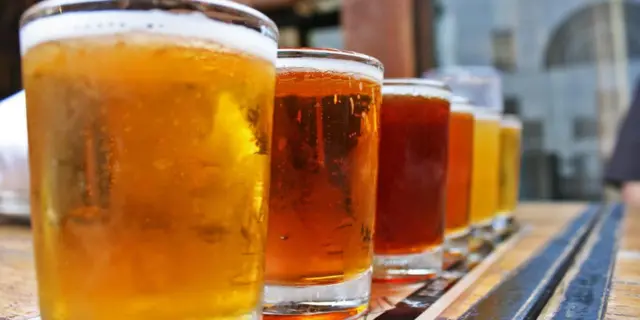
    A row of beer glasses
  6. Spot the giraffe!published at 17:15 BST 6 September 2017

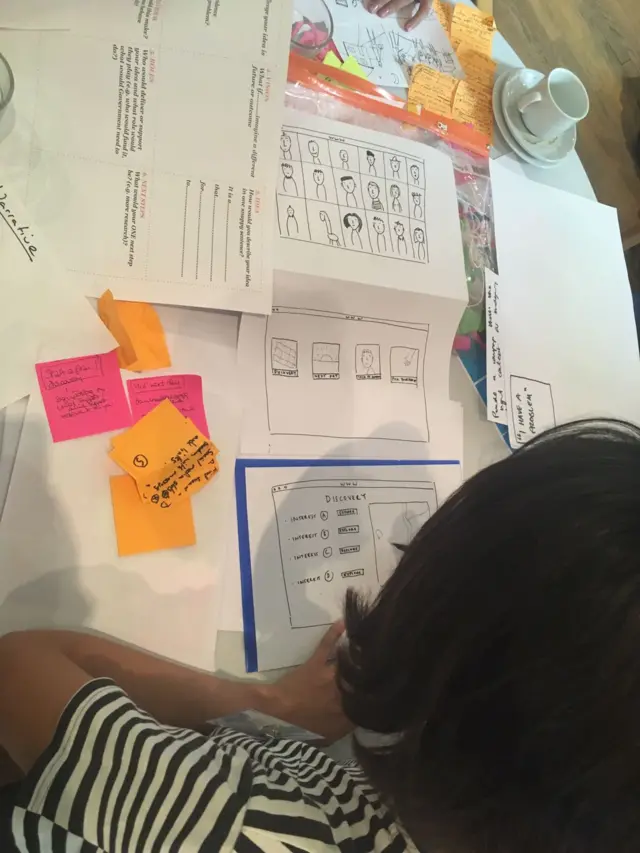
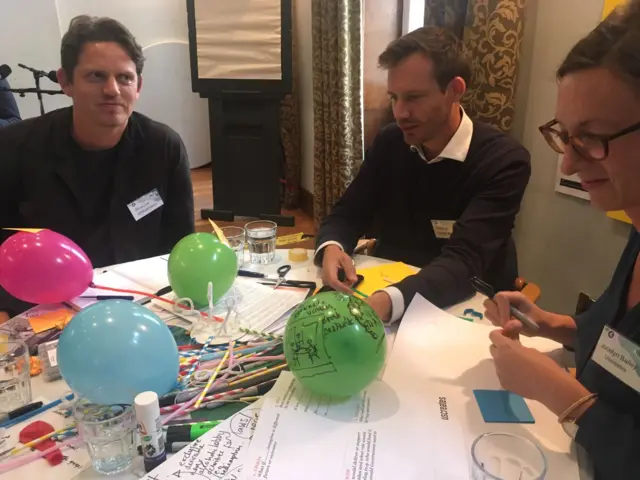
    Our teams are fully ensconced in the prototype stage and we are delighted to see some balloons are in the mix. But where does the giraffe fit in? We will have to wait to find out...

    Papers on a table
    Image caption,

    Team One's prototype plans (including giraffe)

    The Fix
    People sitting around table with balloons
    Image caption,

    Team Three and their many colourful balloons

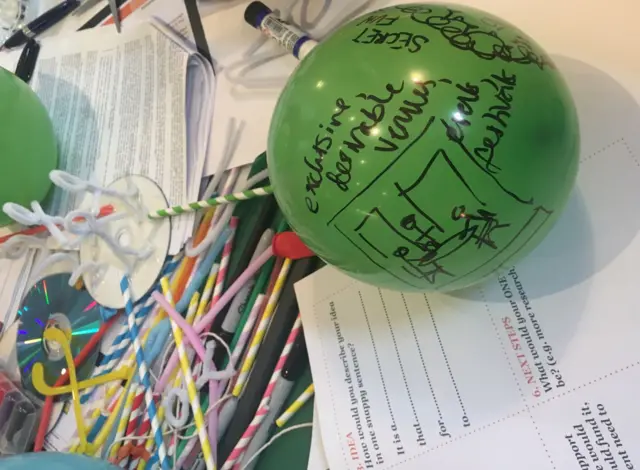
    A balloon with drawing on it
    Image caption,

    Can you read Table Three's balloon?

  7. Tongue-in-cheek ideas from the sabotage sessionpublished at 17:10 BST 6 September 2017

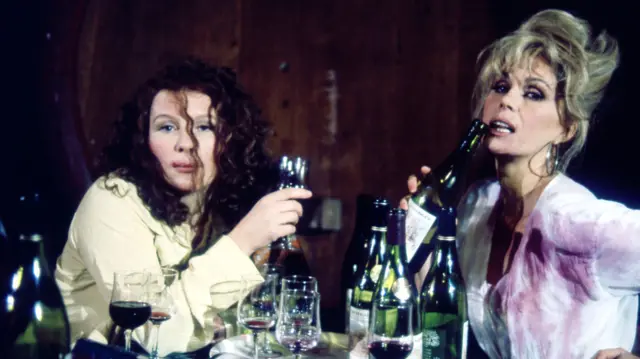
    Jennifer Saunders and Joanna Lumley in Absolutely Fabulous

    As today's challenge was to find ways to reduce alcohol consumption, lead facilitator Cat Drew asked all three teams to invert the problem. So how would you get people to drink more?

    Table one was looking at solutions for alcohol-dependent divorcee Jim. Table two was looking at an empty-nester professional couple, Jane and Peter, who were excessive casual drinkers. Meanwhile table three was targeting Kate, a young woman who was a social binge drinker.

    Suggestions to get people to drink more included drink coupons, instigating a minimum alcohol limit, making alcohol free, bullying people who don't drink and only offering support to recovering alcoholics at 11am on Wednesdays.

    Taking these wild suggestions and inverting them should help each team discover some unexpected solutions.

  8. Hundreds of solutions from Radio 4 listenerspublished at 16:50 BST 6 September 2017

    Thank you so much for all your responses. Some recurring themes have come up that have mirrored what the three teams have been discussing in their solutions, including the wider context of mental health and social norms. But also some more unusual suggestions, do keep them coming in #BBCTheFix

    This X post cannot be displayed in your browser. Please enable Javascript or try a different browser.View original content on X
    The BBC is not responsible for the content of external sites.
    Skip X post

    Allow X content?

    This article contains content provided by X. We ask for your permission before anything is loaded, as they may be using cookies and other technologies. You may want to read X’s cookie policy, external and privacy policy, external before accepting. To view this content choose ‘accept and continue’.

    The BBC is not responsible for the content of external sites.
    End of X post
    This X post cannot be displayed in your browser. Please enable Javascript or try a different browser.View original content on X
    The BBC is not responsible for the content of external sites.
    Skip X post 2

    Allow X content?

    This article contains content provided by X. We ask for your permission before anything is loaded, as they may be using cookies and other technologies. You may want to read X’s cookie policy, external and privacy policy, external before accepting. To view this content choose ‘accept and continue’.

    The BBC is not responsible for the content of external sites.
    End of X post 2
    Facebook

    Like Thomas, Table Two has been grappling with some surprisingly existential questions today.

  9. Why beer is a woman’s drinkpublished at 16:48 BST 6 September 2017

    In 2004, there was only one female head brewer in the country and women were drinking only a tenth of all the beer sold in the UK. Today that figure has nearly tripled and women all around the UK are turning to jobs in brewing.

    But why are more women suddenly developing a taste for ale and its creation? And what's the historical connection between women and brewing?

    Radio 4's The Food Programme decided to investigate...

    Media caption,

    Think beer. Think men with beards? Think again.

  10. Finally! Balloons!published at 16:43 BST 6 September 2017

    We're heading into the prototype section of the day. The teams will now attempt to build and visualise their solution in some way. This may take the form of a storyboard, a wireframe, a mocked-up magazine or a full-blown, interactive, multi-media diorama (with balloons).

    Building a simple version of their vision on a small scale ensures that all of the team are thinking along the same lines with their idea.

    What will the teams create? Watch this space...

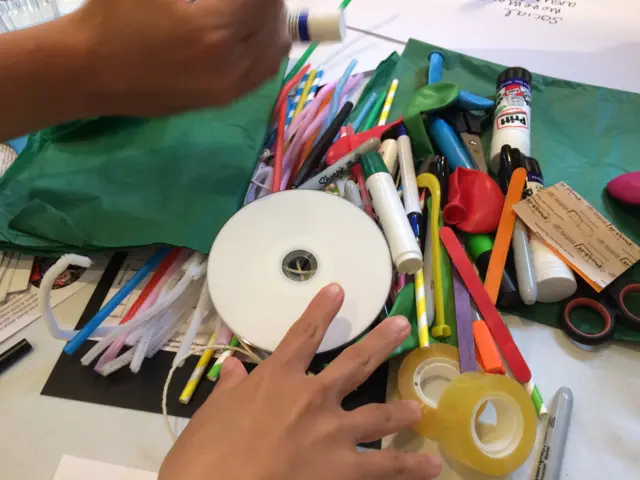
    Pens, tape, scissors and a compact disc on a table
    Image caption,

    A few of the tools that can be used for prototyping

  11. Screen break?published at 16:31 BST 6 September 2017

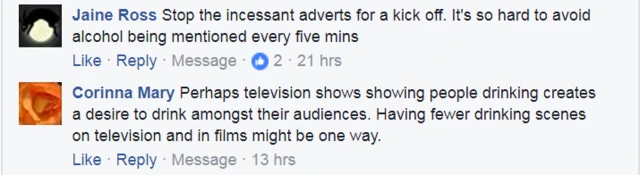
    Is alcohol consumption too prevalent on TV and in films? Is advertising too intrusive? If we saw less people in the media having a tipple, would that change our behaviour?

    Share your thoughts on the BBC Radio 4 Facebook page, external

    A facebook page showing comments
  12. How to deal with an alcoholic parentpublished at 16:26 BST 6 September 2017

    Table 1 has been tailoring their solution for "Jim", a case study of a middle-aged man who is alcohol-dependent:

    Jim admits that he always makes sure he has drink in the house and before his divorce he could be a bit dishonest with money and drink. It put a drain on the family resources which were limited, and the deception was stressful.

    But he likes to drink every day; it cheers him up and relaxes him. Importantly, it’s an important part of his work culture.

    Recently his boss took him aside to have a word about his drinking, Someone had reported to his boss that they smelt alcohol on his breath and thought that he might have been drinking in the morning before work.

    Media caption,

    It is estimated that one in five children are affected by their parents drinking

    What support is available for children with alcoholic parents? And is it possible to manage someone else’s addiction? Jane Garvey spoke to Tracy West of Nacoa, the National Association for Children of Alcoholics and Emma Spiegler, a Family Support Manager at Adfam, the charity for families affected by drugs and alcohol.

  13. Dawn Austwick is our second judgepublished at 16:22 BST 6 September 2017

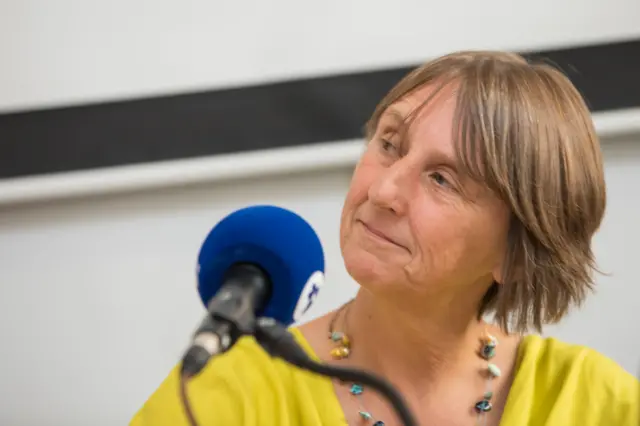
    Dawn Austwick

    As chief executive of Big Lottery Fund, in charge of an organisation that gives money from the National Lottery to community groups and charitable projects around the UK, Dawn knows how challenging it can be to tackle complex social issues. In a previous episode of The Fix, she was impressed with one group's plan to tackle childhood obesity proposed with an after-school supper club.

    Quote Message

    We thought it was very smart, taking an existing activity... and turning it into something that addresses a difficult social issue

    Dawn Austwick

  14. Who chooses the winning idea?published at 16:21 BST 6 September 2017

    Both of our judges have worked extensively in public policy and the winning solution will be announced from 8pm on Radio 4.

    Quote Message

    We're always wary of people who think they have the perfect blueprint

    David Willetts

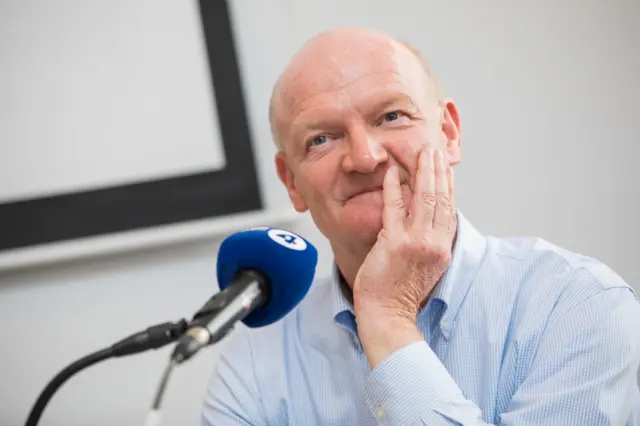
    David Willetts

    David Willetts is the Executive Chair of the Resolution Foundation. He used to be a Cabinet Minister and served as Minister for Universities and Science (2010-2014) and previously worked at HM Treasury and the No. 10 Policy Unit.

  15. What makes a winning social policy?published at 16:18 BST 6 September 2017

    The three teams are now discussing their solutions and finalising their pitches.

    Here is the winning pitch from the first episode of The Fix which looked at the housing crisis. A government-supported social housing incubator proposed finding alternative models of housing on brown sites owned by socially-minded developers.

    Media caption,

    Group 3's winning pitch proposed using brown sites owned by socially-minded developers

    What made this the winning idea? Judge David Willetts explains:

    Media caption,

    The winning idea created a space where a range of innovations and ideas could be tested.

  16. Are Britons Really Falling Out of Love With Booze?published at 16:13 BST 6 September 2017

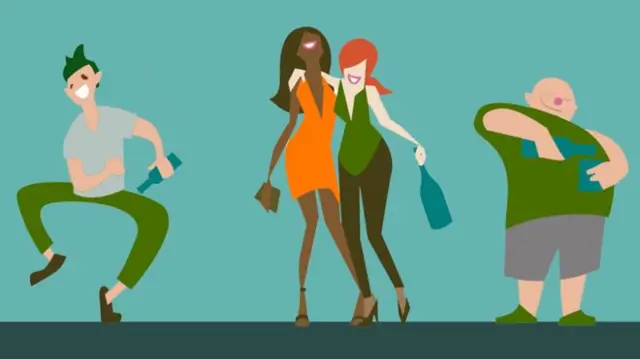
    A cartoon image of young people drinking

    Back in the 1950s, alcohol consumption per head was below four litres of pure alcohol a year - the equivalent of about 140 pints of beer.

    Since those times we have, understandably, started to drink less. But are we losing the taste for a tipple altogether?

    A 2016 poll of nearly 8,000 Britons found just under 60% had had a drink in the past week - the lowest rate since the survey began in 2005.

    Of those who had not had a drink, half were teetotallers.

    But are people really cutting back or rather deluding themselves about their alcohol intake?

    More on the stats and their consequences

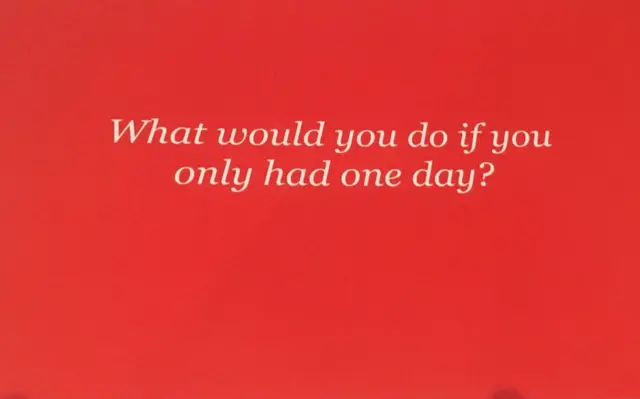
  17. What would you do if you only had one day?published at 16:12 BST 6 September 2017

    The three teams have had some pretty interesting responses to the "change cards" ranging from the BBC filming a reality show that highlights drinking alternatives, to making non-drinking abuse a hate crime.

    Send in your suggestions on Twitter #BBCTheFix or leave us a comment on Facebook, external.

  18. A cultural shift?published at 16:05 BST 6 September 2017

    Do we glamourise, promote and facilitate excessive drinking too much as a society?

    This X post cannot be displayed in your browser. Please enable Javascript or try a different browser.View original content on X
    The BBC is not responsible for the content of external sites.
    Skip X post

    Allow X content?

    This article contains content provided by X. We ask for your permission before anything is loaded, as they may be using cookies and other technologies. You may want to read X’s cookie policy, external and privacy policy, external before accepting. To view this content choose ‘accept and continue’.

    The BBC is not responsible for the content of external sites.
    End of X post
  19. More choice?published at 15:59 BST 6 September 2017

    Could offering a wider range of alcohol-free beers help to reduce consumption?

    What do you think? Join the conversation on the BBC Radio 4 Twitter page, external

    This X post cannot be displayed in your browser. Please enable Javascript or try a different browser.View original content on X
    The BBC is not responsible for the content of external sites.
    Skip X post

    Allow X content?

    This article contains content provided by X. We ask for your permission before anything is loaded, as they may be using cookies and other technologies. You may want to read X’s cookie policy, external and privacy policy, external before accepting. To view this content choose ‘accept and continue’.

    The BBC is not responsible for the content of external sites.
    End of X post
  20. What would the BBC do?published at 15:47 BST 6 September 2017

    The teams are now moving on to another exercise in disruptive thinking.

    Cat has asked every team member to write down their answers to a series of "change cards" deliberately written to elicit provocative responses.

    What would you do if you only had one day?Image source, Uscreates
    • What if you simply exaggerated what we have now?
    • What would you do if alcohol was banned?
    • What would Instagram do to solve this problem?
    • What would the BBC do?

    Then from a list of around 100 ideas the teams have to choose their top three.