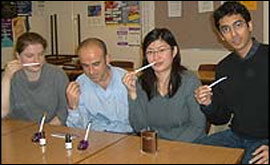
| Scents do not just appear in your conditioner, deodorant or air freshener by accident. There are people whose life's work it is to design the aromas which prompt us to buy certain products or wear a particular perfume - and many are learning their art at a Devon university. Students from across the globe are attracted to the University of Plymouth's BA in Business and Perfumery. A post-graduate course, run in tandem with Versailles University, and several distance learning programmes are also on offer. The lives of most trademark smells, whether a top notch high fashion fragrance or a humble loo block, start in the same place - in one of the leading creative fragrance companies, such as IFF, Quest or Firmenich . The maker of a shampoo or a washing powder briefs several of the top companies to come up with a fragrance for their product. This process begins in their evaluation departments, which are populated by the kind of students being taught in Plymouth. 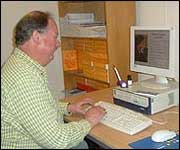 | | The course aims to teach an international language of odour. |
Their fragrance ideas are then passed on to the creative perfumer - the so-called nose - who performs the sensory alchemy which transforms a number of raw ingredients (including essential oils and chemicals) into the desired fragrance. "No fragrance is created by one person alone any more. It's a debate between marketing, the perfumer and the evaluator," said Dr Tony Curtis, the Plymouth courses' creator. "I always say the perfumer is the author and the evaluator is the commissioning editor." Once the fragrance has been created to fit the brief it is shipped out in liquid form to the factories where it is incorporated into the required product. But, as Dr Curtis points out, the creation of the smell is often nothing to do with functionality but is about evoking an emotional response from the consumer. "It's about getting the product to speak to you," says Dr Curtis. "Odour is about a cue, if you want something to be caring we know in this industry how to create a caring fragrance, likewise if you want it to be revitalising we know how to do that." So students on the undergraduate course at Plymouth - which Dr Curtis says is unique in Europe - learn a mix of marketing and perfumery and a vital skill they are taught is the ability to recognise a plethora of smells. 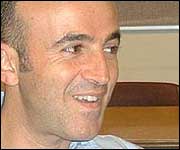 | | Perfumery student Marios Nicolaou is looking for a competitive edge. |
In addition to memorising each individual scent, students also have to master a new lexicon to describe the aromas. "What we are teaching is an international language of odour which any perfumer will recognise," said Dr Curtis. "Students have to learn a standard vocabulary so they can communicate properly with others in the industry." By the end of the four-year course they can identify and describe up to 400 different smells. And students get a glimpse of the world of fragrance during their year-long placement in the industry. "During that year they are working with perfumery noses and major customers and they get to see the whole creative process, it is very inspiring," said Dr Curtis. The placement also helps students keep track of the ever-changing trends emerging within the world of fragrance. Just as the top-end catwalk trends eventually find their way into the likes of Top Shop and Miss Selfridge, so the high-end fragrances eventually end up in high street personal care products. |