 | 28 October 2014 |

| |
| BBC Homepage | | |
| |||
| Contact Us | | |
Nature FeaturesYou are in: Devon > Nature > Nature Features > Dartford warblers on the decline 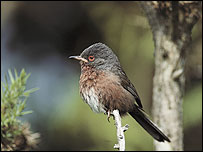 Warbler Dartford warblers on the declineBy Laura Joint The RSPB is alarmed over a sharp decline in the number of Dartford Warblers at previous strongholds in East Devon. Dartford Warbler FactsDartford warblers are amber listed as a bird of conservation concern because of their historical population decline and because more than 50% of the UK population of the species breeds at 10 or fewer sites. They are also a Species of European Conservation Concern. They were previously on the red list, but their population has more than doubled over the last 25 years. A UK wide survey of the birds has been carried out this year. It is the first national survey since 1994. The heathland bird the Dartford warbler has mysteriously disappeared from places in East Devon where it was once a common sight. The Royal Society for the Protection of Birds (RSPB) in Devon is baffled as to why the bird has declined - and in some cases disappeared altogether - at previous strongholds. RSPB wardens have monitored sites this summer, and the findings are alarming. There has been a dramatic drop in numbers at the charity's Aylesbeare Common nature reserve, and at two other areas - Lympstone Common and Venn Ottery nature reserve - there was no sign of the bird. Before the winter, there were several pairs at Lympstone Common and Venn Ottery.  Heathland on Aylesbeare Common (Andy Hay, RSPB) One possible explanation for their loss is the cold 2005-2006 winter. Dartford warblers mainly eat insects and spiders which die in cold weather. If the birds can't get enough to eat, they lack the fuel to keep themselves warm at night and die. Aylesbeare warden Toby Taylor said: "This is really worrying news. "There have been good numbers of Dartford warblers at sites like Lympstone Common and the Devon Wildlife Trust's Venn Ottery nature reserve over the last couple of years, but when we monitored the sites this summer we didn't record any at all. "It's possible that the birds have suffered the effects of the cold winter we had. "It is too early to be sure of the reason behind the disappearance of the birds from some of the East Devon sites, but the results of the national survey are definitely going to make interesting reading," added Toby.  The bird is in decline on Aylesbeare Common Some sites in neighbouring Dorset have also seen declines. However, the colony on Exmoor appears to be unaffected, which is why the RSPB is so mystified. The preliminary findings are part of a national RSPB survey, which is to be published next year, 2007. Dartford warblers nearly became extinct in the UK in the mid 20th century, and were hit hard by the severe winter of 1962-3 when the population dropped to just 10 pairs. The RSPB's work to restore heathland contributed to the bird's recovery nationally, and their numbers grew to nearly 1,700 pairs in 1994. This is the first survey since 1994, and the results next year will give conservationists an idea as to whether the East Devon decline is simply a blip, or part of a wider picture. last updated: 22/02/2008 at 12:41 SEE ALSOYou are in: Devon > Nature > Nature Features > Dartford warblers on the decline   
| ||||||||||||||||||||
| | About the BBC | Help | Terms of Use | Privacy & Cookies Policy |

