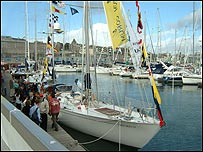
The last time Gipsy Moth IV was in Plymouth, the little boat attracted crowds of 250,000. The date was 28th May 1967, and the yacht had just circumnavigated the world with Devon yachtsman Francis Chichester. The voyage had taken 274 days and it was the first true circumnavigation via the three Capes of Hope, Leeuwin and Horn, making only one stop. | "If I could ask Chichester anything I would ask him how on earth he did it! There are six of us on board and we are finding it difficult at times. " | | Peter Heggie, Plymouth |
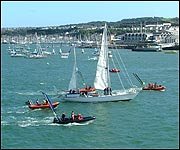
Chichester, from Shirwell in North Devon, was knighted by the Queen for his record breaking achievement, which was made all the more remarkable by the basic facilities on board the 53ft ketch. Almost four decades later Gipsy Moth IV has had a £650,000 makeover ahead of another circumnavigation of the globe. This time the voyage will have 28 stopovers (Chichester had only one, Sydney, Australia for urgent repairs) and will give over 80 disadvantaged young people the opportunity of a lifetime. On Sunday 25th September a flotilla of boats, with horns sounding and flags flying, escorted the yacht past Plymouth Hoe where hundreds of people cheered her off to Gibraltar. In the sky above an historic Gipsy Moth bi-plane flew past in salute. The yacht is scheduled to return to Plymouth in May 2007 - the 40th anniversary of Chichester's triumphant arrival in the port. Chichester hated the boat, describing her as "cantankerous and difficult," and she never sailed again. At the end of the round-the-world voyage, the boat was taken to dry dock at Greenwich, where she remained until she was rescued in November 2004. She was saved by a partnership of the charity, The United Kingdom Sailing Academy (UKSA); Yachting Monthly magazine; and the Maritime Trust. They bought the vessel for the princely sum of £1 and a Plymouth gin and tonic. Since then, renovations costing £650,000 have taken place at Camper and Nicholson, the Hampshire yard where Gipsy Moth was originally built. She's now kitted out with all mod cons and the latest navigational aids, in readiness for her new challenge. The route is different this time, and it's not a single-handed voyage. There will be three skippers used in rotation, starting with Richard Baggett. There will also be a skipper's mate, crew leader, and three young adults on each of the 28 voyage legs. The young adults have severe learning difficulties, are from disadvantaged backgrounds or are suffering or recovering from cancer. Instead of taking the route of the three horns, the voyage will go via the Panama Canal and Suez Canal. During the stopovers around the globe, local youngsters will get the chance to learn sailing skills on board Gipsy Moth. Anna Symcox of Cowes-based AKSA - where Gipsy Moth is now based - says the project has received support from many people, including yachtswoman Ellen MacArthur and the Chichester family. 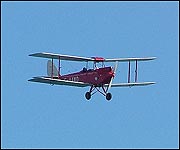 | | Gipsy Moth bi-plane |
"Francis Chichester's son Giles will be in Plymouth for the start of the trip. He has given us his full support. "We are hoping that lots of people will be out to see Gipsy Moth start her voyage, and we know that quite a few people will be in their small boats when she leaves." Every day the crew make a video diary allowing people back home to keep up with the yacht's progress on the web. If all goes according to plan, Gipsy Moth will sail back into Plymouth in May 2007. After that, she will return "home" to Cowes, and it's hoped that money can be raised to ensure she remains in tip-top condition. Anna said: "We're still looking to raise another £400,000 to secure the boat's future and make sure she doesn't get back into the state she was in before." Sir Francis Chichester died in 1972 and is buried in his home village of Shirwell. Watch Sir Francis Chichester's historic arrival back in Plymouth after his famous round the world voyage in 1967.
 Gipsy Moth IV archive > Gipsy Moth IV archive >
Audio and Video links on this page require Realplayer
|
|