BBC HomeExplore the BBC
This page has been archived and is no longer updated. Find out more about page archiving.

24 September 2014
CumbriaCumbria
FEATURES

BBC Homepage
England
ยปCumbria
News
Sport
Junior Football
Travel
Weather
Entertainment
Message Board
Video Nation
Enjoy Cumbria
Communities
In Pictures
Webcams
Features
Faith
Diverse Cumbria
BBC Bus
Digital Lives
Comic Relief
Abolition
RaW
BBC Local Radio
Site contents

Contact Us


Discoveries
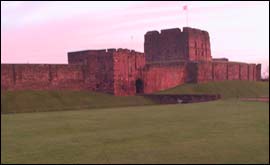
Carlisle Castle
Important finds were made on the Castle Green

If you live, work or shop in Carlisle, you're walking on centuries of buried history.

Rachel Burnett investigates Carlisle's rich Roman heritage.

SEE ALSO

Innovation - How York and Wallsend make the most of their Roman heritage.

Future - What can Carlisle do to seize the opportunity presented by archaeologists?

BBC History

Your History
Explore the history of your family, home, community or town; listen to voices recording key events and memories, create a historical record yourself or join the debate about your community.

WEB LINKS

Roman Empire

Council for British Archaeology

Oxford Archaeology North

University of Bradford

Carlisle City Council
The BBC is not responsible for the content of external websites.

FACTS

The Romans arrived in Carlisle in 1AD and didn't leave for nearly 350 years.

Staff at the Central Methodist Church in Carlisle keep a box of real Roman sandals in the office cupboard! They were found on the site.

Scientists think a body louse (yuk!) found in a Roman cesspit in Carlisle is the oldest in the world.

Residents in the Stanwix area of the city can say they live on Hadrian's Wall, literally. It runs straight under their homes!

Over 80,000 objects were discovered on the Castle Green in Carlisle during the Millennium dig.

A dig on the site of The Lanes shopping centre in Carlisle was the largest ever in a northern Roman town.

A medieval traffic accident was unearthed before Debenhams was built in 2000. A donkey and cart were found crumpled up in a ditch.

Temporary forts line Botchergate. They were used by Roman troops venturing over the border to Scotland.

Roman armour found on Castle Green has only been found once before in Britain. If you want to know what the arm-guards look like, watch Gladiator. Russell Crowe wears one!

PRINT THIS PAGE
View a printable version of this page.
get in contact

Carlisle - Roman name 'Luguvallium' - was the most northwestern town in the Roman Empire.

Over the years, archaeologists working in the city have discovered artefacts of national and international importance.

Luguvallium was an important Roman town at the frontier of an empire which spread to the Middle East.

Recent archaeological digs in modern Carlisle have uncovered Roman buildings, roads, water systems and thousands of objects. As a result, experts have been able to build a picture of what life was like in the Roman town.

Big digs

In 1973, a dig began around the Annetwell Street and Abbey Street area. Over the next 10 years archaeologists revealed the southern gateway to the first Roman fort. Behind it lay barracks, workshop areas and stables.

In these buildings, experts found several important pieces, including a small altar used to worship the god 'Fortuna' and a hay ration document, giving the names of the soldiers based in the fort and how much hay they were allocated for their horses.
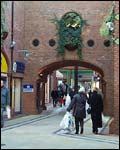
The Lanes in Carlisle
Important discoveries were made before the Lanes was built.

Several big projects followed this, including a dig on the site of The Lanes shopping centre.

The archaeologists made many exciting finds - administrative buildings, homes and the remains of insects and animals.

This meant that archaeologists could work out what people ate for example, and how the frontier town was managed. It was a major step in piecing together the city's Roman history.

Millennium finds

The Castle Green dig , or 'Millennium Dig', of 1999 and 2000 turned up some of the most important finds:

  • a wooden fort - the first found in Carlisle
  • a workshop
  • a stone building, thought to be the commanding officer's house.

    The buildings themselves were a good find but they pale into insignificance compared to the objects which were discovered.
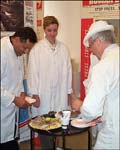
  • Tunny fish relish - a taste test
    'Tunny Fish Relish' recreated nearly 2000 years on.

    Outside the commanding officer's home, a pot of fish paste called 'Tunny Fish Relish' was found. It had a handwritten label which said the delicacy had been shipped in from Cadiz.

    In the workshop, pieces of Roman armour - only found once before in Britain - lay where they had been left centuries before. The rare arm-guards were of international importance.

    Alongside these spectacular artefacts, the diggers found coins as shiny as the day they were dropped, jewellery, glassware and pottery.

    On display
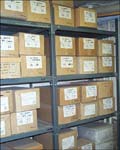
    Boxes of artefacts
    Boxes of artifacts are stored in Tullie House.

    Some of the items discovered over the years are on display in the Tullie House Museum and Carlisle Castle.

    The important pieces of armour are being studied and preserved at Durham University.

    The majority of pieces lay in the rows and rows of boxes in the basement of Tullie House or in storage at Shaddon Mill, out of public view.

    This doesn't please many people, who think a lot more could be made of the objects and the information they hold.

    line
    Top | Features Index | Home
    More from this section
    Features
    Countryside Alive
    Housing hell & help
    Barrow lifeboat

    What's on - eventsNews in briefMeet the teamContact us
    BBC Cumbria
    Annetwell Street
    Carlisle
    Cumbria CA3 8BB
    Tel: (+44) 01228 592444
    cumbria@bbc.co.uk


    About the BBC | Help | Terms of Use | Privacy & Cookies Policy