| SEE ALSO |  | AskAway Unusual questions about Cumbria answered and posed Enjoy Cumbria - things to see and do in Cumbria BBC Health | | | WEB LINKS | | Samuel Gawith - Snuff manufacturer The BBC is not responsible for the content of external websites. | | | FACTS | | Tobacco is a plant - nicotiana tabacum - that is grown and harvested, then dried, cured and processed to produce a variety of tobacco products. In their manufactured form, the tobacco leaves and stems are transformed into products that deliver an extremely powerful central nervous system stimulant or "upper" called nicotine. For centuries, tobacco has been smoked through devices commonly called cigarettes, cigars or pipes. It is also chewed, dipped or sniffed in the form of chewing or spit tobacco and snuff. in 1684, Pope Urban VIII threatened excommunication for anyone found taking snuff in church! | | | PRINT THIS PAGE | | | View a printable version of this page. | |  |
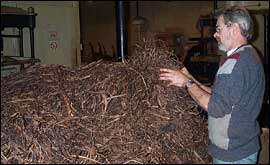
| | The Samuel Gawith Company grind and manufacture snuff, also known as nasal snuff, from the raw materials of tobacco leaf and stalk, using age old methods and machinery at their factory in Kendal. 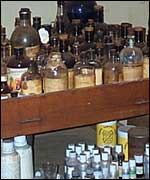 | | Bottles |
The history of the company begins with an enterprising Kendalian by the name of Thomas Harrison who, aware of the popular interest and associated commercial potential, of snuffs and tobaccos, went to Glasgow to learn the trade of snuff making. He returned to Kendal in 1792 with not only knowledge of snuff making, but with approximately 50 tons of second hand machinery, estimated to be manufactured around 1750. The first factory was set up at a mill at Mealbank, on the river Mint, a few miles North East of the centre of Kendal. Although this building disappeared about 50 years ago, some of the machinery is still intact and in day-to-day use at the Brown House today. A family business Over the next 200 years the business of snuff making and the associated tobacco trades passed through the family in various parnerships, deals and inheritance until in 1920 new premises at Sandes Avenue, Kendal were opened. The machinery was transferred from Meal Bank, and adapted to be powered by electricity, rather than water. 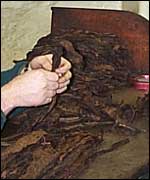 | | Checking the tobacco leaves |
Some time in the early 1930s there was further expansion, and Samuel Gawith took over the idyllically situated snuff mill of William Nevinson at Eamont Bridge, immediately south of Penrith. This had originally been a corn mill, then gunpowder mill, then from 1835 a snuff mill. This ran until about 1936-7 when, probably as a result of the change from snuff taking to cigarette smoking immediately after the First World War, operations at Samuel Gawith's were consolidated. Eamont Bridge and Sandes Avenue were closed and the Kendal Brown House expanded. For at least its third time the original four-pestle mill was dismantled, moved and re-instated. A tribute, indeed, to the undoubted craftsmanship and ingenuity of it's constructors. |