 | 24 September 2014 |

| |
| BBC Homepage | | |
| |||
| Contact Us | | |
Diversity in CumbriaYou are in: Cumbria > Features > Diversity in Cumbria > Slave trade legacy Slave trade legacyWhat legacy did the slave trade of the seventeenth and eighteenth century leave on the North of England? Carol Cooke recently attended an event in Windermere where a new documentary was previewed. 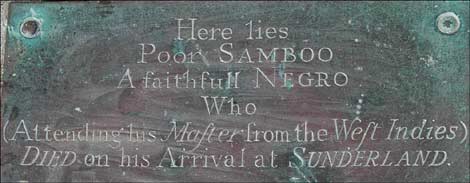 Sambo's grave and inscription The part England played in the slave trade of the seventeenth and eighteenth century is well documented... Liverpool have acknowledged their responsibility, Bristol are wondering whether or not they should apologise, the National Maritime Museum in London held a festival recently to look at Britain's role in the slave trade, and the grave of Glasgow's most famous "Tobacco Lord", John Glassford who was involved in the slave trade and took slaves back to Scotland to be employed as family servants is now part of Glasgow's Black History Tour. And that’s it then isn’t it? Well not really. 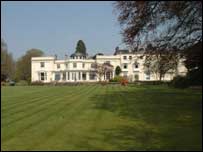 Storrs Hotel Over 50 people from all over Cumbria visited Storrs Hall Hotel near Windermere which was developed from money generated by the slave trail; to find out more about the north's hidden slave trail, and enjoy a preview of a programme due for transmission on BBC1. The programme was a special landmark documentary about ‘The North’s Hidden Slave Trail’ and is the result of collaboration between the Open University and the BBC in the North East & Cumbria. 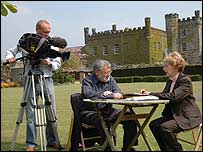 Phillipa Gregory and Roger Dalladay. According to Jaqui Hodgeson, BBC Executive Producer ‘Inside Out’, ‘The programme looked at the way in which one of the most insidious trades left its mark across the North of England – in surprising ways and unexpected places.’ The programme was presented by Philippa Gregory, historian and best selling novelist who searched out the clues in a journey that took her from west to east coast, and on the way discovered the first black police officer, PC John Kent, who worked in Carlisle from 1837. John was the son of Thomas Kent who was brought from the West Indies to work as a slave on an estate in Cumbria. Philippa Gregory broke the news, ‘Who do you think you are?' style to John Kent’s descendants, who were astonished and proud to hear how well their ancestor had done. Being born the son of a slave and becoming a police officer in one generation was a mighty feat of determination, and one which left the son of the family almost speechless. 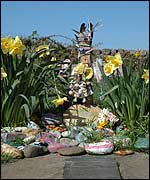 Sambo's grave After the screening of ‘The North’s Hidden Slave Trail’ the audience were invited to ask Philippa Gregory some questions. The session turned out to be a sharing of stories. Philippa had researched for the programme and her book, and many local people had anecdotal stories which also cast light on the slave trail. One member of the audience asked about the slave trade in Lancaster, for although the slave trade is well documented there, even now, several hundred years on, there is discomfort and distress at facing up to the past. However a memorial was recently commissioned to mark the slave trade. Bristol has a similar problem in that there is still uncertainty as the best choice of action whereas Liverpool has acknowledged responsibility and used the stone etchings on banks around Liverpool docks to create a tourist trail. Another member of the audience was fascinated by Sambo’s grave, a tiny wooden cross found at Sunderland Point near Morecambe Bay, and featured in the programme. Since the grave was found, children have decorated it with flowers and remembrances, but it is still not commemorated properly. last updated: 01/05/2008 at 16:04 You are in: Cumbria > Features > Diversity in Cumbria > Slave trade legacy [an error occurred while processing this directive] |
| | About the BBC | Help | Terms of Use | Privacy & Cookies Policy |
