| 28 October 2014 |

| |
| BBC Homepage | | |
| |||
| Contact Us | | |
AbolitionYou are in: Cumbria > Abolition > The Boat’s Coming In At Whitehaven 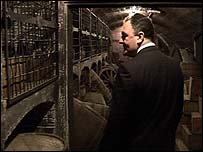 Cllr. Geoff Blackwell. The Boat’s Coming In At WhitehavenBy Reuben Abraham It's nearly 200 years since the Abolition of the Slave Trade Act, banning the slave trade in Britain, came into force, now Whitehaven looks set to apologise for its past involvement ... The harbour at Whitehaven, Cumbria seems straight out of a tourist postcard - white crests of waves, boats tugging at their anchors, smiling people milling around, taking in the sun. The town, famous for its Georgian buildings and side-streets seems as welcoming as ever. Copeland Borough Council would like as many people as possible to visit the region, not only as tourists but also for work. But with 50% of all jobs here associated with the nuclear plant at Sellafield, and 34% of the of the resident population having no educational qualifications, the Council sees trouble ahead. Business is not exactly booming. 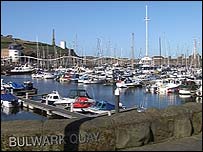 Bulwark Quay in Whitehaven The Council are quite keen to see the influx and power of the ‘brown pound’ that’s fuels the growth of places like Birmingham, but which seems quite conspicuous by its absence here. In fact, only 0.7% of the local population claim to be ethnic. “We realised that something was wrong and wondered if it had to do with our past, ” says Cllr. Geoff Blackwell. And in perhaps Whitehaven’s dark past lie the roots of their present problem, according to him. Blackwell stares at the images of shackled black men and women at the Rum Story museum during a walk through the town. “How could someone do this to them ?”, he asks in anger.  Image of slavery from the Rum Story. But this was exactly what happened some centuries ago in this place. Whitehaven had a successful trade in shipping men and women kidnapped in Africa and forcibly condemned to slavery, making rum on the sugar plantations in the Caribbean. But then came the Abolition of the Slave Trade Act banning slave trade in the British Empire; with the subsequent death of the shipping and coal-mining industries, Whitehaven saw a plunge in its fortunes. The town hasn’t recovered since. “In 2007, on the 200th anniversary of the Wilberforce agreement, we intend to apologise for our involvement in the slave trade,” says Cllr Blackwell who is spearheading this spirit of humility and reconciliation within Copeland Council. He hopes black and ethnic minorities will then find Copeland more favourable to move into and set up businesses. 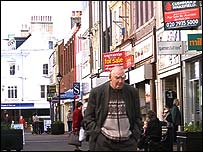 Whitehaven Campaigning for an apology has not been easy for him, with several people from the Council upset at the thought of apologising for a deed done years ago. Some of them have even asked for his resignation. “They think we should stick to building roads and providing water instead”, says Blackwell. “But we can’t forget what we did, and apologise we will,” he adds. And what would he do if a ship full of slaves docked in at Whitehaven right now ? " I’d be picketing at the harbour”, says Blackwell vehemently. More here
The BBC is not responsible for the content of external websites last updated: 01/05/2008 at 16:11 You are in: Cumbria > Abolition > The Boat’s Coming In At Whitehaven
|
| | About the BBC | Help | Terms of Use | Privacy & Cookies Policy |